Play Movie


Listen
to Katherine Kennard
reading this story


KYOTO LANTERN
Kojima Shoten
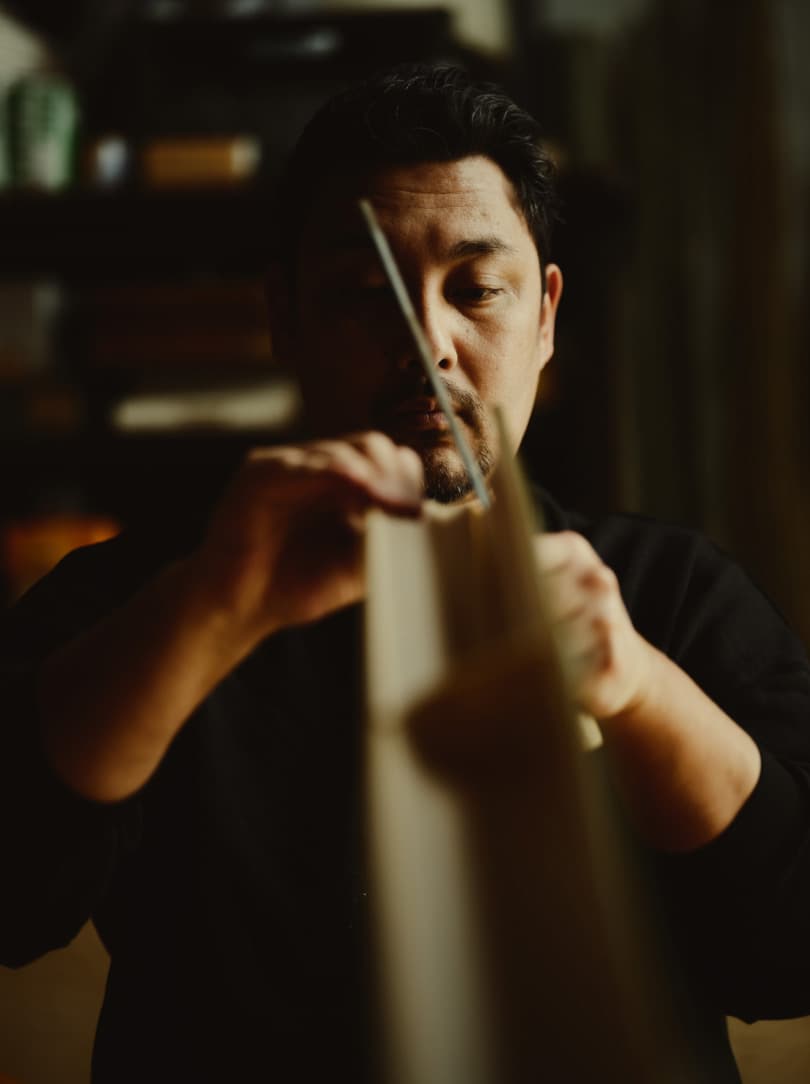
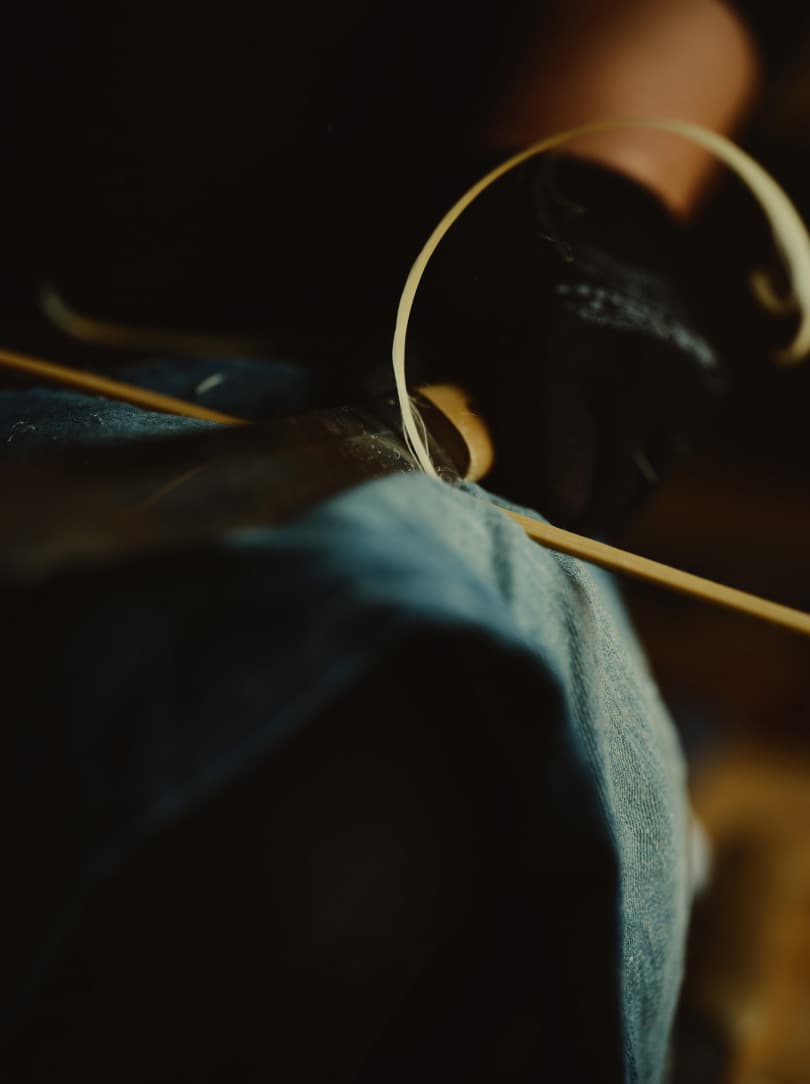
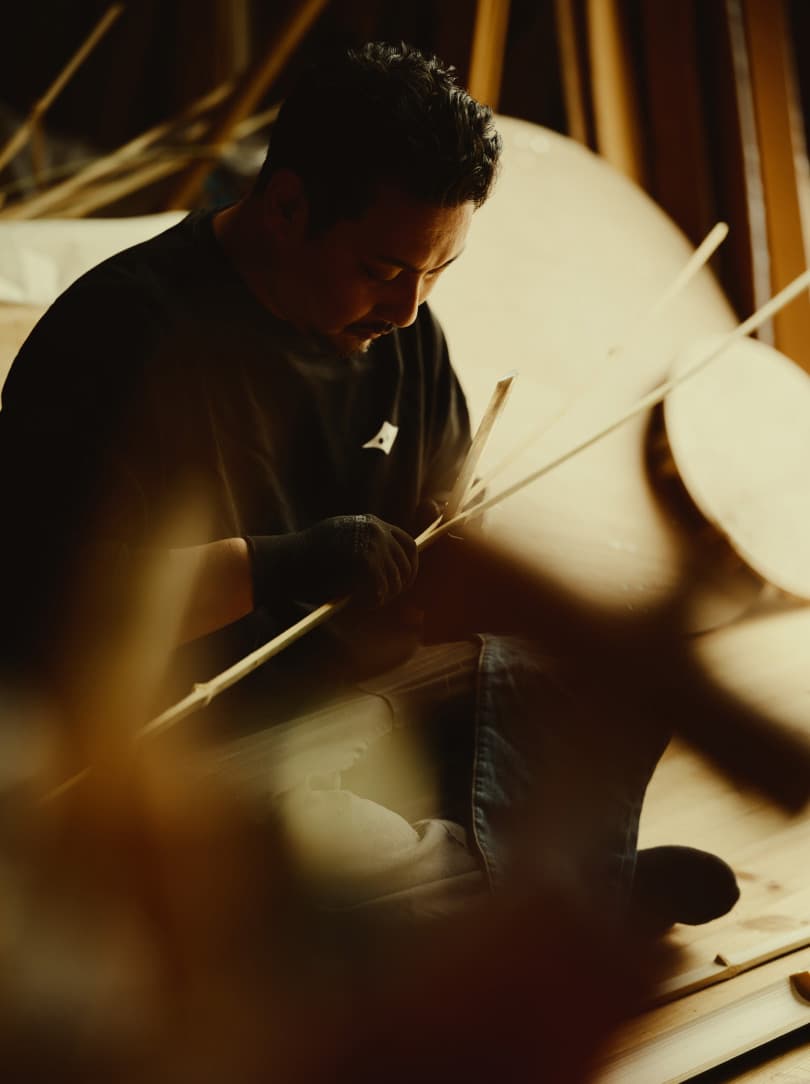
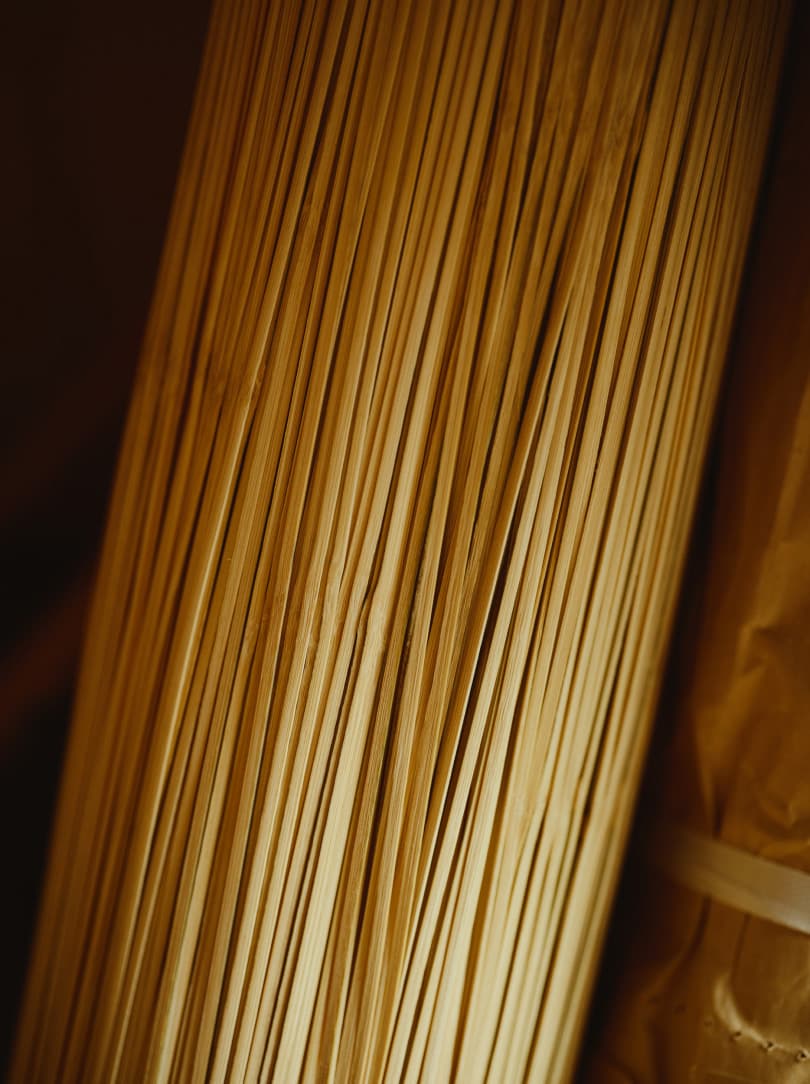
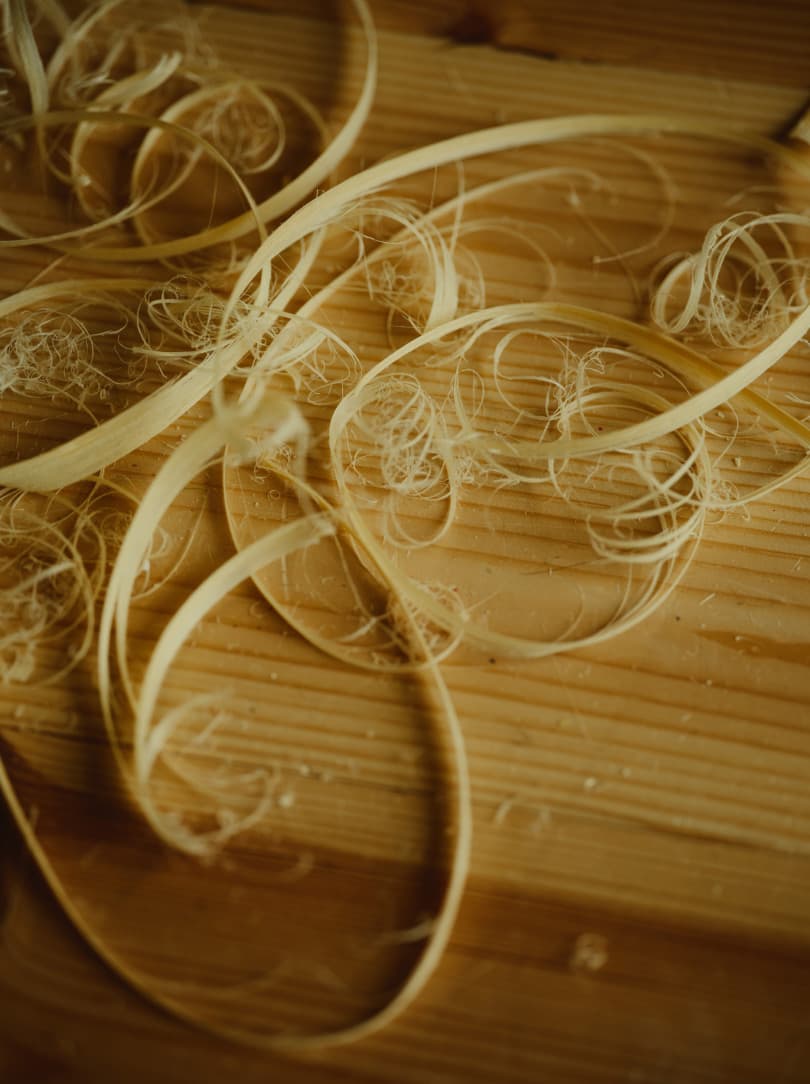
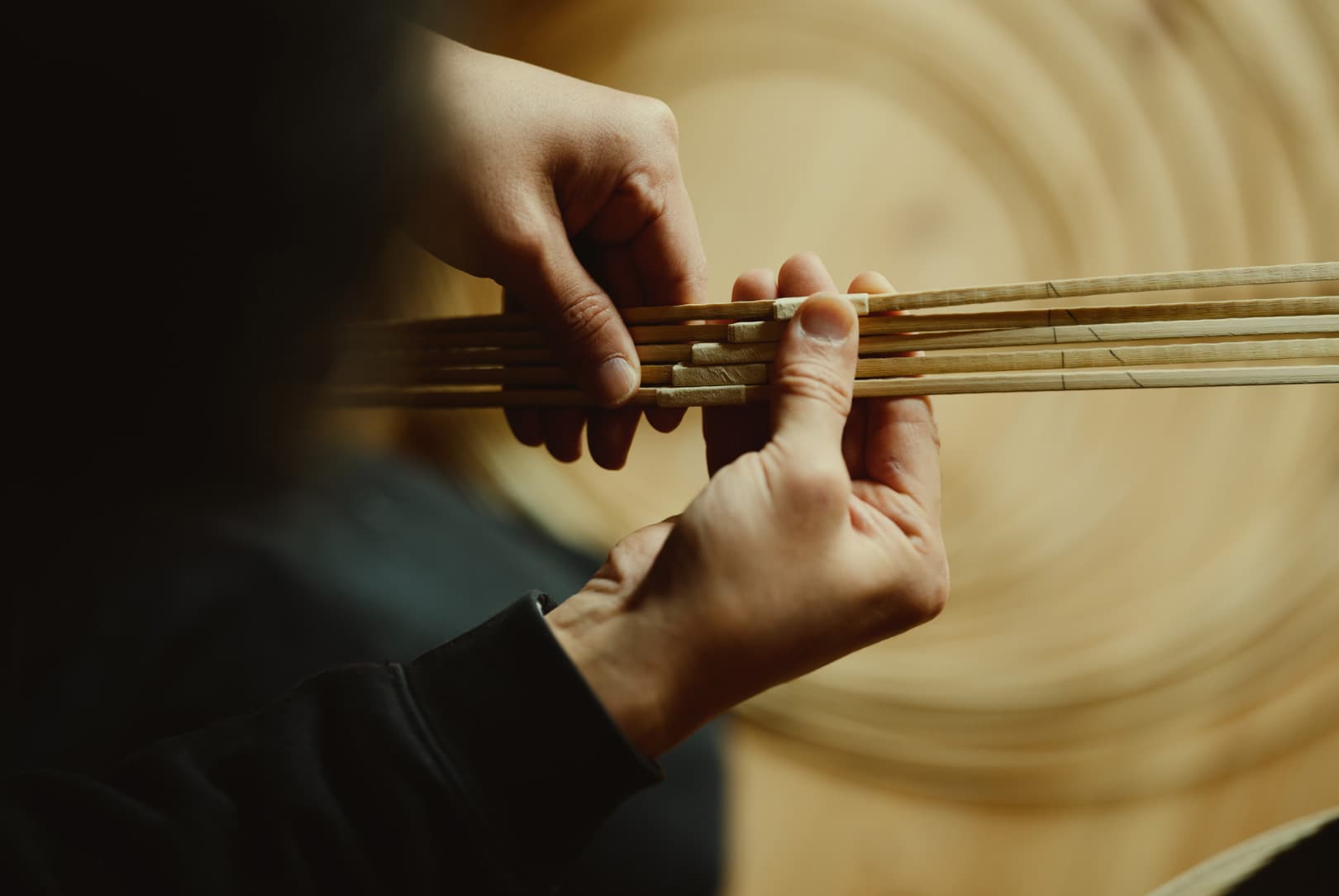
The initial split is crucial. Holding one end of a long, hollow bamboo pole at chest height and resting the other diagonally against the workshop floor, Syun Kojima positions an elongated metal blade precisely across the centre of the circular end. With a wooden mallet in his other hand, he taps the blade carefully as it eases through the dense material, dividing the bamboo cleanly into two semi-circular halves.
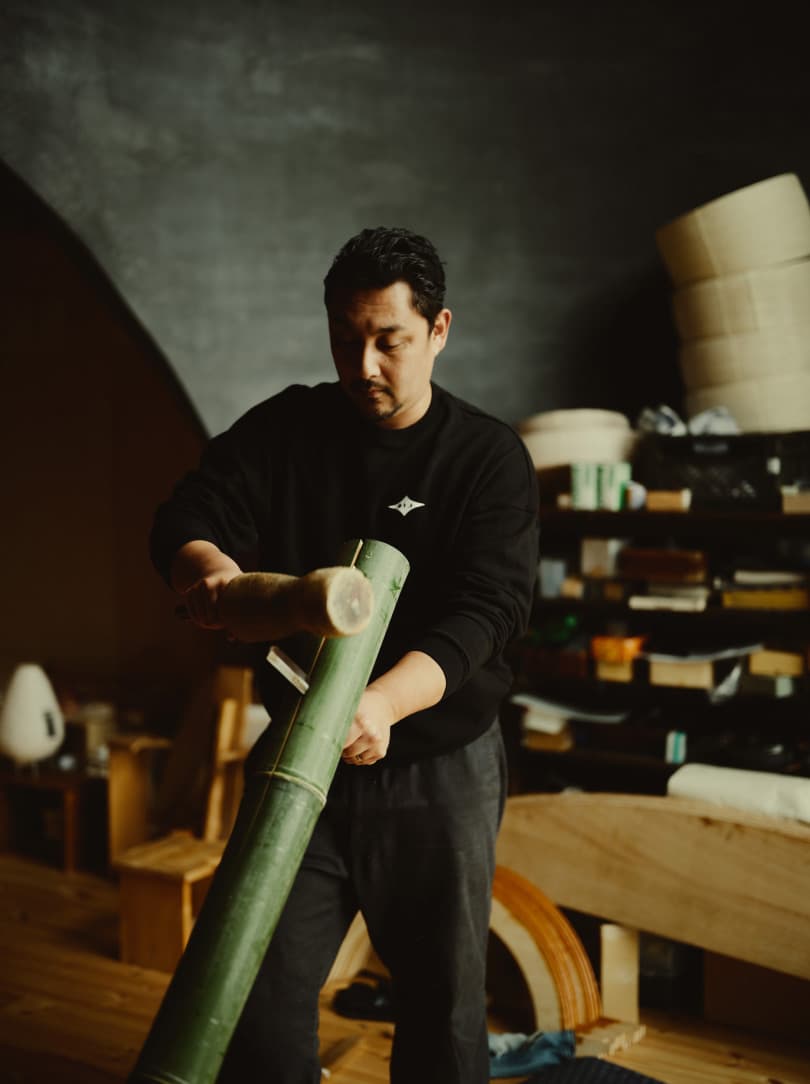
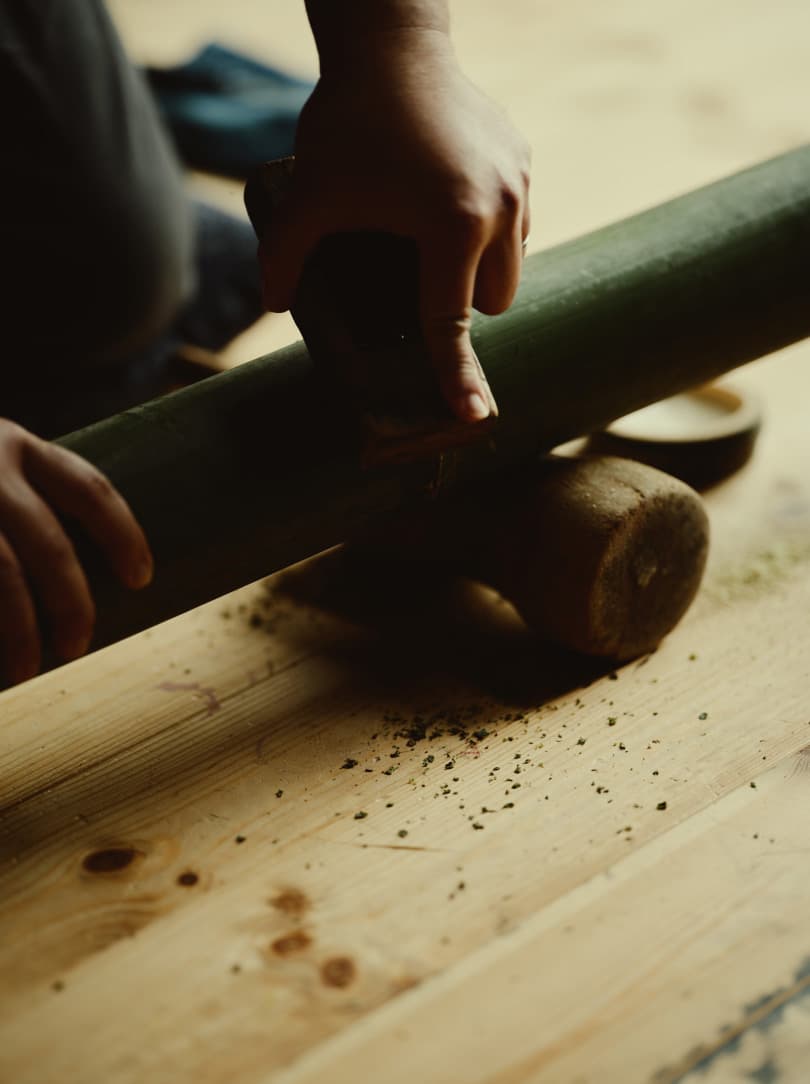
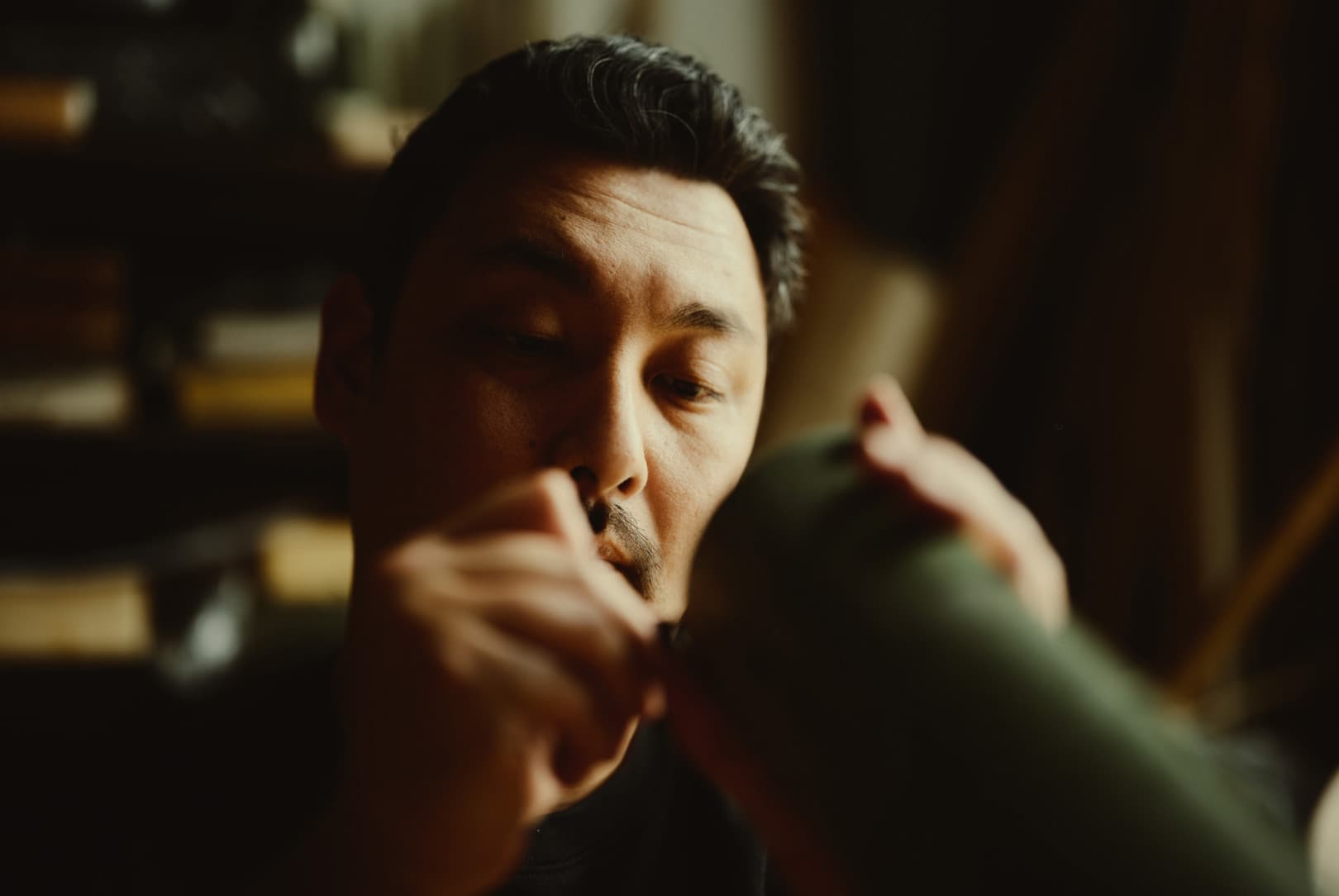
He works calmly and with quiet precision, focused but faintly smiling, aware that we are observing. His movements appear instinctive, the result of years spent honing a skill first learnt from his grandfather. Everything that follows depends on this first split being exact. “If the first split of the bamboo is misaligned, everything else will be misaligned as well,” his brother Ryo Kojima explains. “The entire process is like that. If one part is off, every step after that becomes more difficult.”
The brothers represent the 10th generation of the Kojima family at the helm of Kojima Shoten, a traditional Kyoto lantern workshop founded between 1789 and 1801 during the Kansei era of the Edo period. Before they became objects of design, ‘chōchin’ were objects of necessity in everyday life. “Lanterns were used to illuminate the roads at night,” says Ryo. “The lantern itself served to extend the light of the candle, helping to illuminate the path.” For centuries, they were also used as portable lighting in homes, for shop signage and religious rituals. Light and collapsible, they were easy to carry around.
“If the first split of the bamboo is misaligned, everything else will be misaligned as well. The entire process is like that. If one part is off, every step after that becomes more difficult.”
RYO KOJIMA
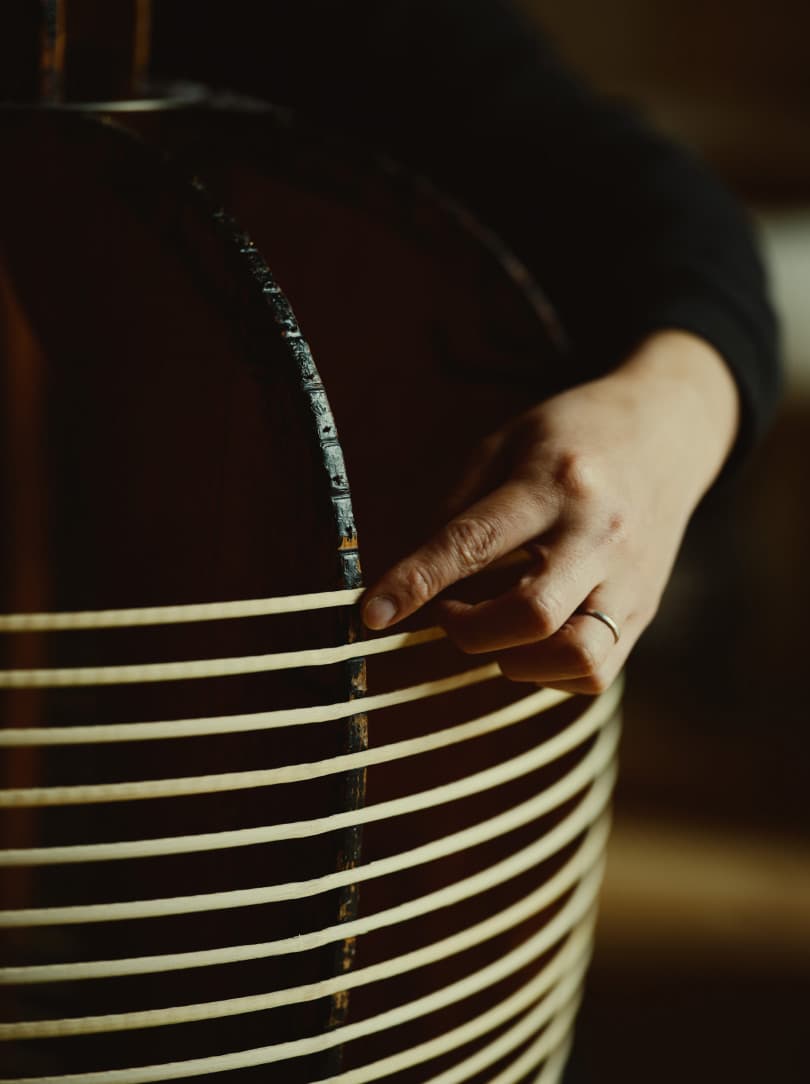
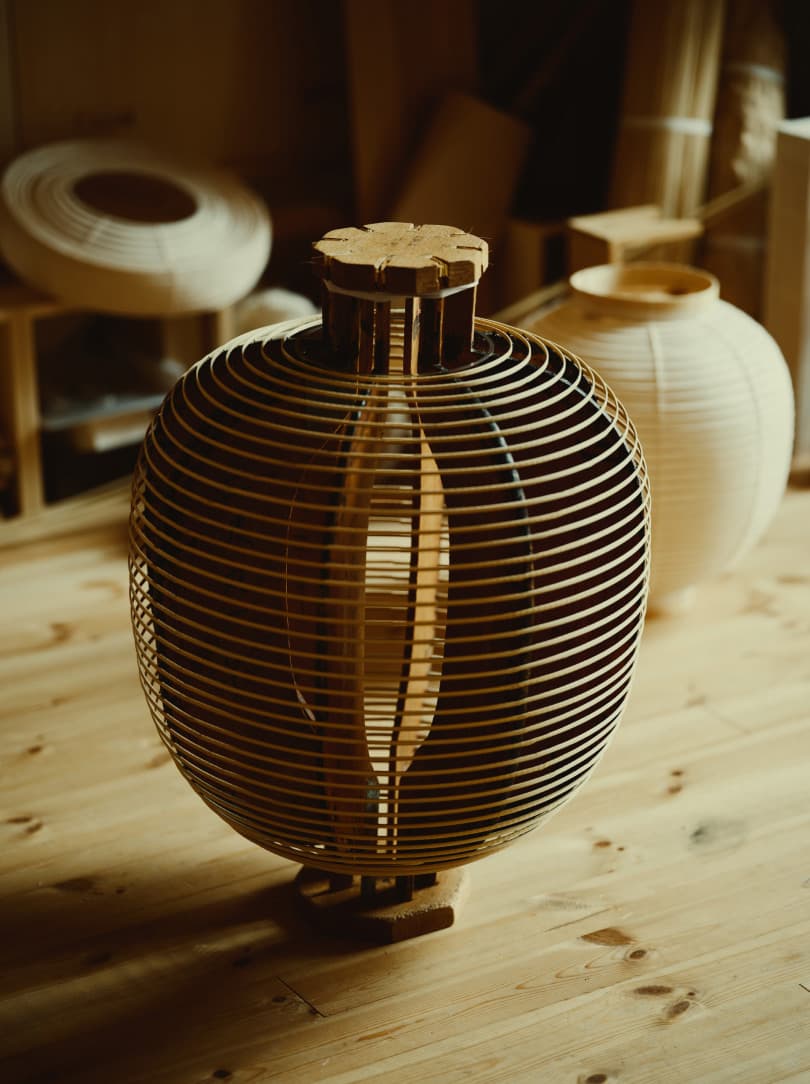
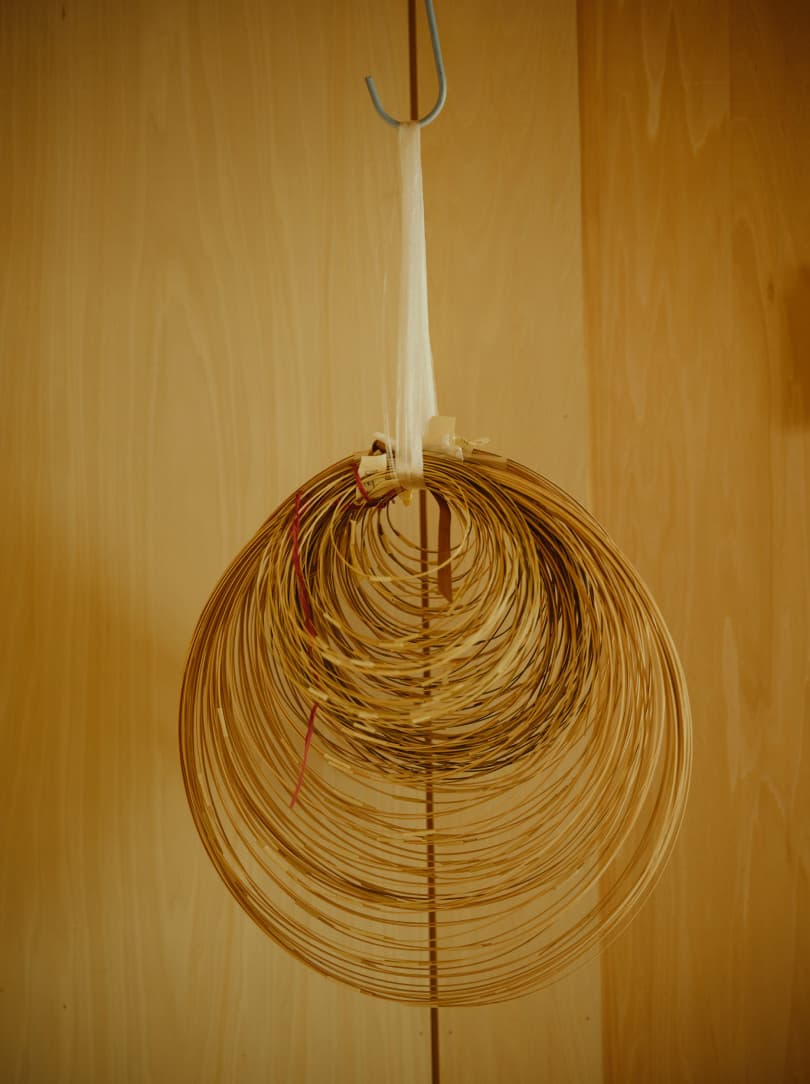
The lanterns made specifically by Kojima Shoten are known as ‘Kyo-chōchin’. “The term ‘Kyo-chōchin’ was something my grandfather came up with,” Ryo explains. “The method we use is called ‘jibari-shiki’.” The term came to describe lanterns made in Kyoto using a traditional construction technique in which individually crafted bamboo rings are assembled one by one, bound with thread and covered with handmade washi paper.
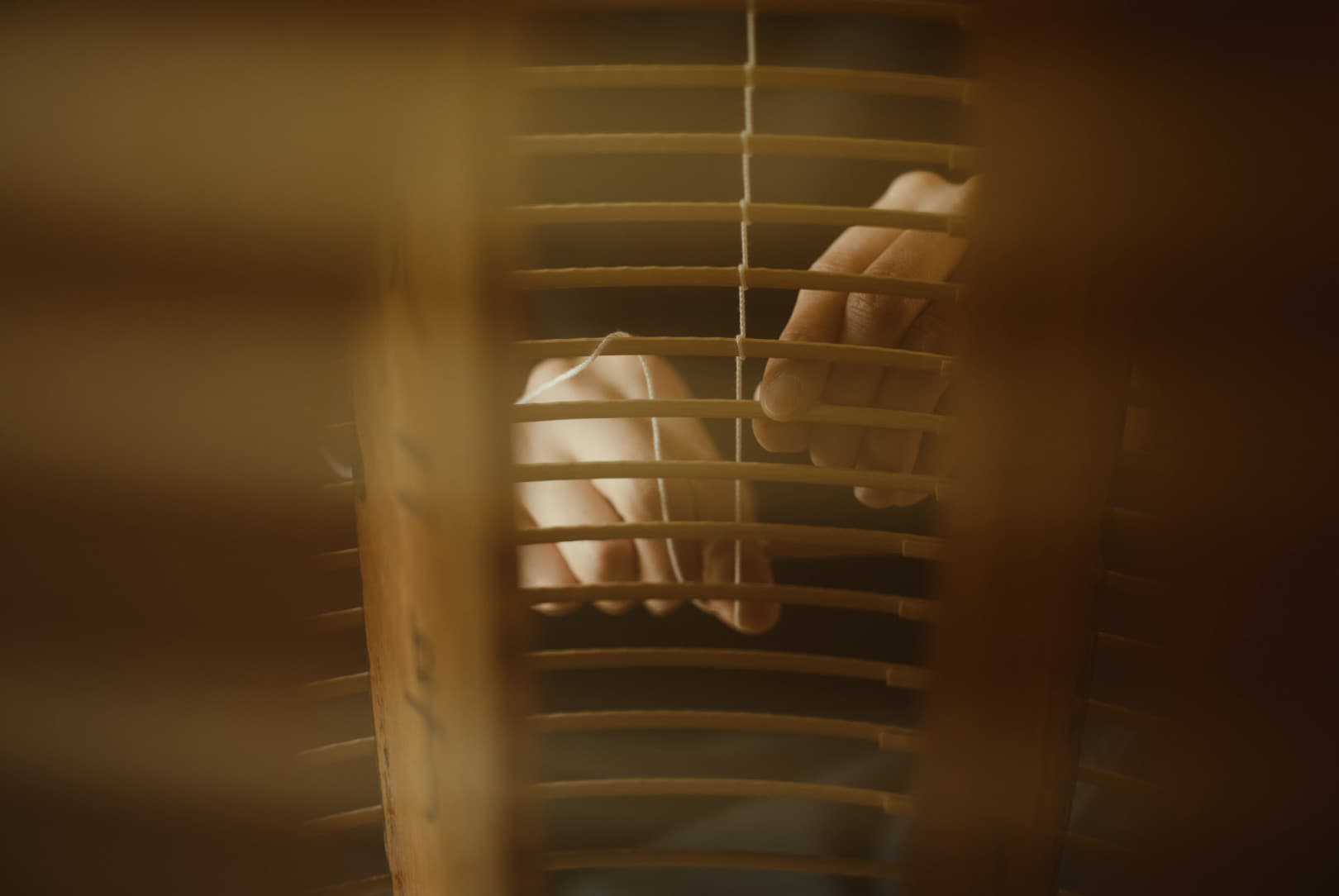
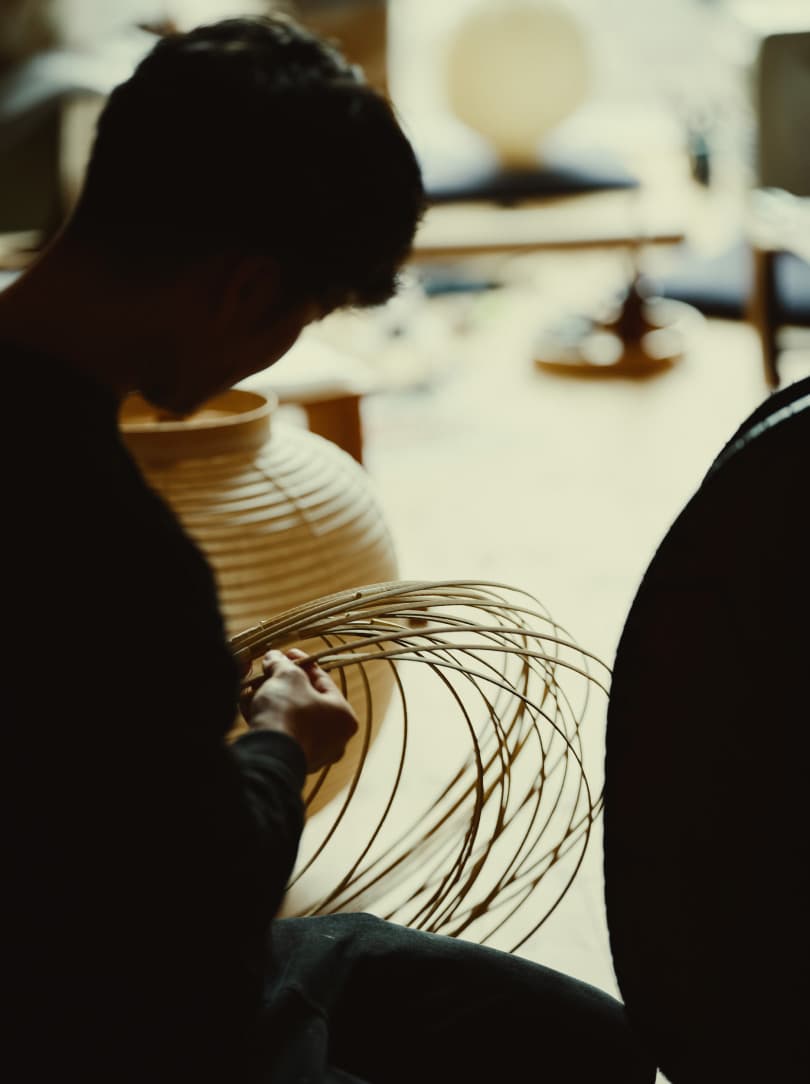
Very few workshops still use this method today. Most manufacturers have adopted faster, more modern versions, such as those using the ‘makibone-shiki’ method, which rely on a continuous spiral coil of bamboo rather than individually formed rings. The resulting lanterns are cheaper but far less durable, compromising on structural integrity for speed and efficiency. For Kojima Shoten, the meticulous ‘jibari-shiki’ process is central to the identity of the craft and they remain committed to keeping it that way.
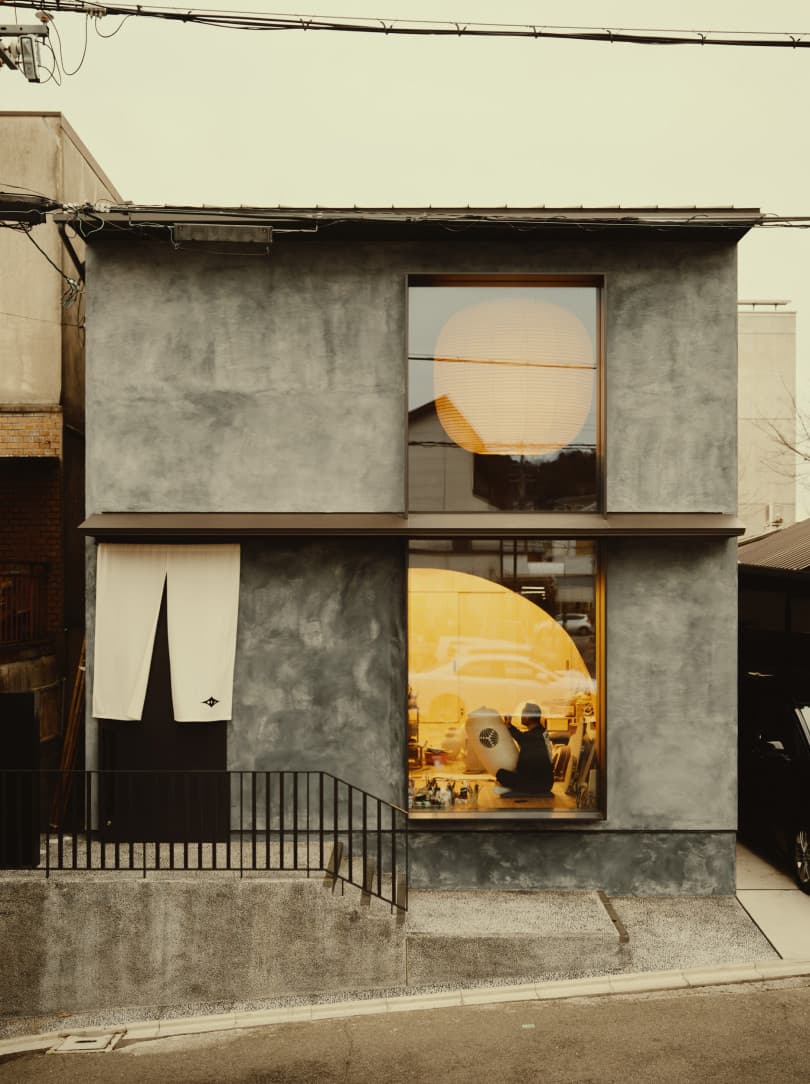
Despite being steeped in tradition, the family’s workshop looks incredibly modern. A few blocks off one of eastern Kyoto’s busy arterial roads, the traffic noise fades into a maze of narrow residential streets where bicycles lean against walls and compact houses crowd closely together. Then the workshop appears: a newly completed dark-grey building with angular contemporary lines and two large windows spanning both storeys. An enormous paper lantern hangs in the upper window, while the inner workings of the workshop are visible through the lower one.
“Lanterns were used to illuminate the roads at night. The lantern itself served to extend the light of the candle, helping to illuminate the path.”
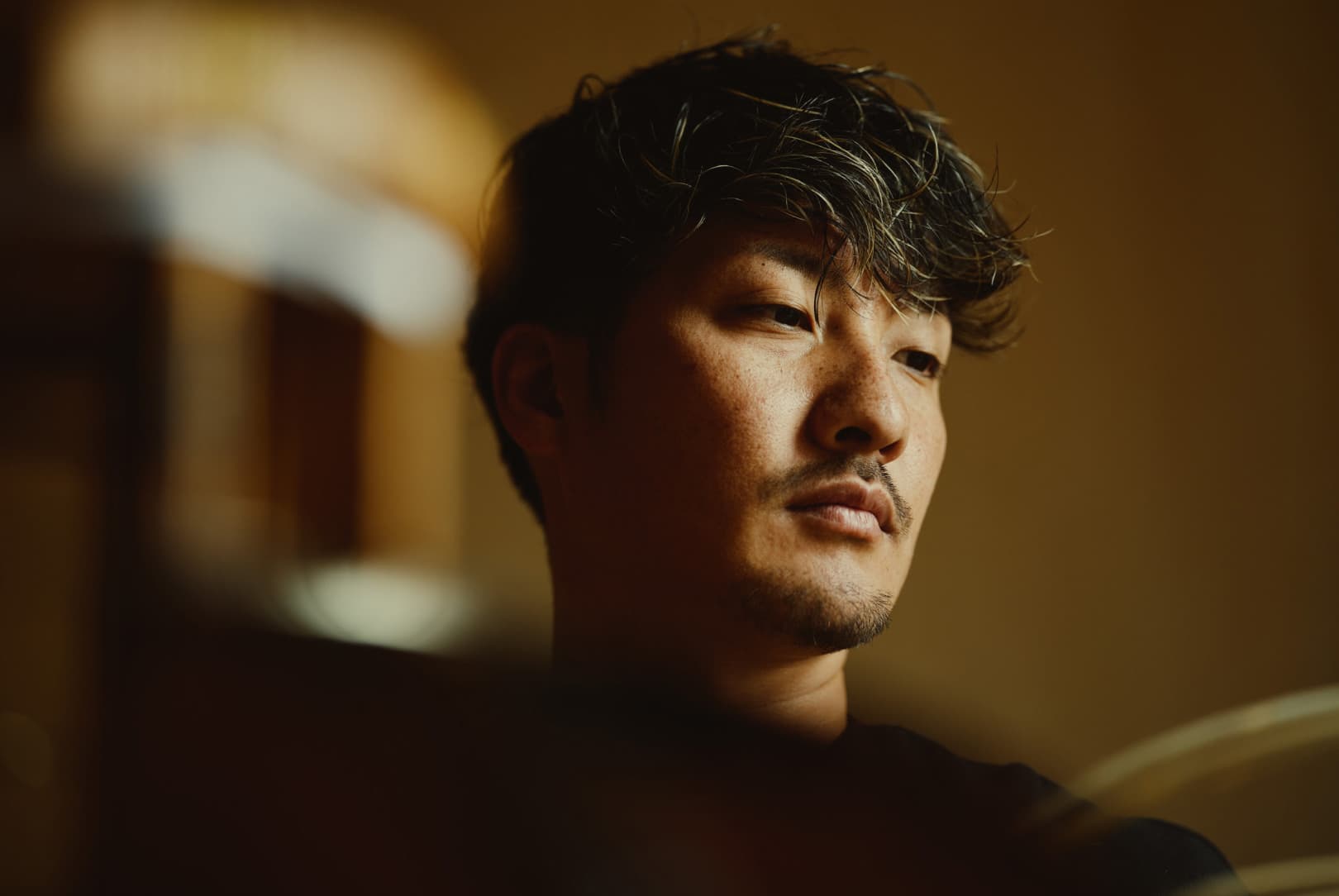
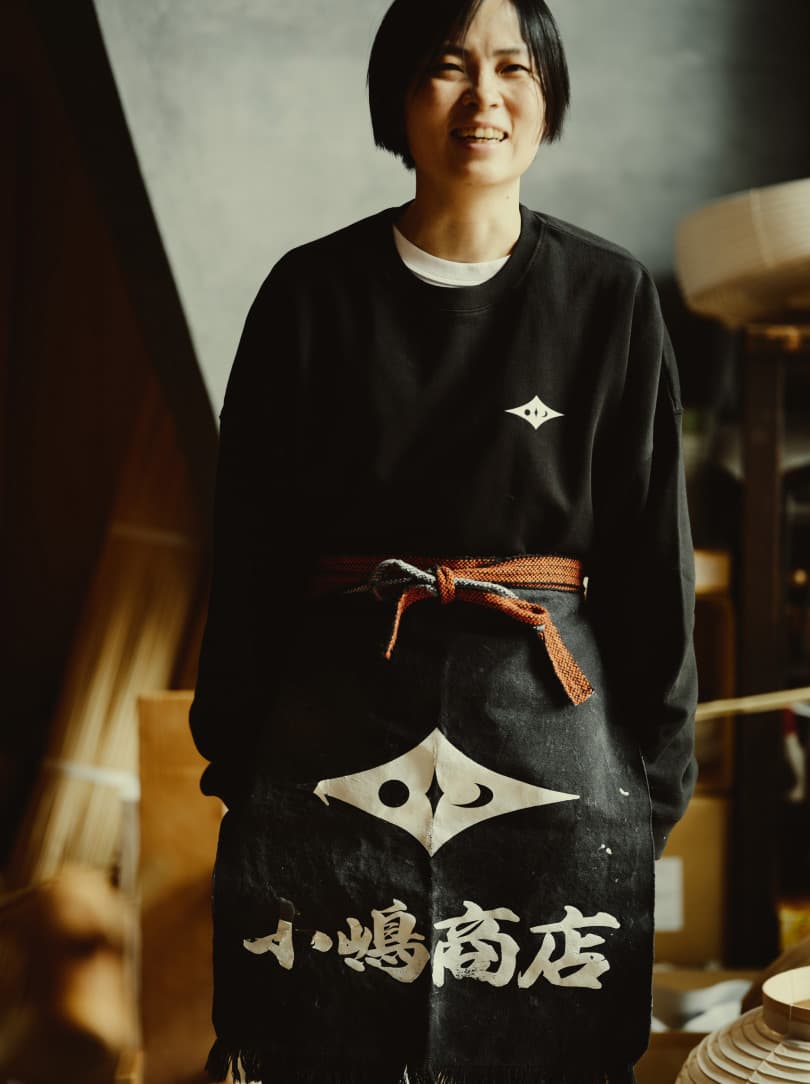
It is a mild, gently sunny morning when we arrive. Ryo’s young son circles the open parking area opposite on a miniature Hummer bicycle, dressed head-to-toe in a Portugal football kit. From behind the ‘noren’ hanging across the doorway, Ryo emerges, smiling softly as he greets us. He wears a simple black sweatshirt printed with the white company logo, loose faded black jeans and black trainers; his hair cropped short, textured on top with subtle blonde highlights. He has an easy nonchalance about him and could just as easily pass for someone working in fashion or design.
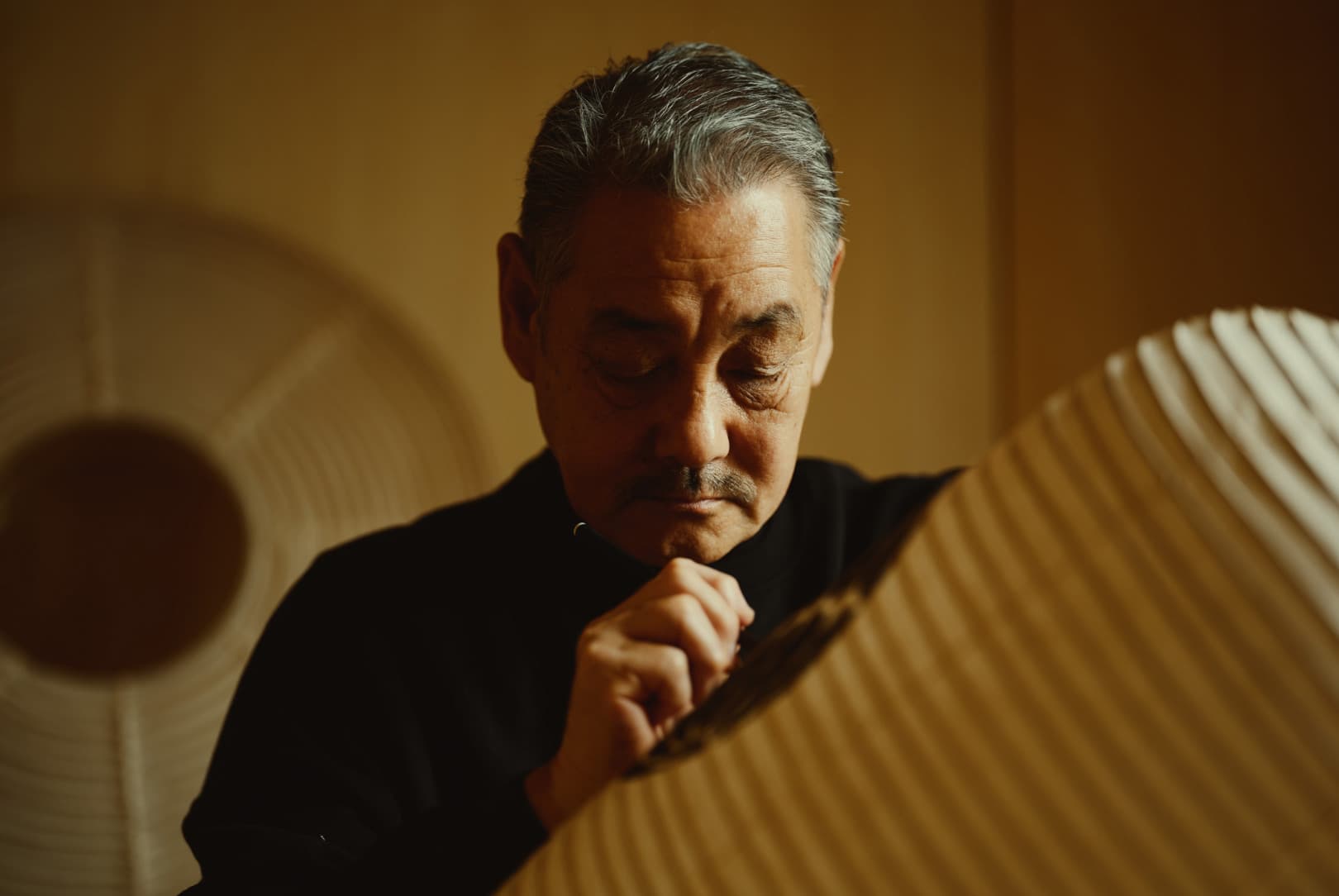
Moments later, a shiny black car pulls up. Ryo’s son rushes over excitedly as the driver’s door opens and his grandfather steps out, wearing the same black company sweatshirt. He scoops up his grandson, who squeals with laughter as the family gathers outside the workshop before heading in together. Even before we enter, there is already a strong sense of the tie that binds Kojima Shoten. It feels tightly woven into the rhythms of family life.
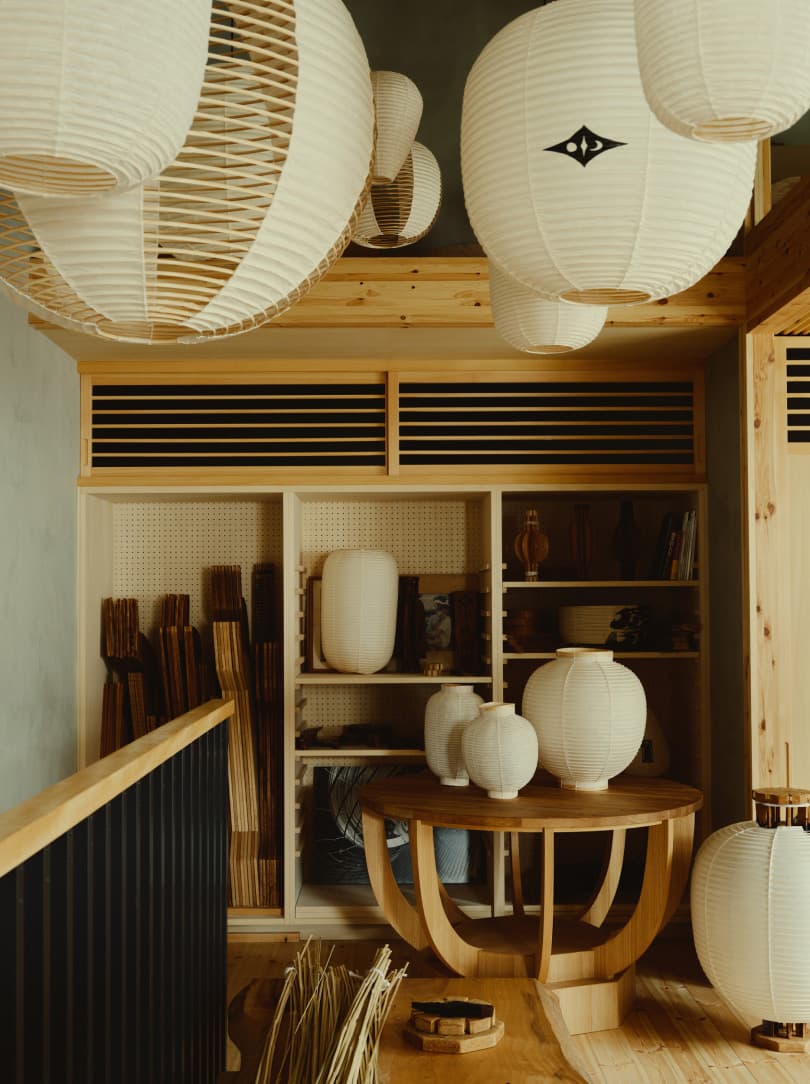
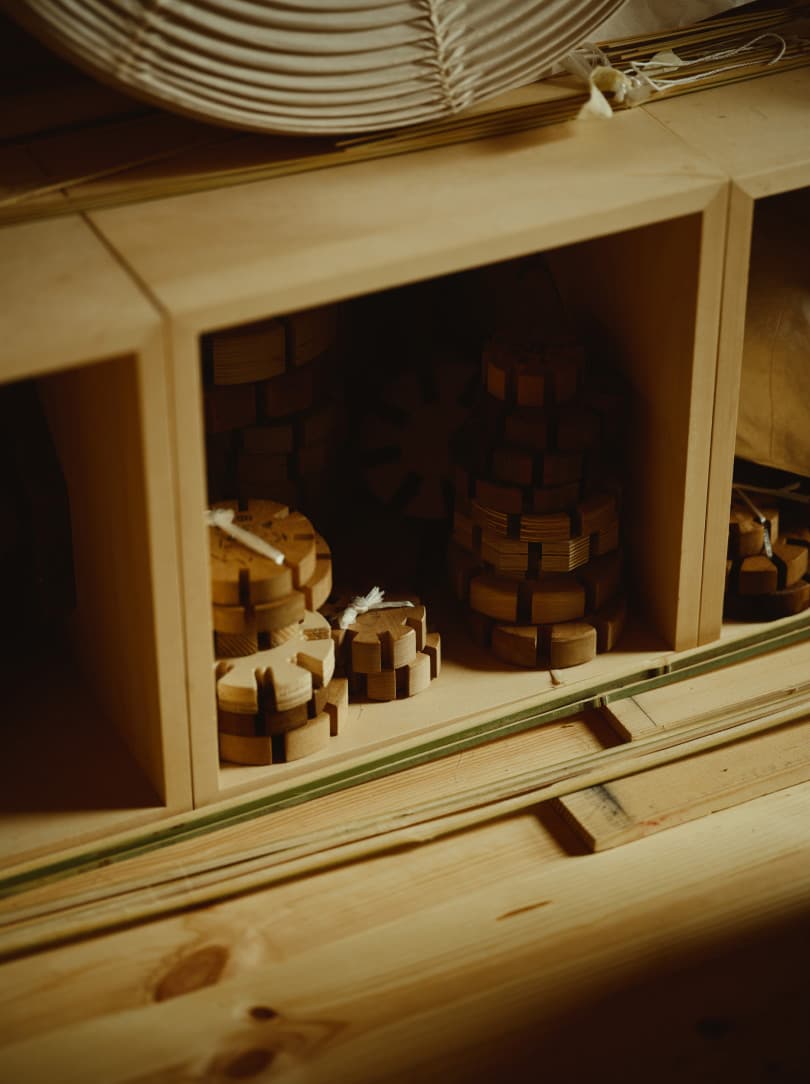
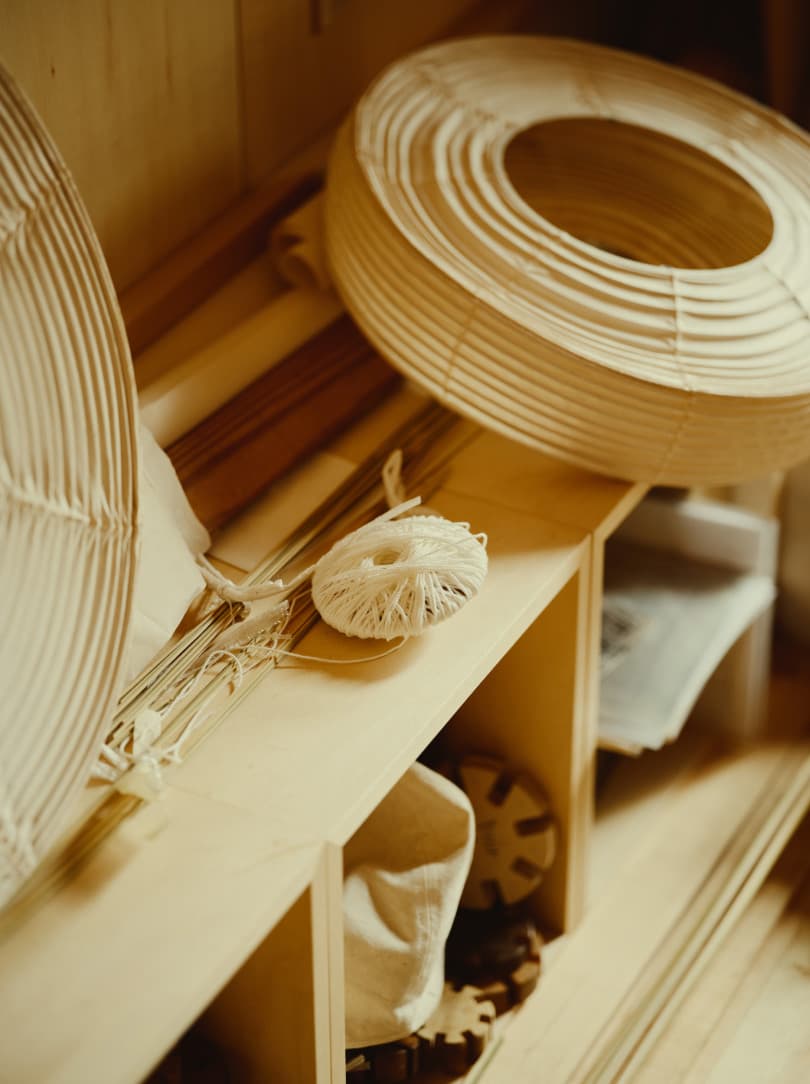
Stepping inside, the atmosphere feels immediately purposeful and creative. Pale timber covers the floor, walls and ceiling of the open-plan room, which is filled with soft natural light from the large front windows. Bundles of thin bamboo strips lean vertically in one corner beside long wooden planks and disassembled lantern moulds, one stretching close to 2 metres in length. Nearby, open shelving is stacked with tools, folders and partially collapsed paper lanterns balanced on top of one another.
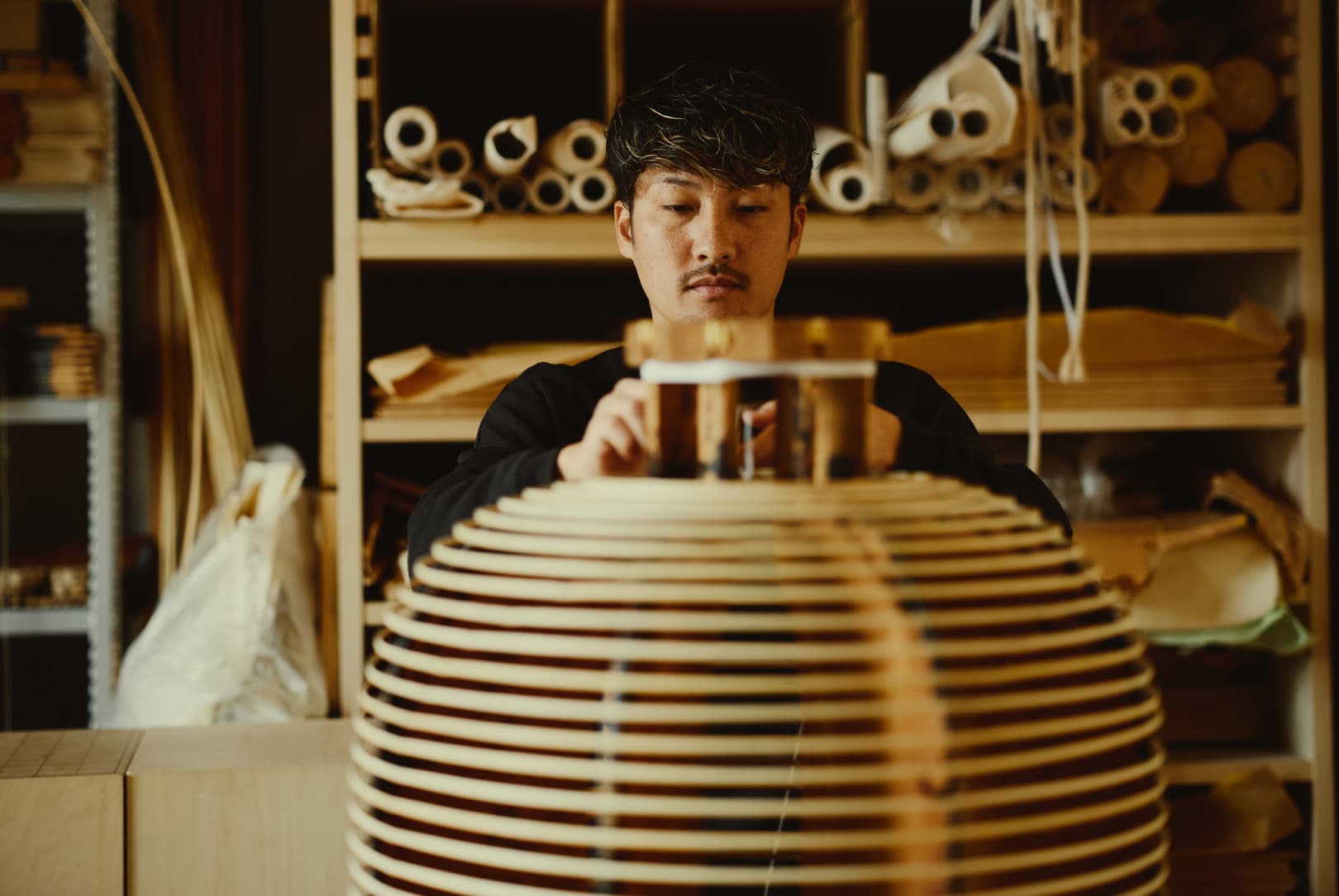
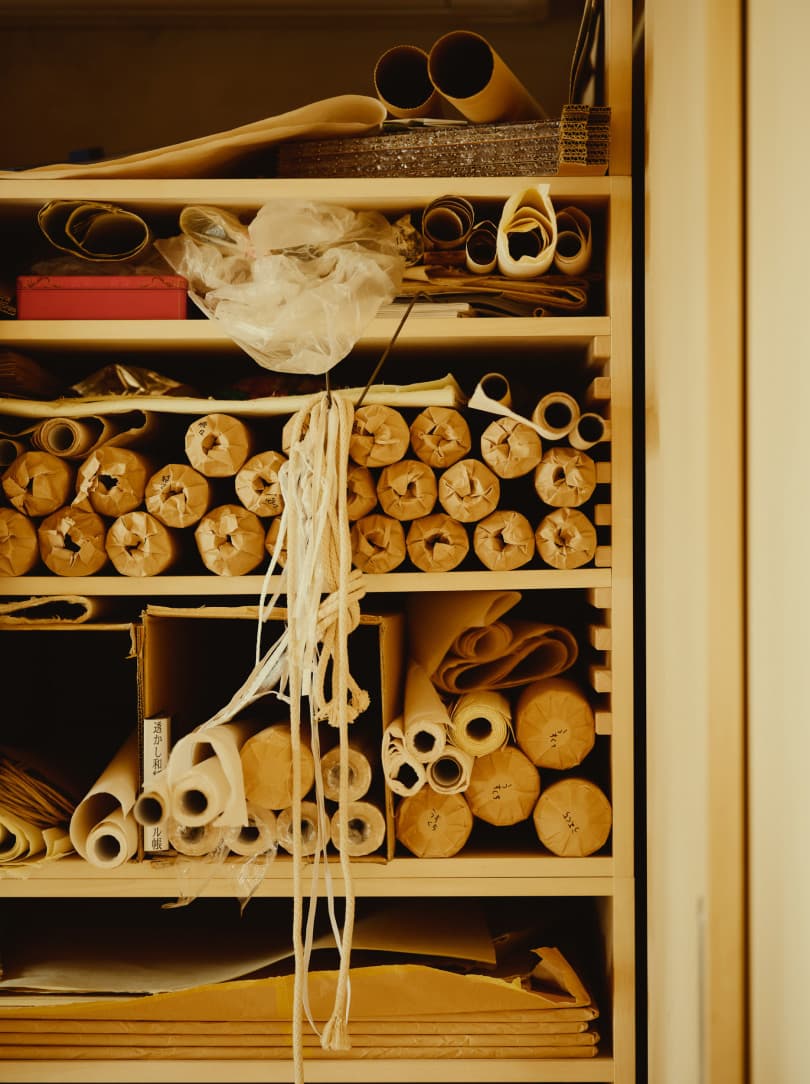
At the far end of the room, more shelves are filled with washi paper: some bundled neatly in brown-paper-wrapped rolls, others stacked in flat open piles. Rope ties and measuring tapes hang from a metal hook, while lanterns in various stages of completion stand quietly throughout the workshop, waiting for their next stage of assembly. On the back wall, handwritten orders are taped beneath a ‘kamidana’, or ‘god shelf’, a small Shinto altar traditionally placed in homes and workplaces to honour and seek protection from the gods. This one holds a red Kabuki mask, fans and other cherished ornaments, alongside several ‘ofuda’, paper talismans received from Shinto shrines and temples, each inscribed with the names of deities believed to watch over the workshop and those inside it.
The room has the gentle disorder of an active workshop, balancing the practical demands of production with the restrained minimalism of a contemporary studio. It feels less like a preserved craft workshop and more like a modern design space built around the centuries-old techniques.
“The term ‘Kyo-chōchin’ was something my grandfather came up with. The method we use is called ‘jibari-shiki’”
Behind the workshop lies Ryo’s family home, where he lives with his wife and two children. After graduating from secondary school in 2008, he began working as an apprentice under his father, Mamoru Kojima, and in 2021 became Kojima Shoten’s representative director. His older brother, Syun, focuses primarily on the painstaking bamboo work at the heart of the lantern-making process, while their father still works alongside them as a senior master craftsman – meaning three generations continue to overlap daily.
Ryo credits many of the workshop’s recent changes to conversations with Syun. “About 10 years ago, we were always thinking about how quickly we could make lanterns and how many we could produce,” he says. “But my brother started asking what potential lanterns had beyond festivals.” Together they began exploring new possibilities for the craft, from architectural lighting and interiors to large-scale installations and collaborations. As their work gained attention, the brothers became known as the “Lantern Brothers”, gaining press attention and helping to introduce Kyoto lantern-making to entirely new audiences. The change has been dramatic. A decade ago, wholesale production accounted for about 80 to 90 per cent of Kojima Shoten’s work; today, Ryo says, that balance has effectively reversed.
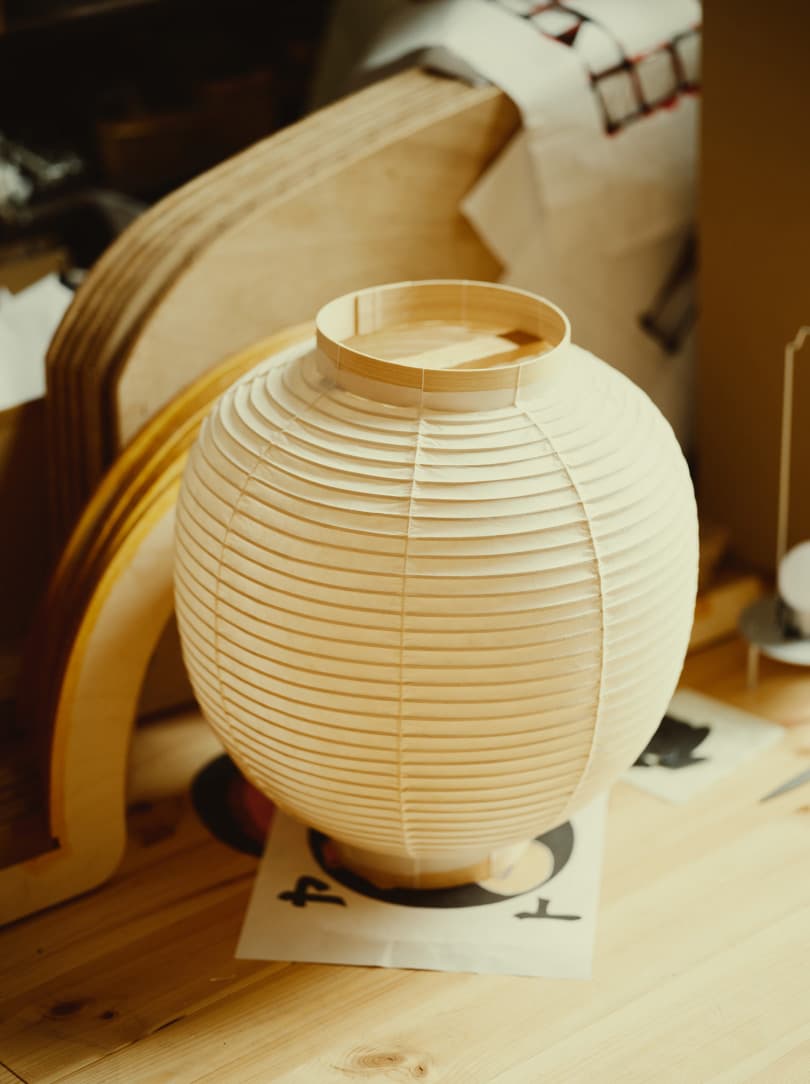
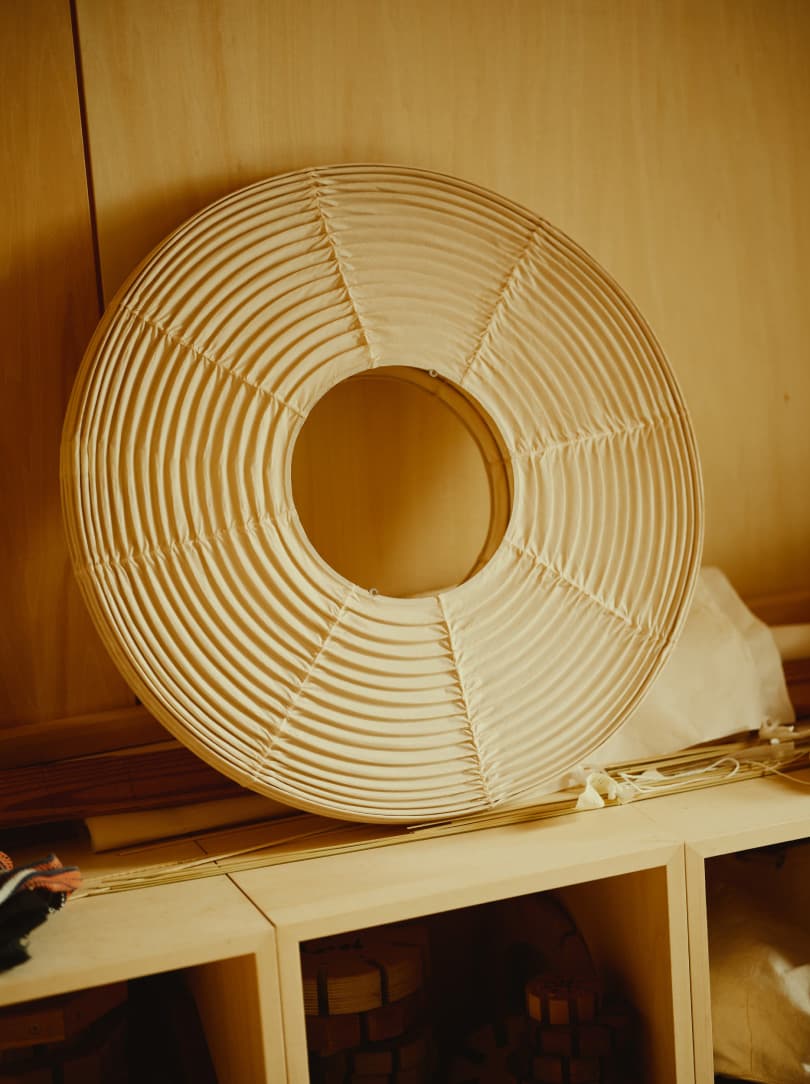
International attention has continued to grow through collaborations with contemporary brands and design initiatives. For the Dior Bamboo Pavilion in Tokyo’s Daikanyama district, Kojima Shoten created monumental hand-painted lanterns that were placed throughout the concept store’s vast circular atrium, which was designed to evoke the feeling of standing inside a giant Japanese lantern. Some were painted with Dior’s floral motifs and logos, while others were shaped in homage to the fashion house’s iconic Lady Dior handbag. “A decade ago, I never would have imagined we’d receive a request like this,” Ryo says. “I strongly feel that traditional crafts, including lantern-making, are really being given a lot of attention today.
“A decade ago, I never would have imagined we’d receive a request from Dior. I strongly feel that traditional crafts, including lantern-making, are really being given a lot of attention today.”
As the workshop gradually comes to life, workers arrive one by one, cheerfully greeting both their employers and each other. There are 10 in total. Like the Kojima family, many are dressed in monochrome layers and denim, tying simple black aprons over their company sweatshirts or white T-shirts before settling quickly back into the previous day’s work. The diamond-shaped logo printed on each sweatshirt was redesigned in recent years by their brand director, Shusuke Matsubara, a Kyoto-based creative director known for his work across design, hospitality and traditional craft projects. As Ryo explains, it references the traditional symbols of light, incorporating motifs of the sun, moon and stars.
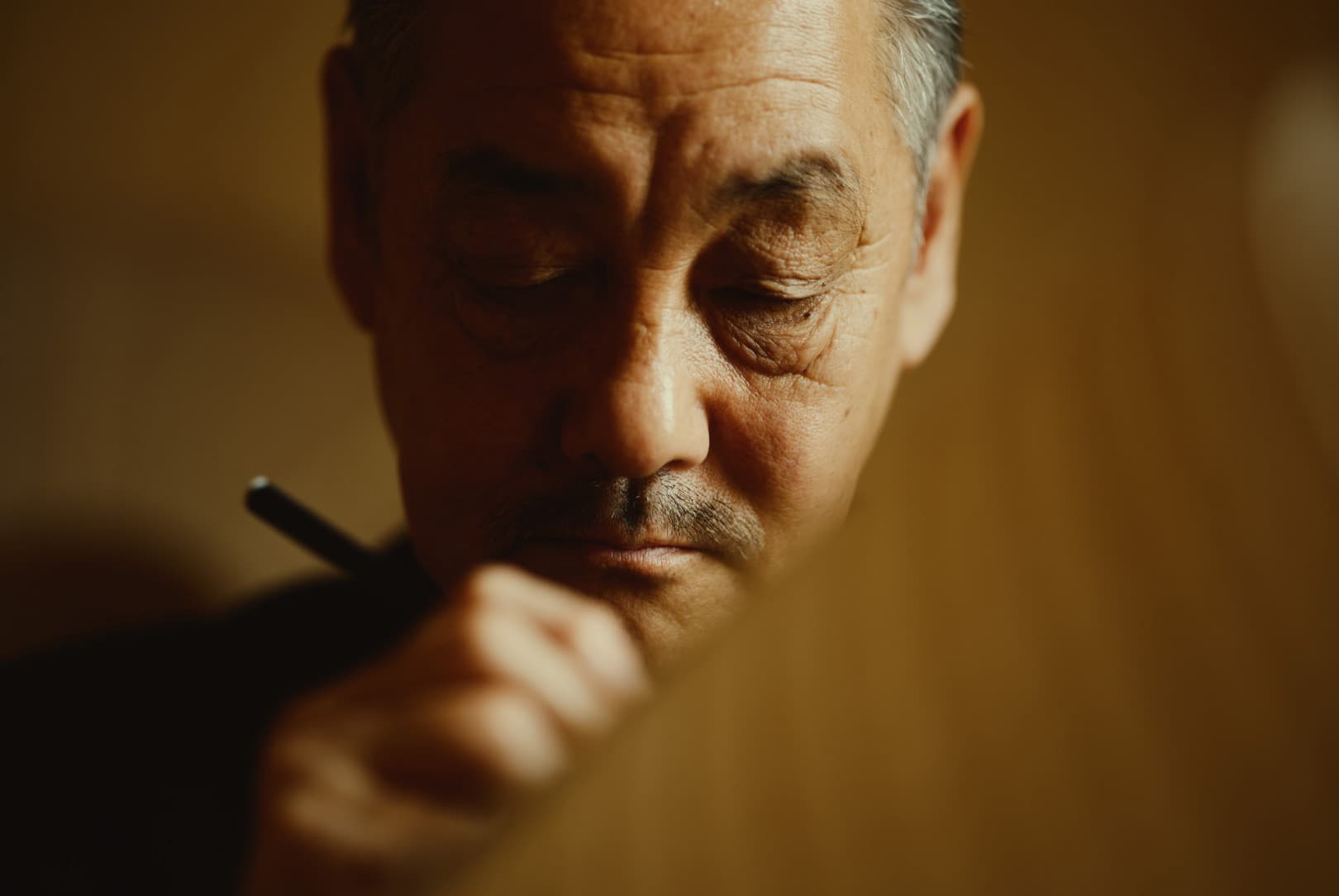
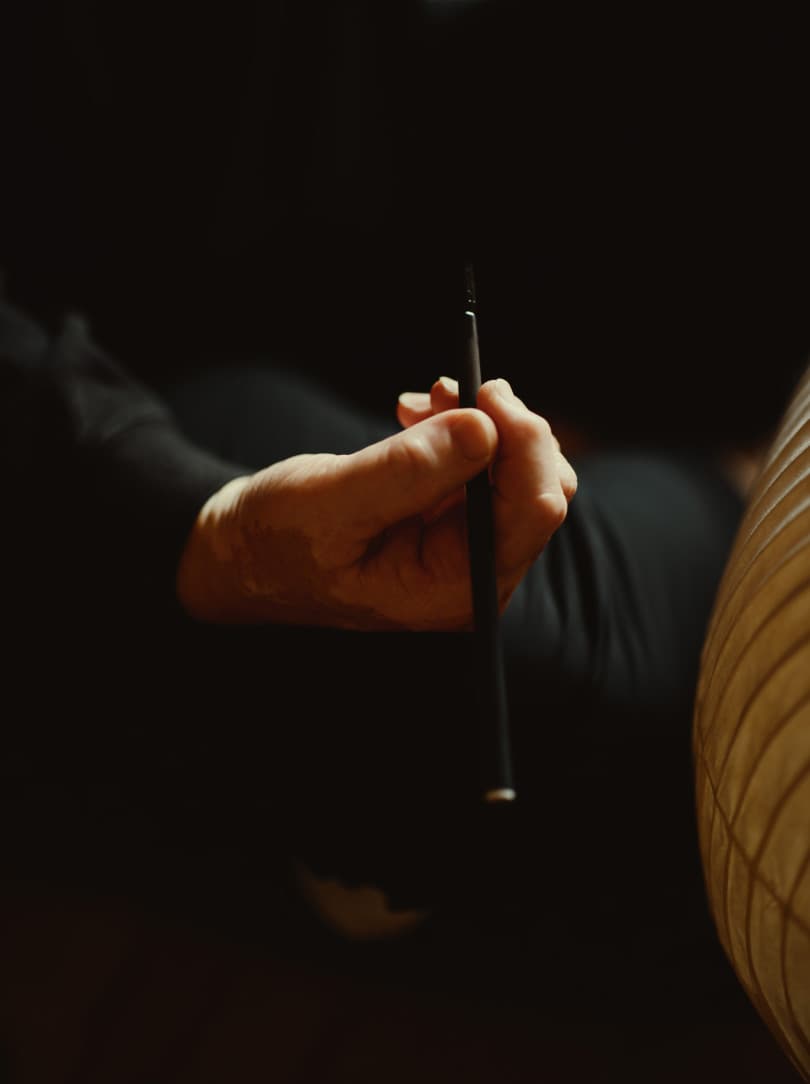
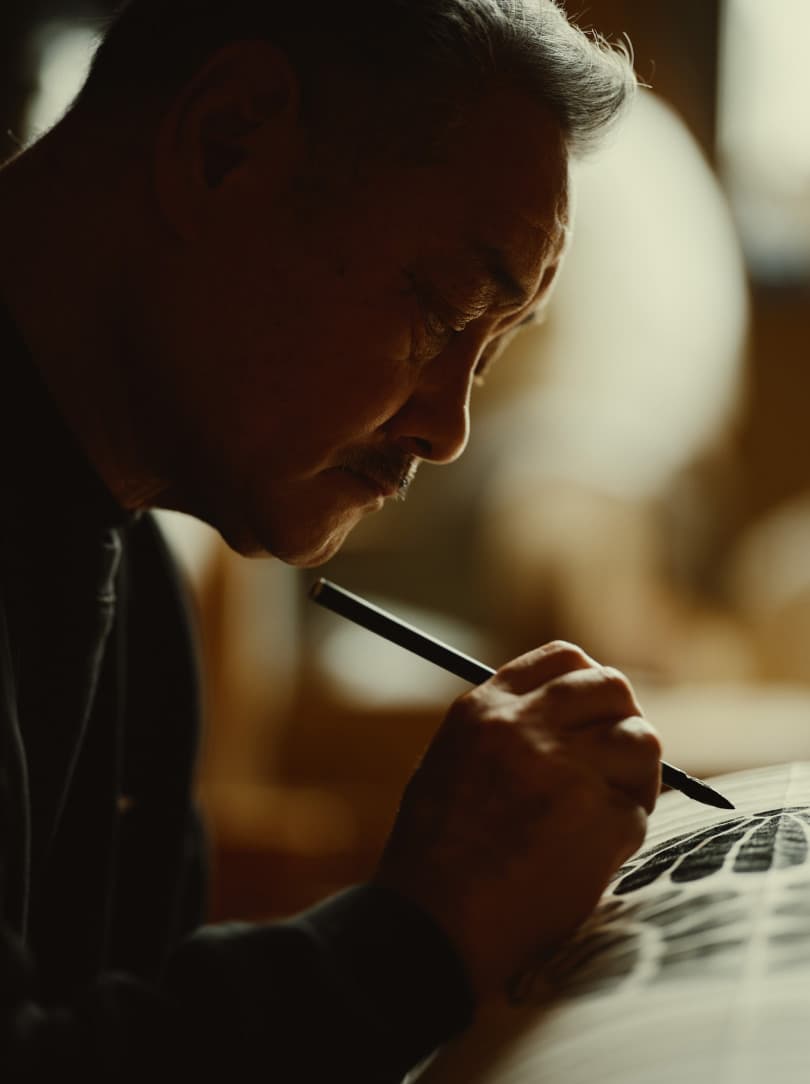
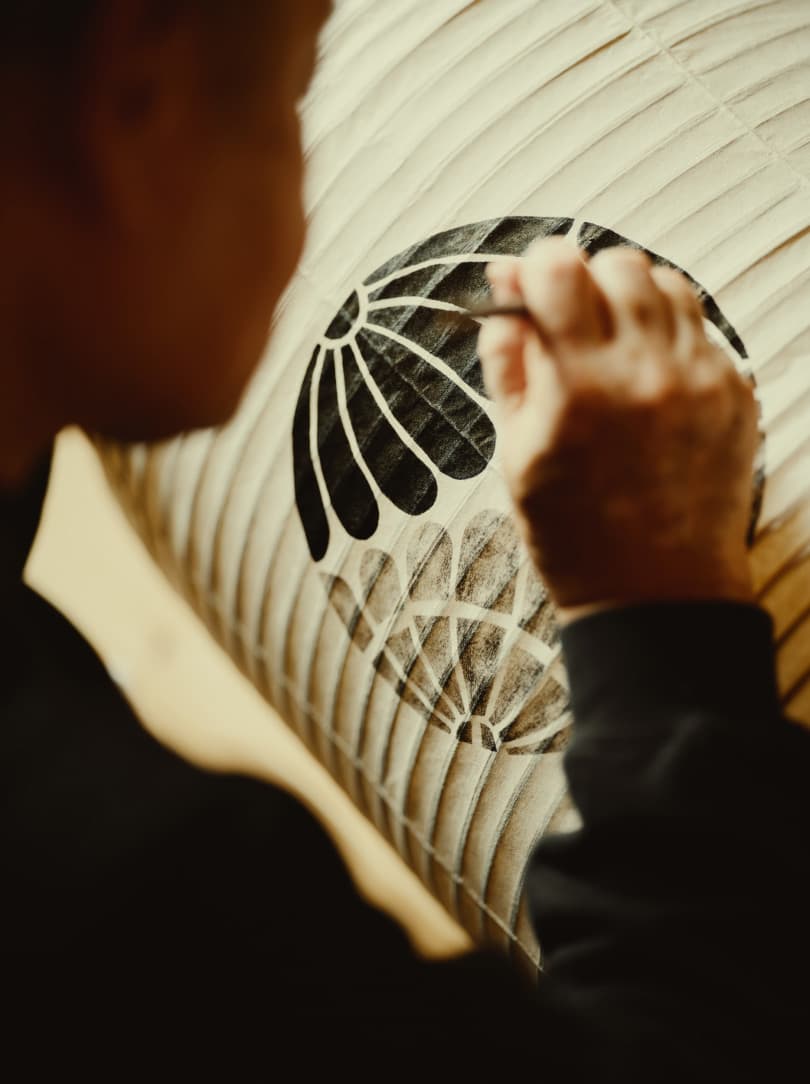
Mamoru, Kojima-san senior, is already absorbed in his first task of the morning. Sitting cross-legged on the floor, he paints a circular floral pattern onto the surface of an ovoid-shaped lantern resting on its side in front of him. One hand steadies a stencil against the washi paper while the other moves carefully with the brush, applying black pigment in slow, deliberate strokes. Every so often he leans back slightly and dips the brush into a glass jar of paint resting beside him on a tray.
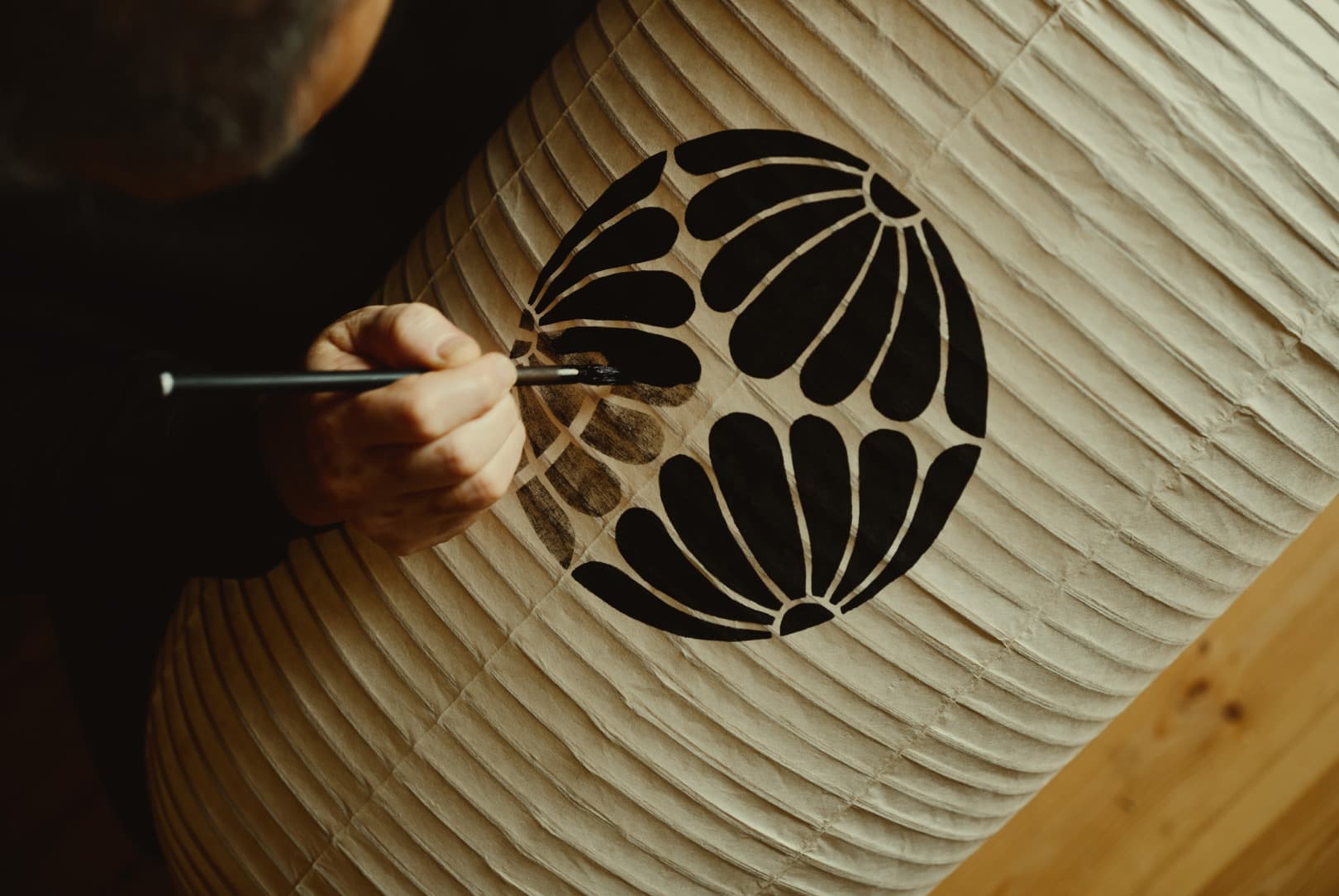
Painting is a relatively recent addition to Kojima Shoten’s process. “Originally, we were only manufacturing lanterns and selling them wholesale,” Ryo explains. “We delivered plain white lanterns to lantern shops, so there was no real reason for us to do the painting ourselves.”
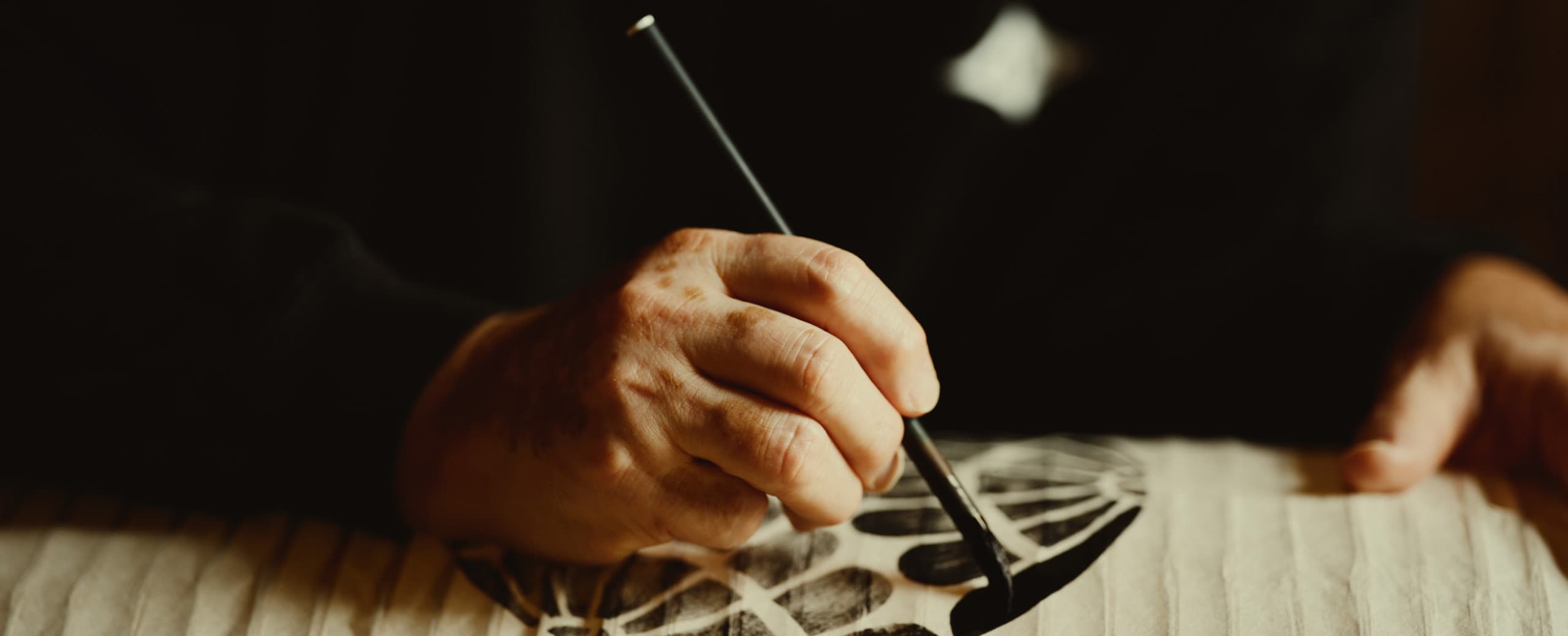
For generations, specialist painters completed that stage of production. He tells us that his father was guided by a principle that the workshop should not take work away from fellow craftspeople. But as the number of specialist painters dwindled, he made a decision. “There were fewer and fewer people doing the painting,” Ryo says. “My father felt he should be able to do everything, so he started painting the lanterns, too.”
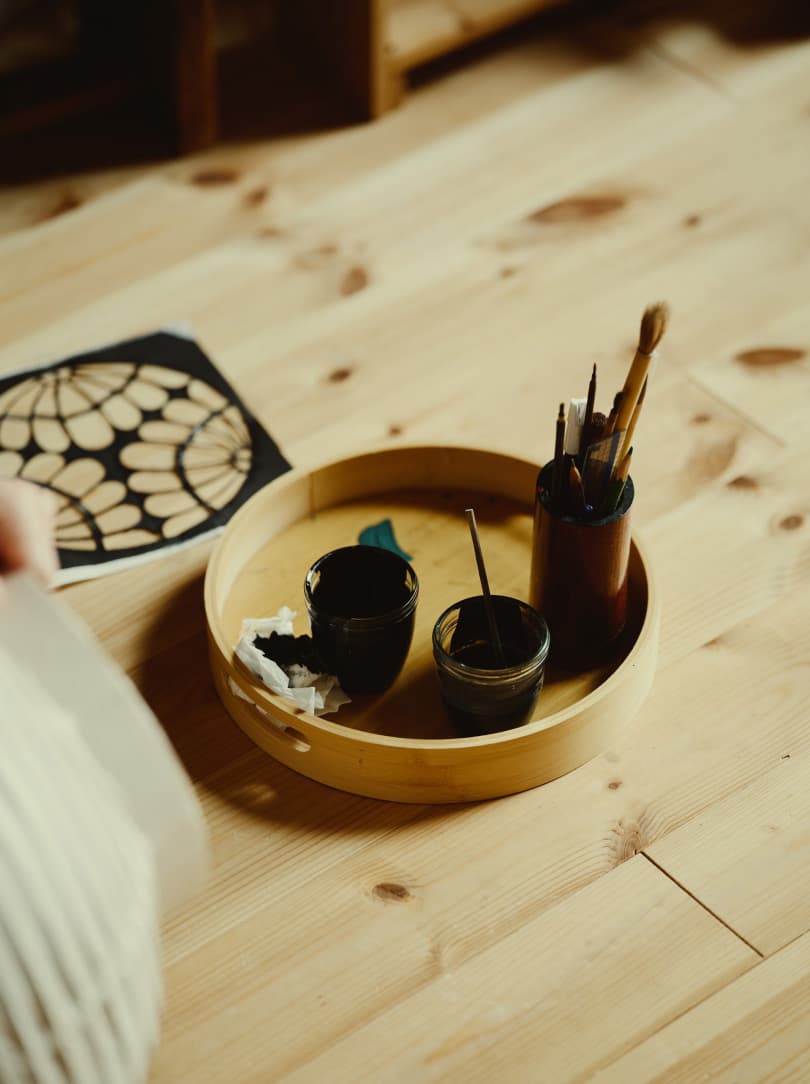
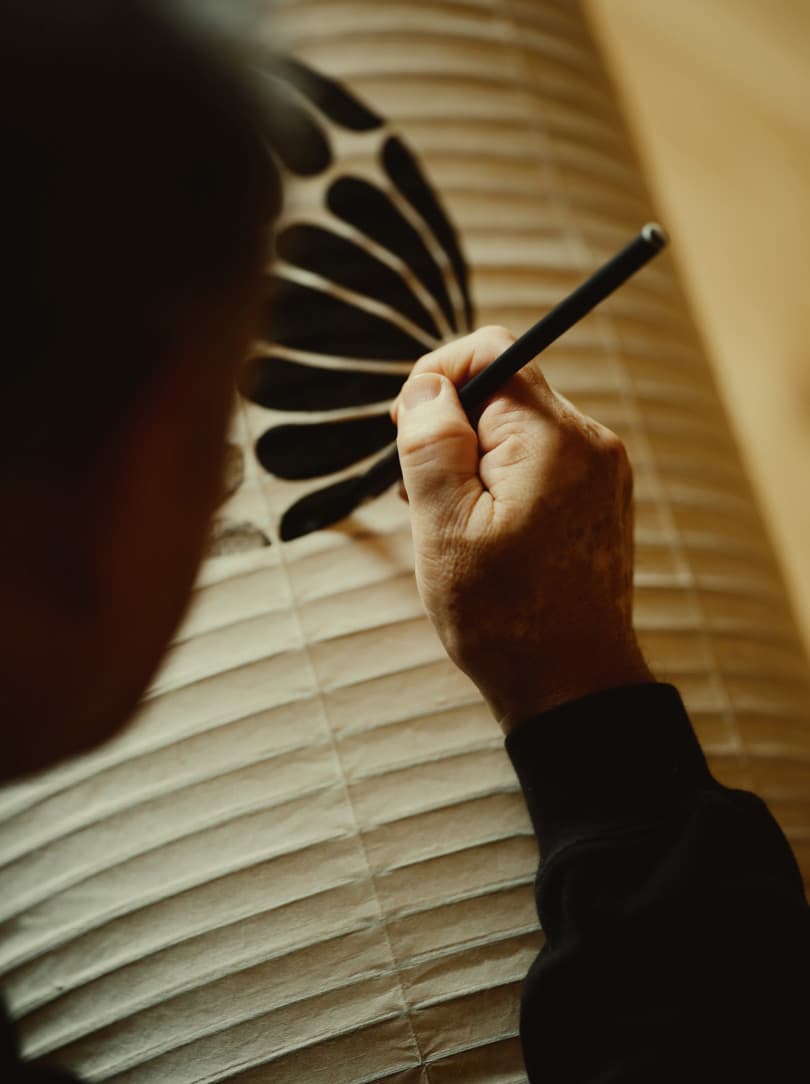
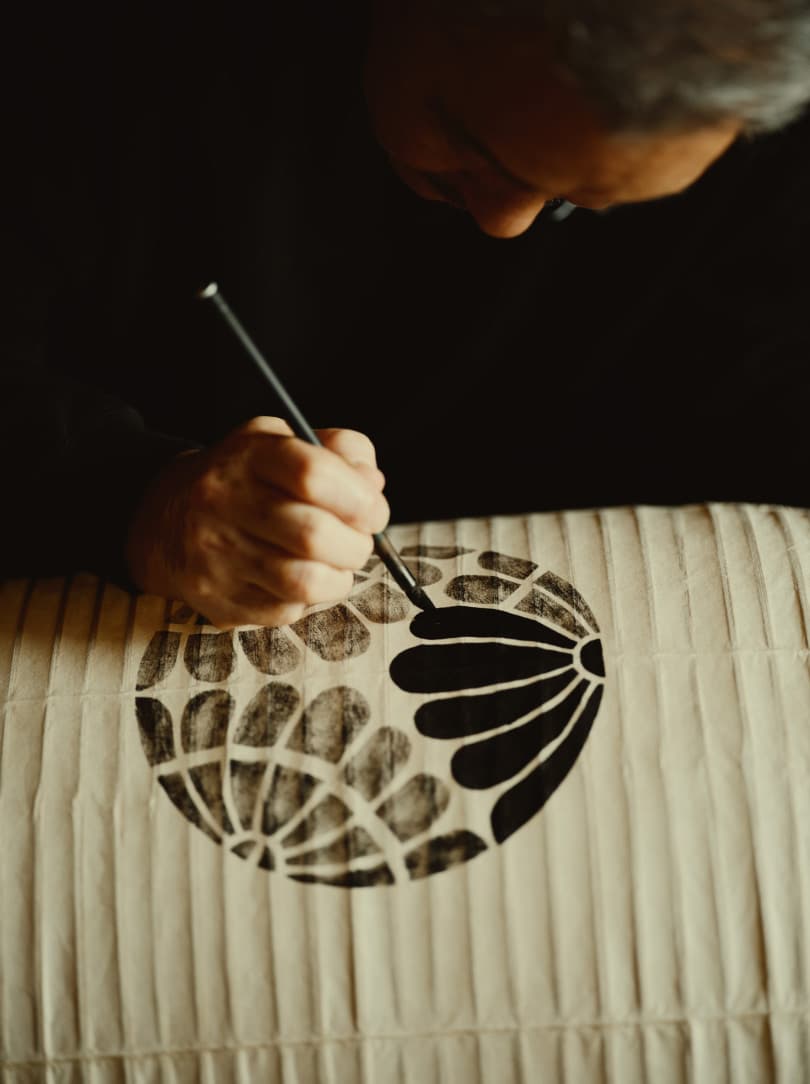
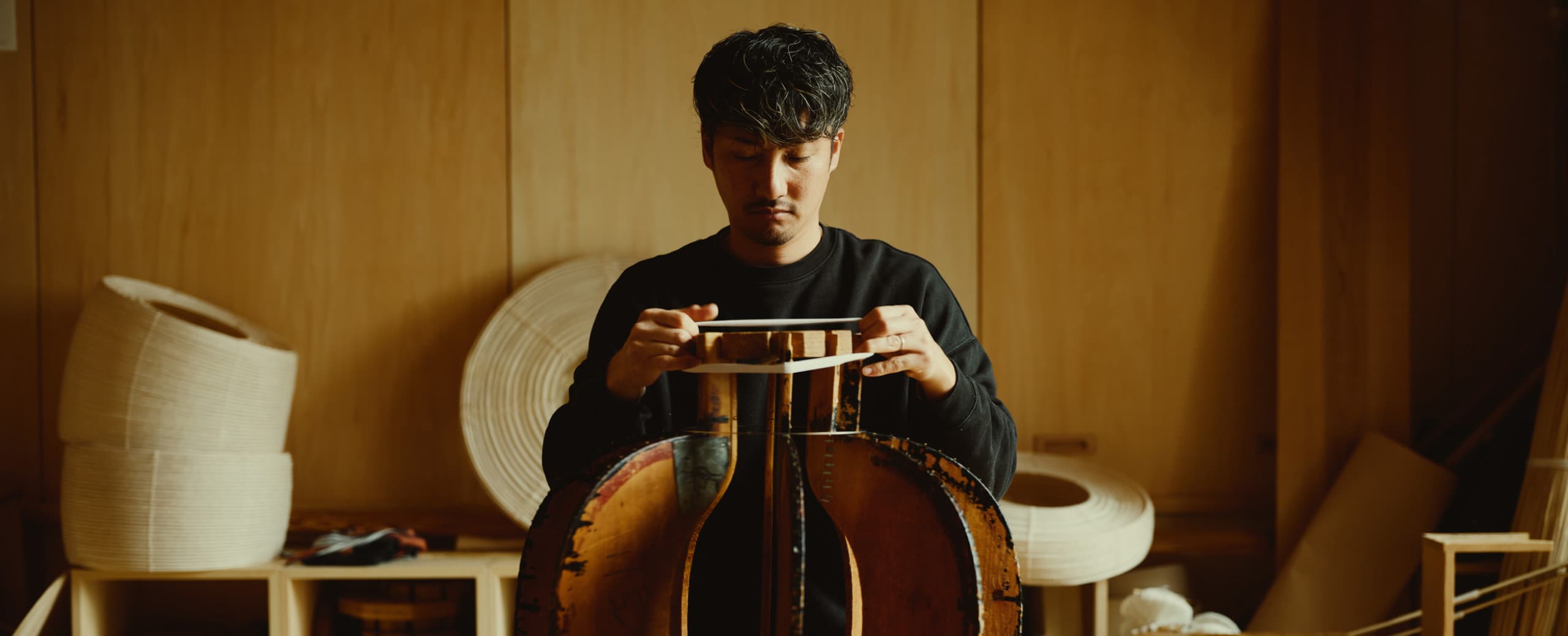
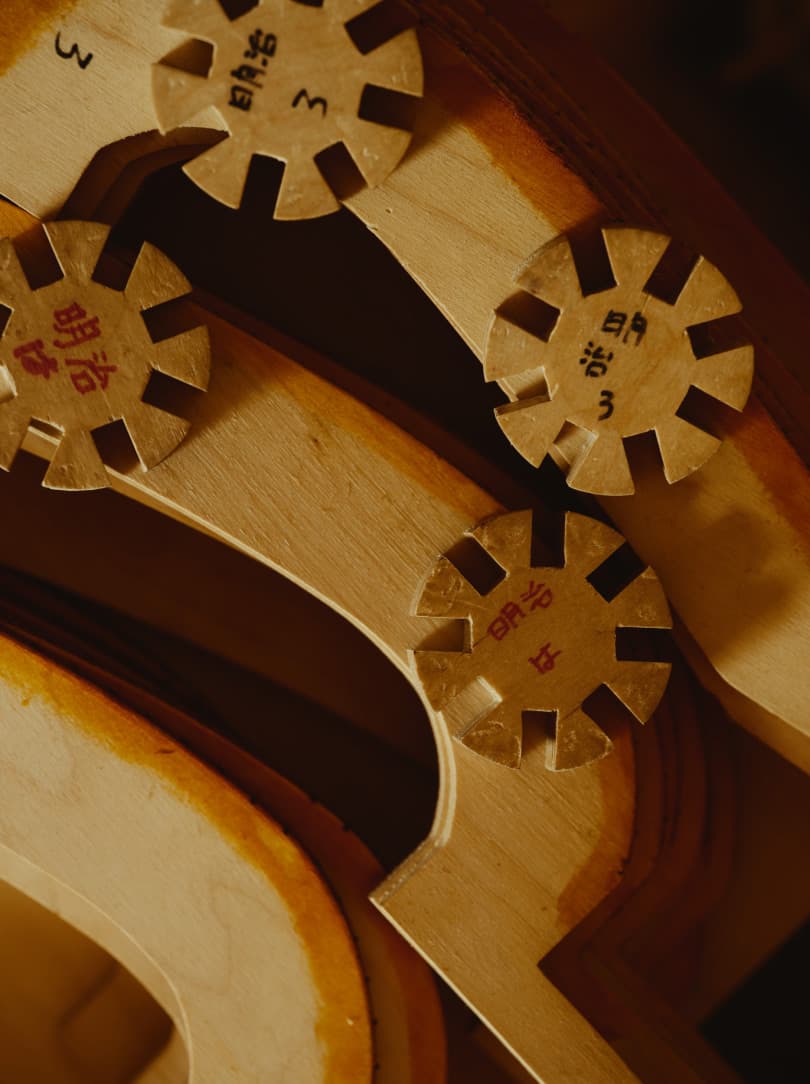
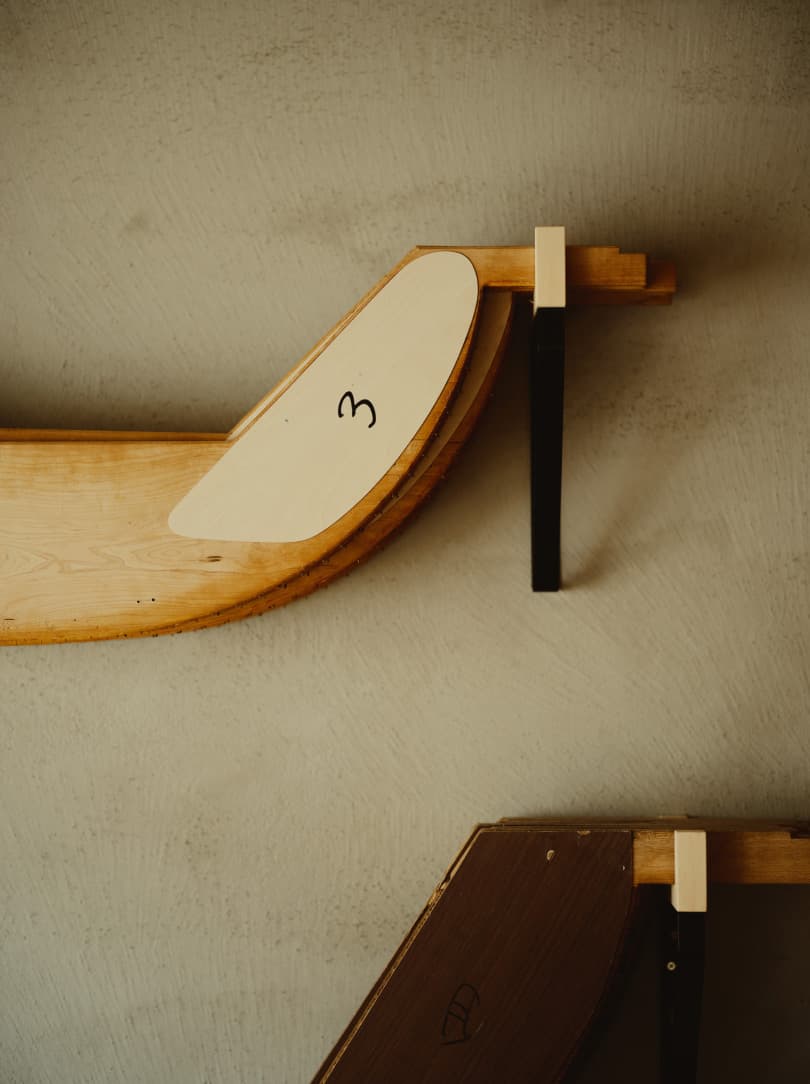
This step, however, is the last of nine. The first, ‘take-wari’, or bamboo splitting, we already witnessed with Syun. Now we follow Ryo as he begins the second stage: assembling the wooden mould, or ‘Katakumi’, many of which were made by his grandfather.
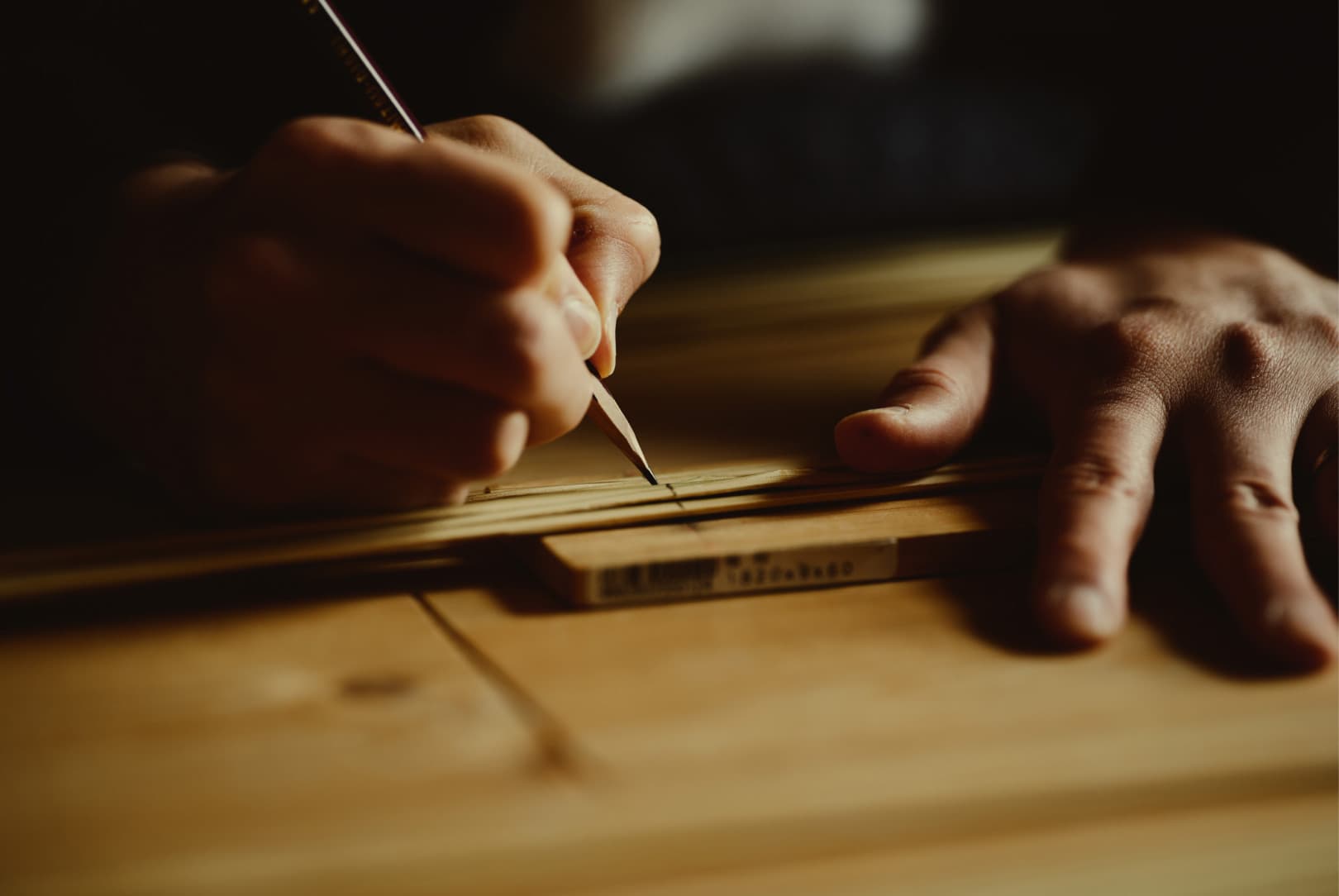
“There were fewer and fewer people doing the painting. My father felt he should be able to do everything, so he started painting the lanterns, too.”
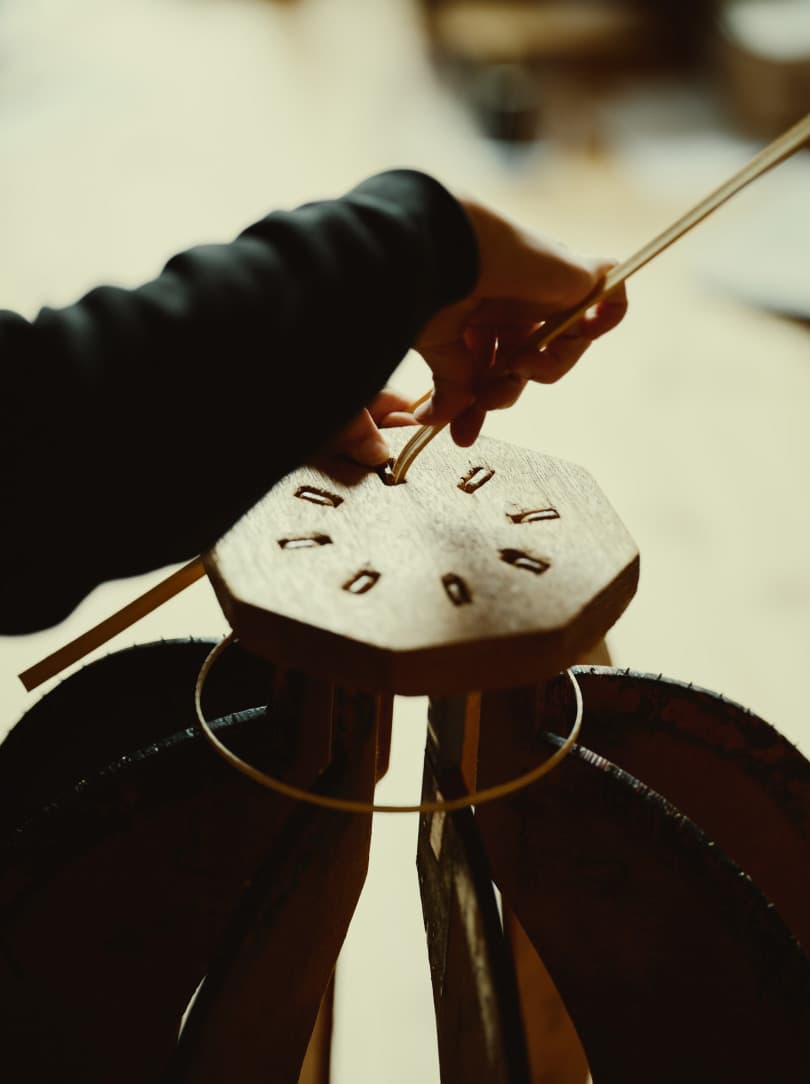
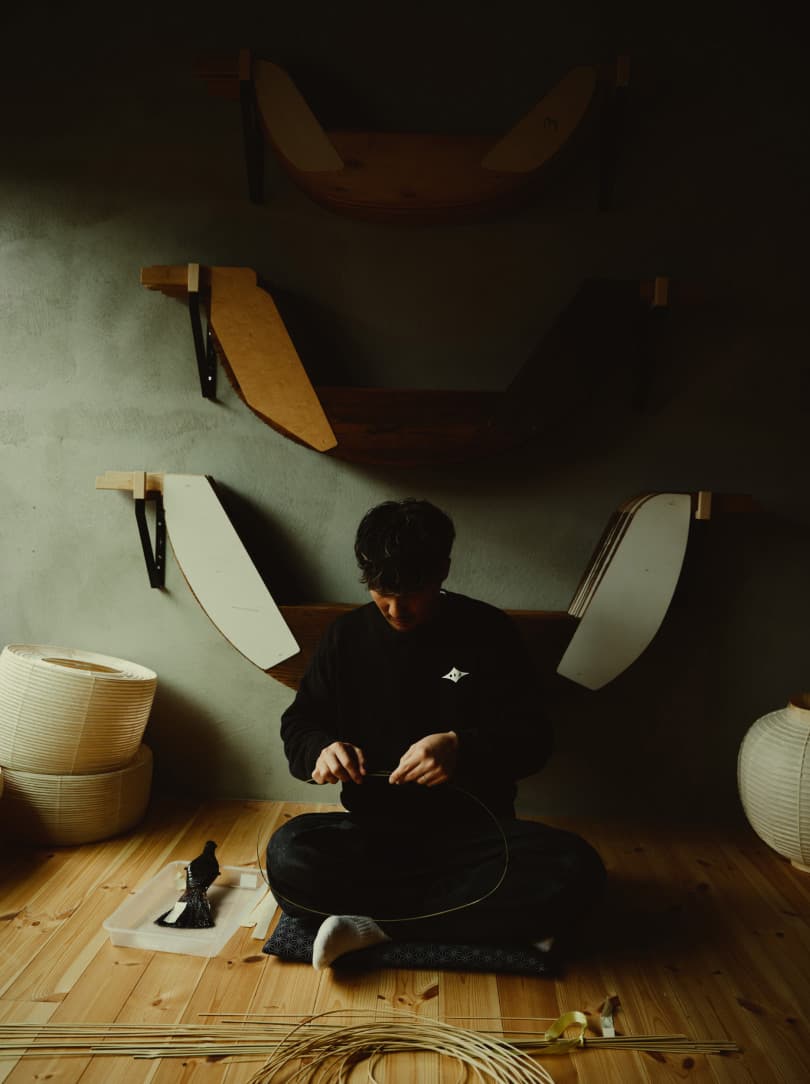
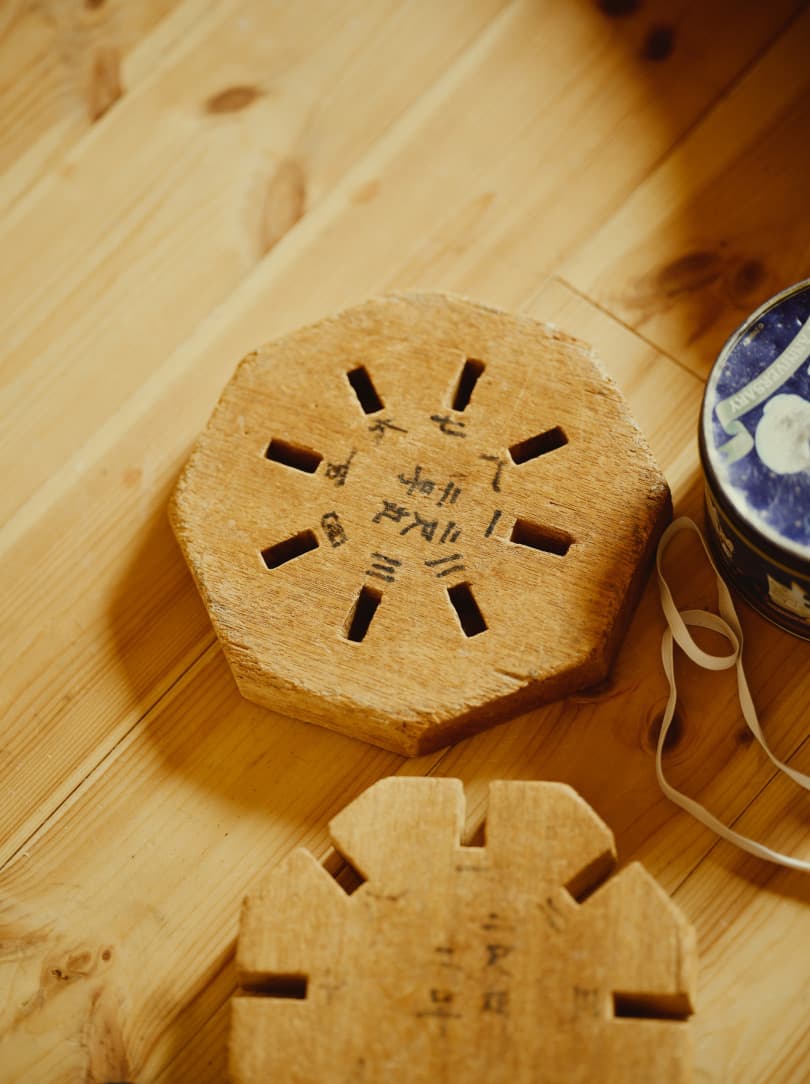
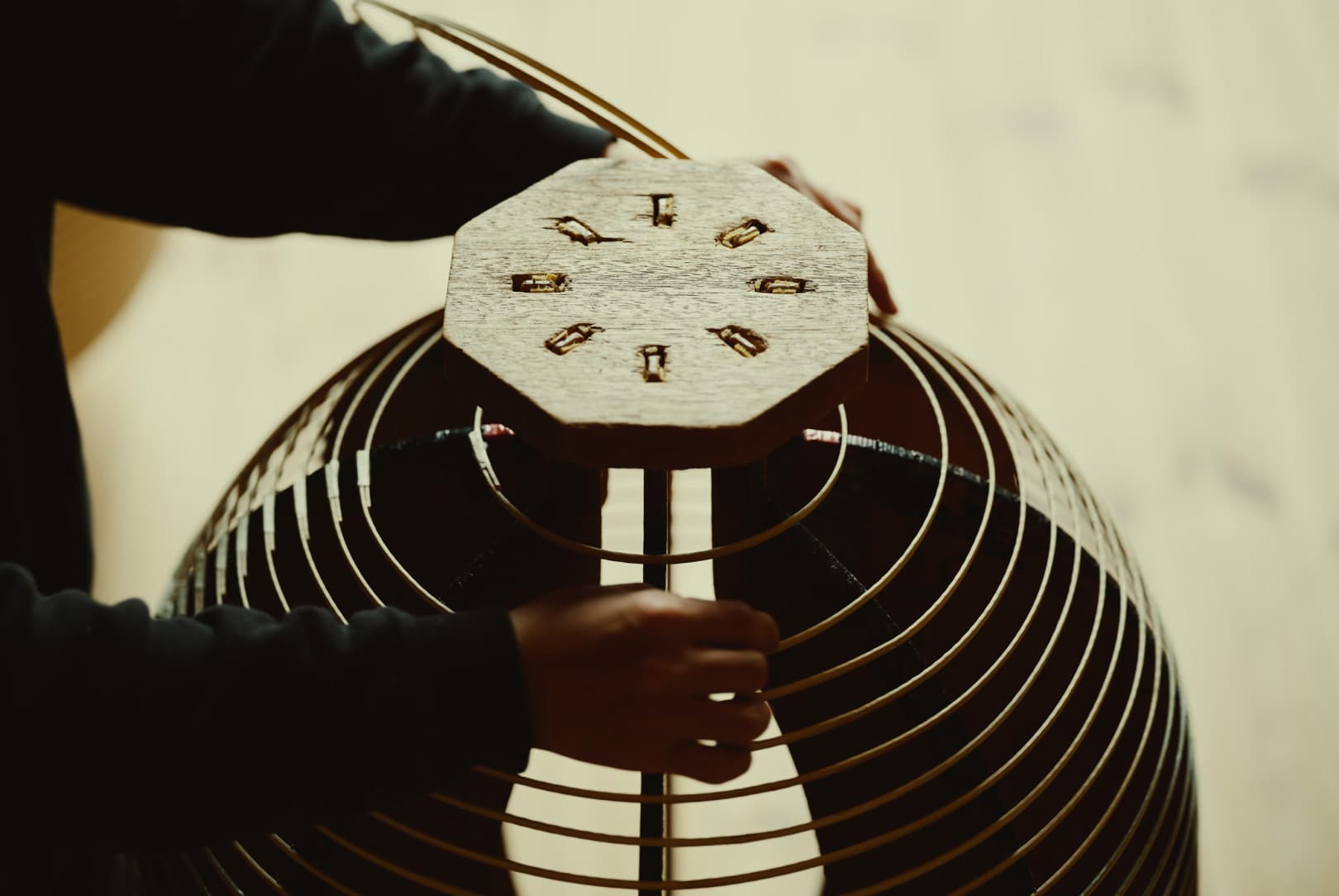
Kneeling on a thin cushion, he slots eight curved wooden sections into a circular base, securing them with a wire ring before fitting a second grooved piece on top to lock everything into place. A white elastic band provides additional stability as bamboo strips are inserted into the holes above, their protruding ends snapped off once aligned.
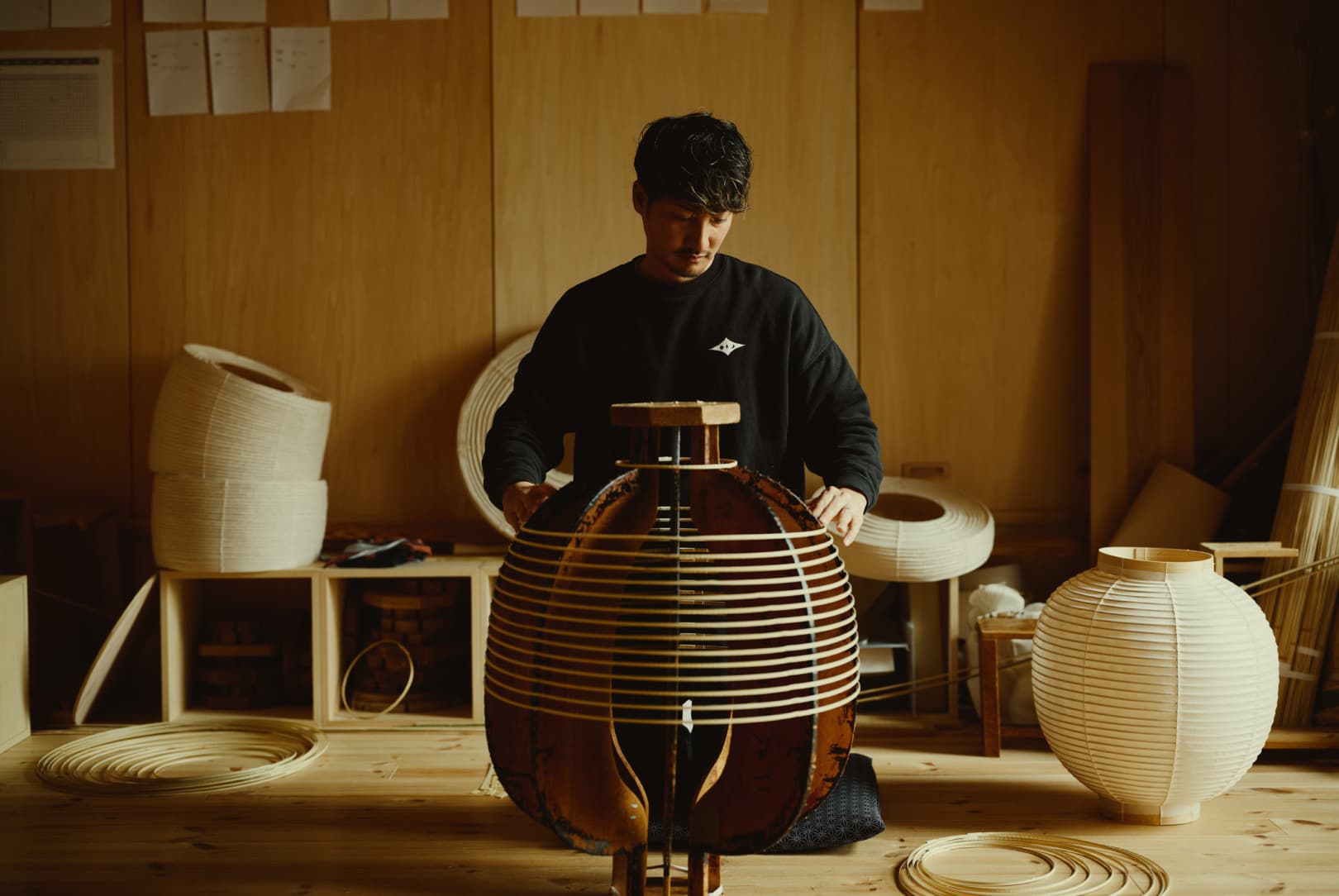
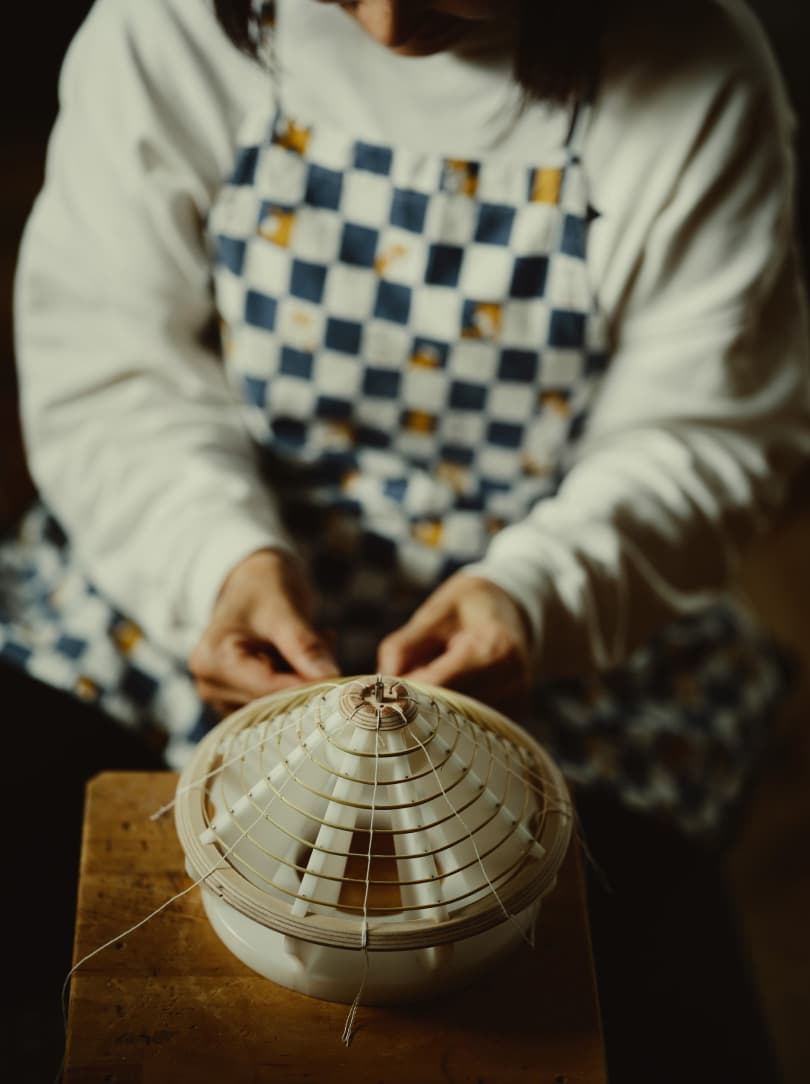
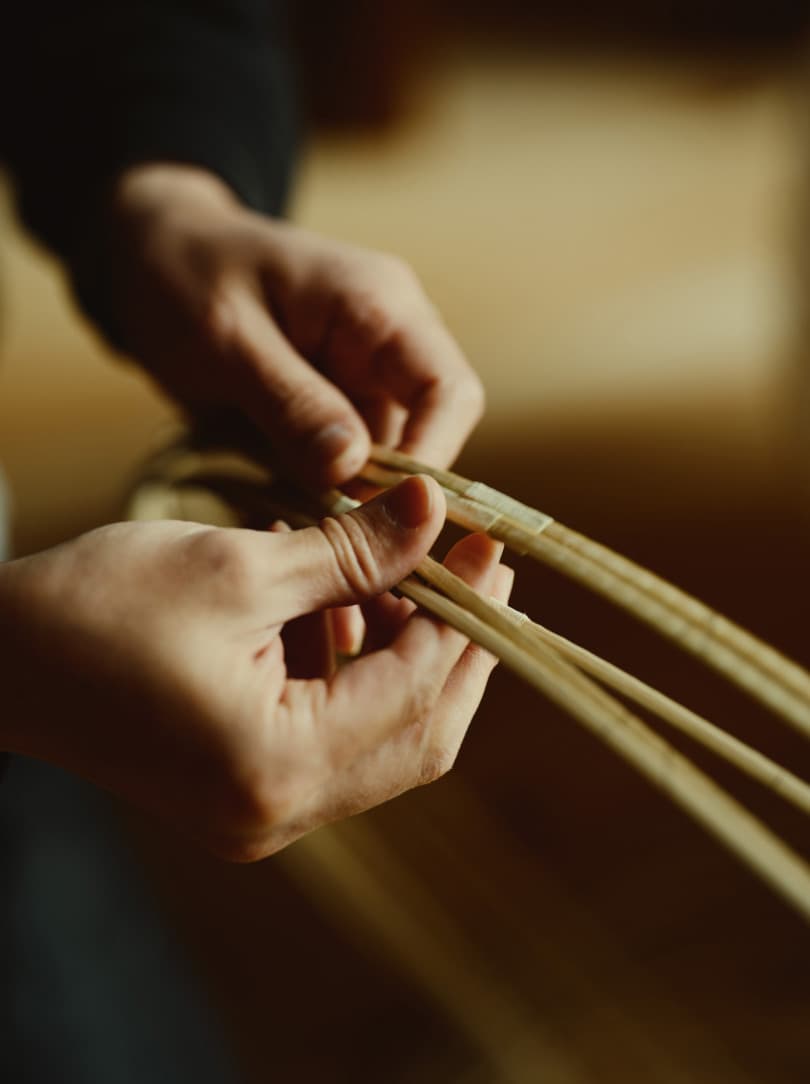
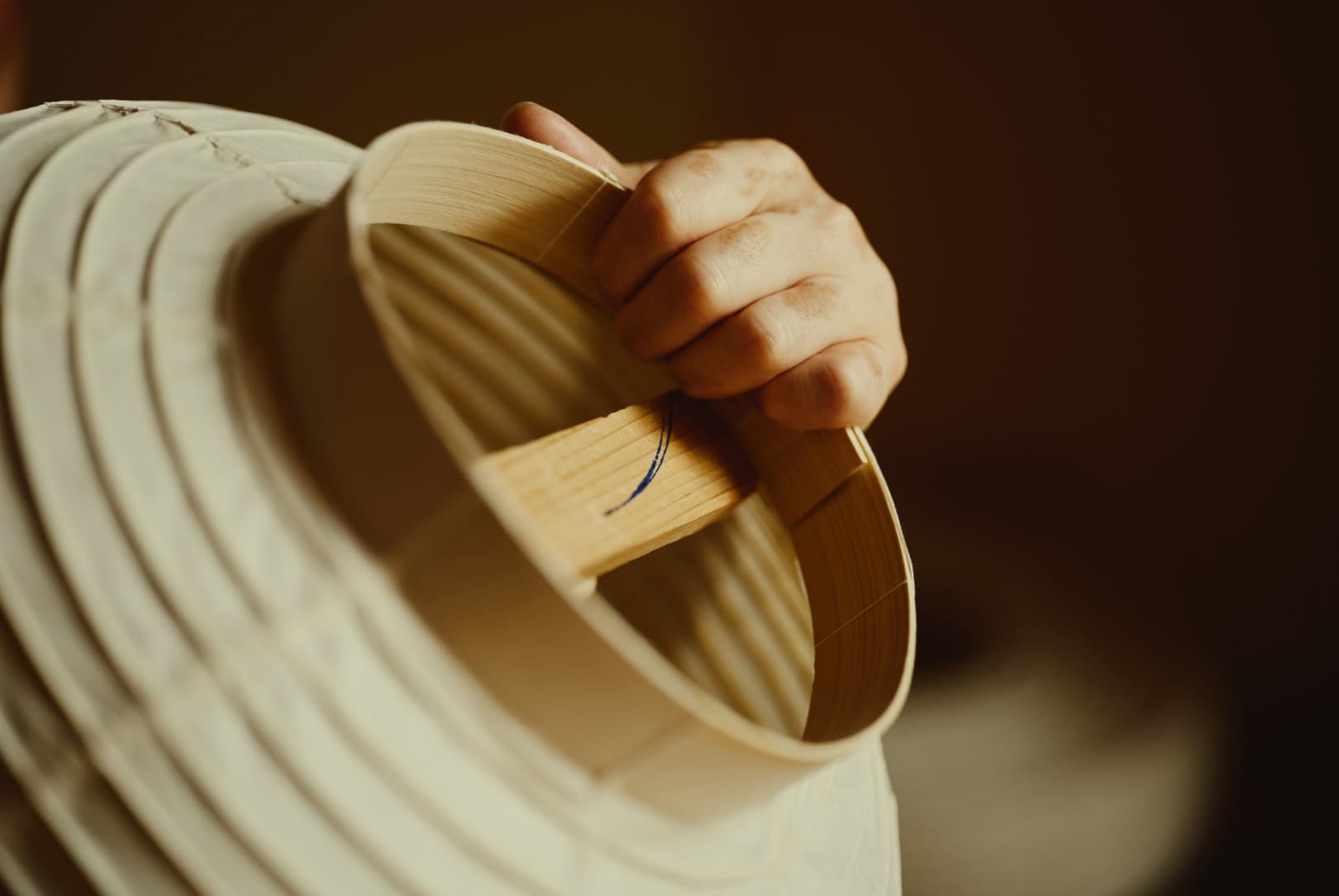
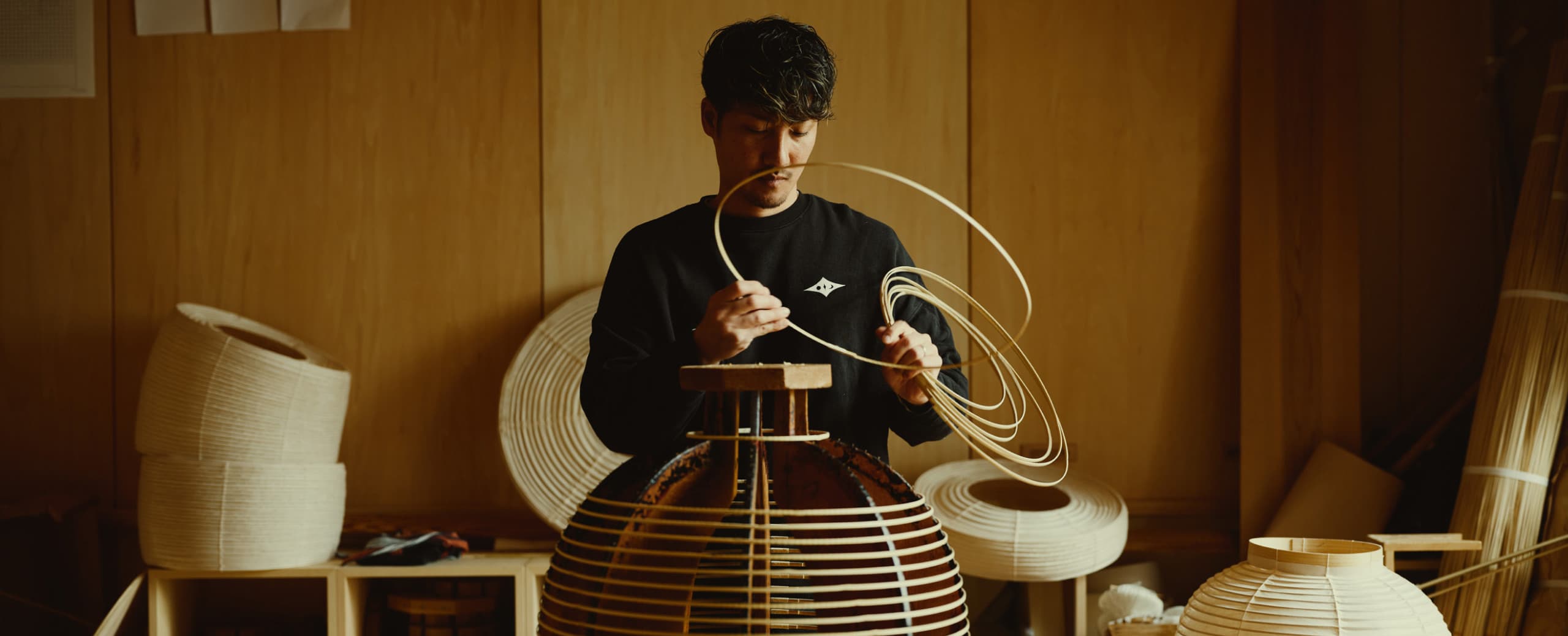
Running down the outer edges of the mould are tiny grooves lined with small nails, where the bamboo rings will sit. Gathering a bundle of custom-sized rings, Ryo carefully fits them one by one over the frame, beginning about two-thirds of the way down where the lantern is widest. This third stage, known as ‘Honekake’, or bone shaping, gradually transforms the mould into the recognisable skeletal form of a lantern. Once each ring is seated in its groove, he flips the mould over to fit the remaining pieces.
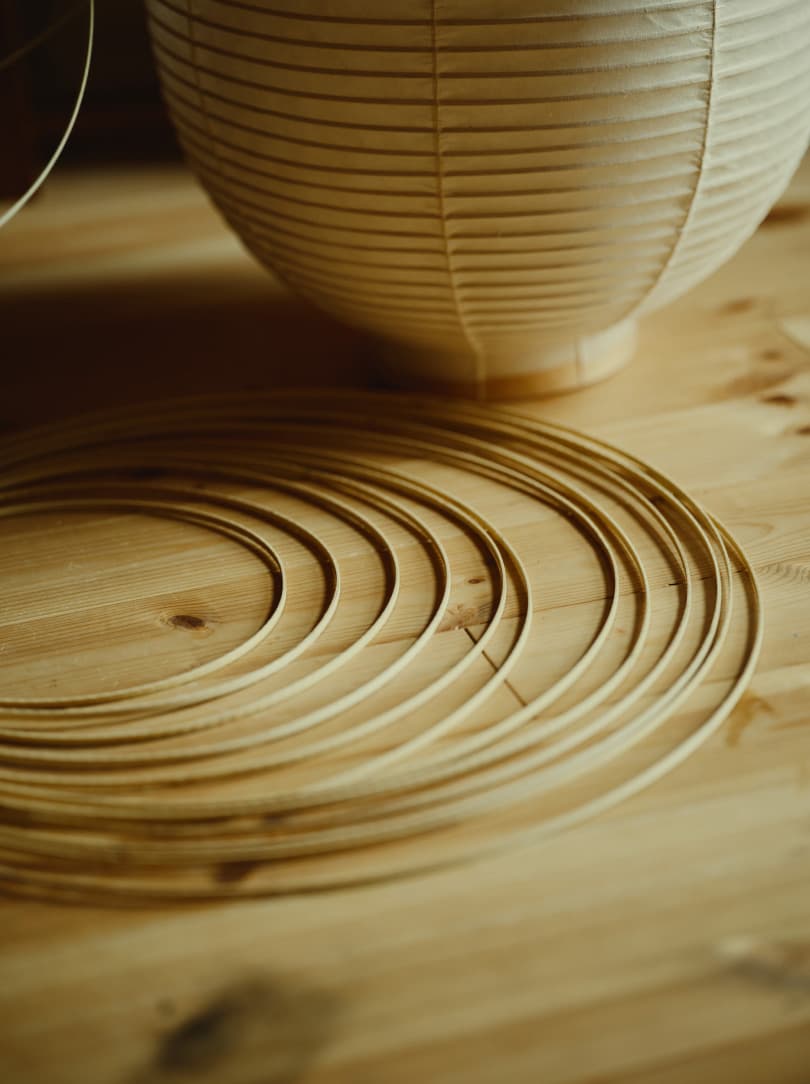
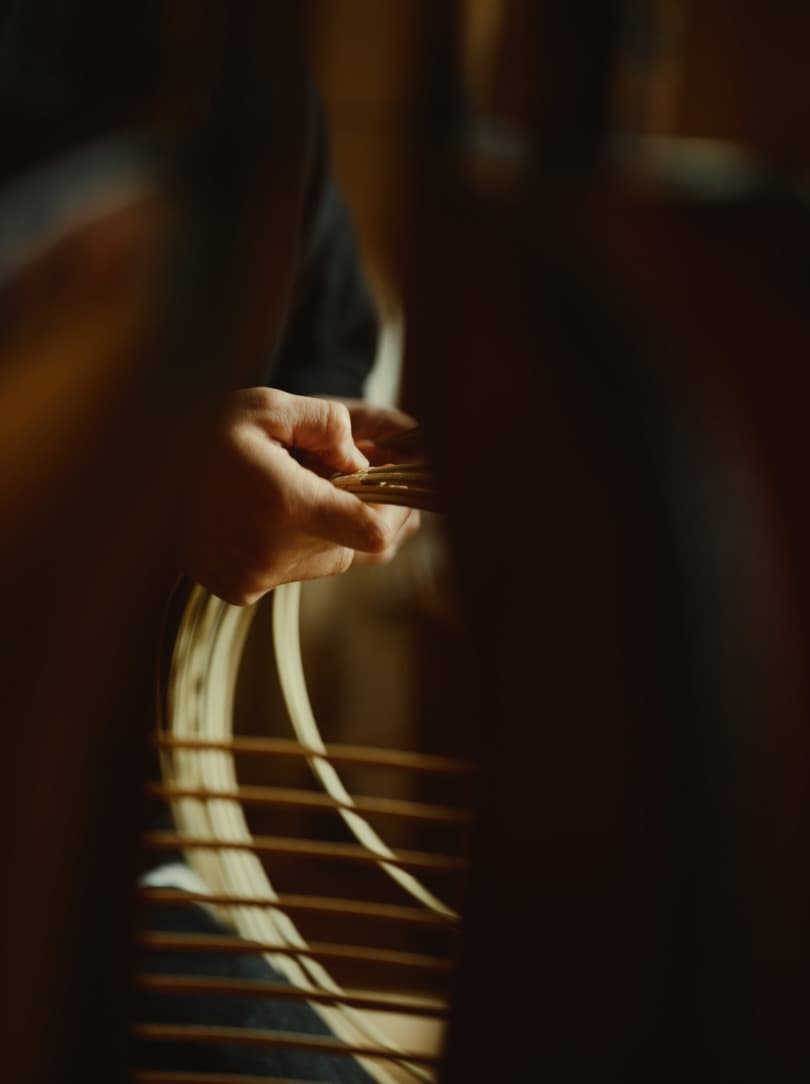
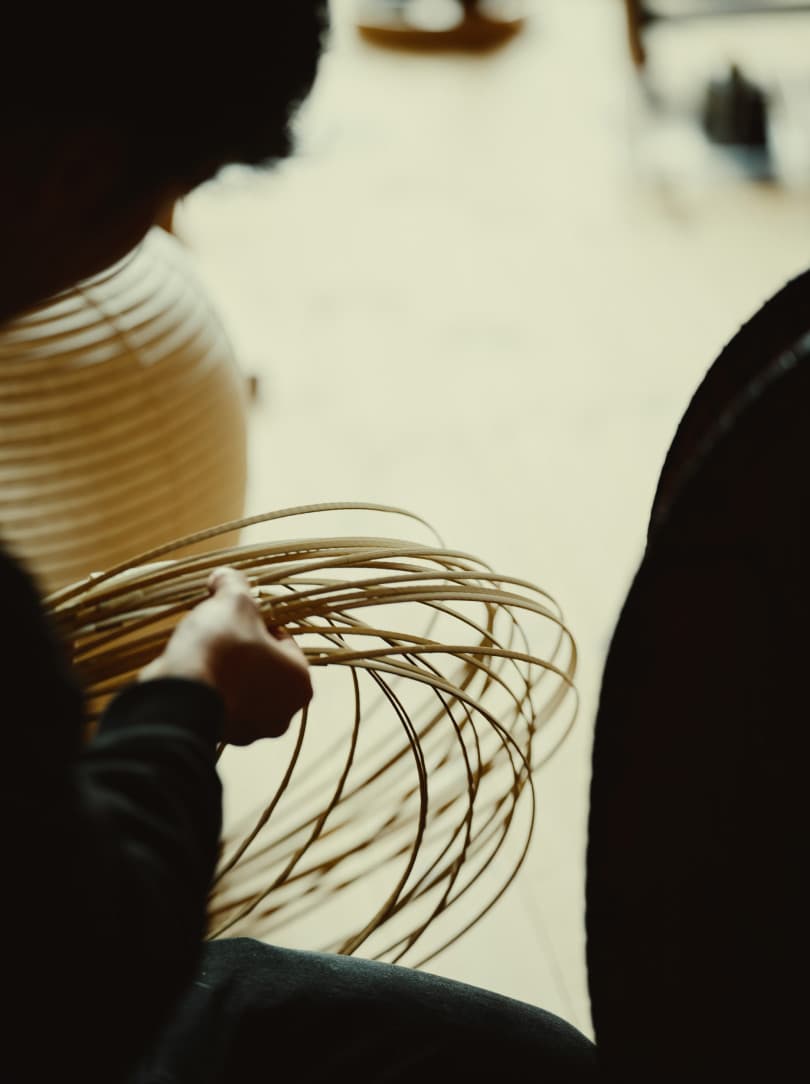
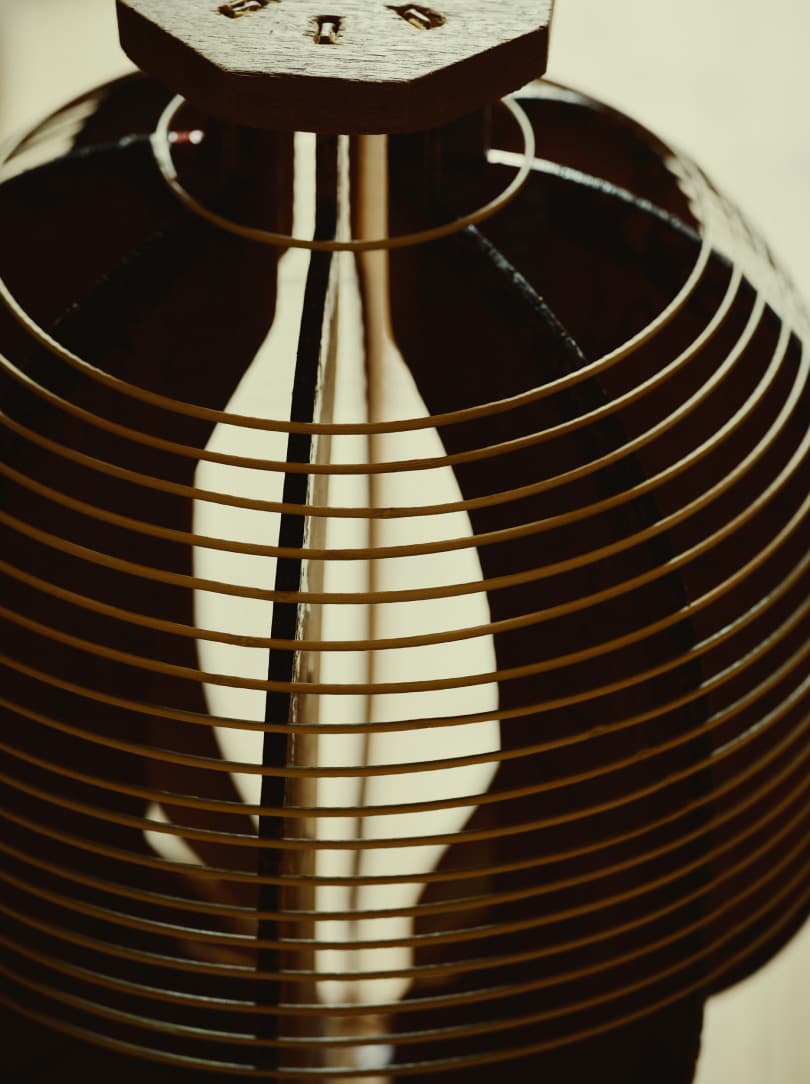
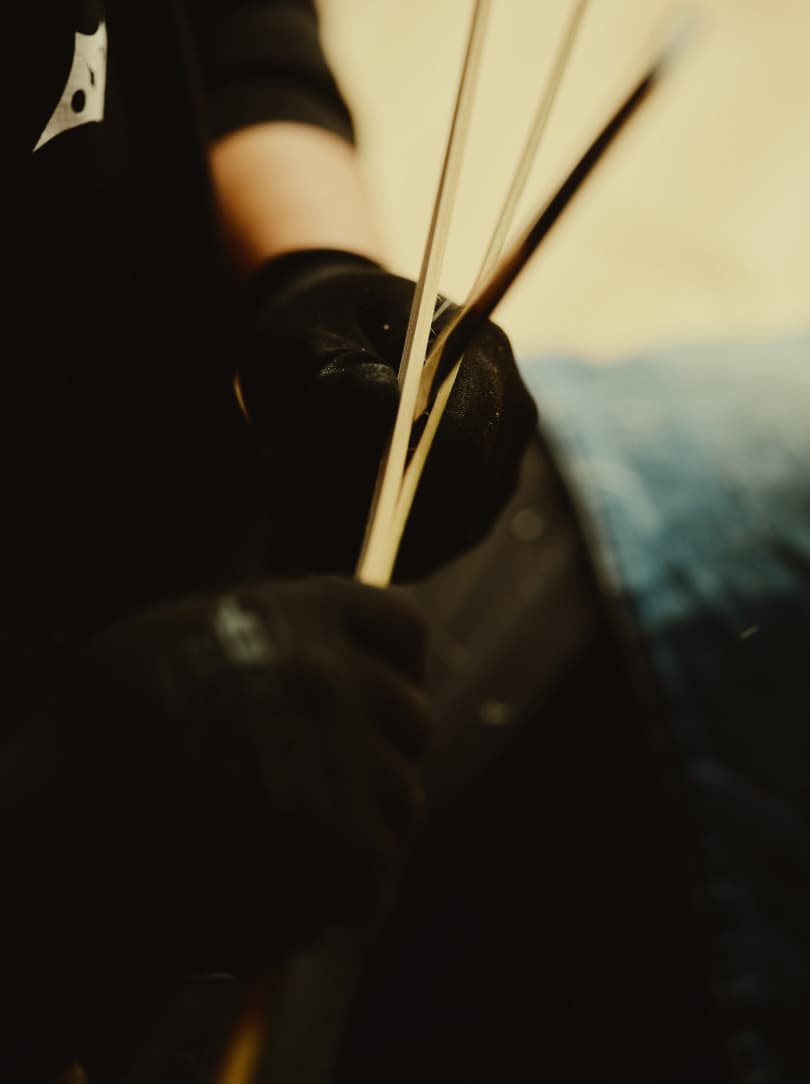
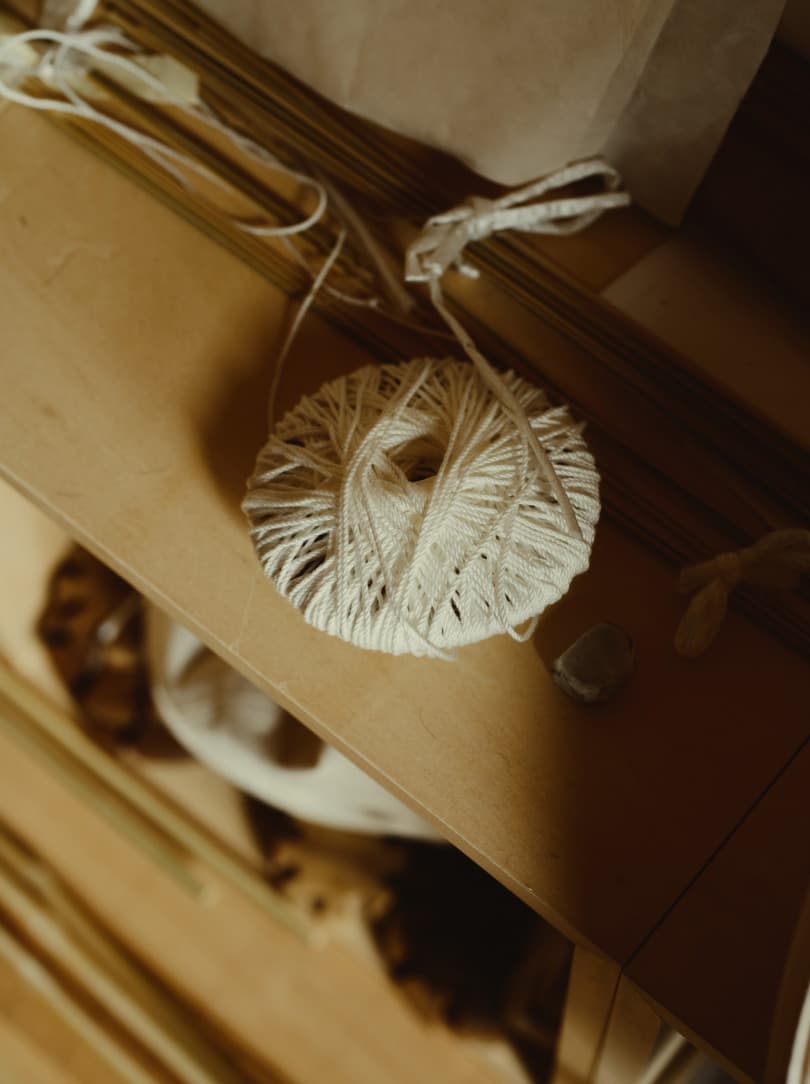
Next comes step four, ‘Itotsuri’: binding the rings together with white thread to hold the lantern’s shape. Traditionally the thread was made from hemp, though the workshop also uses Cremona, a durable synthetic cord. Beginning with a small knot at the top ring, Ryo threads the cord in, around and out of each using a thin tool to navigate the narrow gaps, before taking it all the way to the bottom, where it is tied off. This is repeated six times, between each section of the mould. To keep everything aligned, Ryo explains, “we use the thread, but we also measure with our fingers and hands. In the end, it’s a kind of fine-tuning guided by intuition.
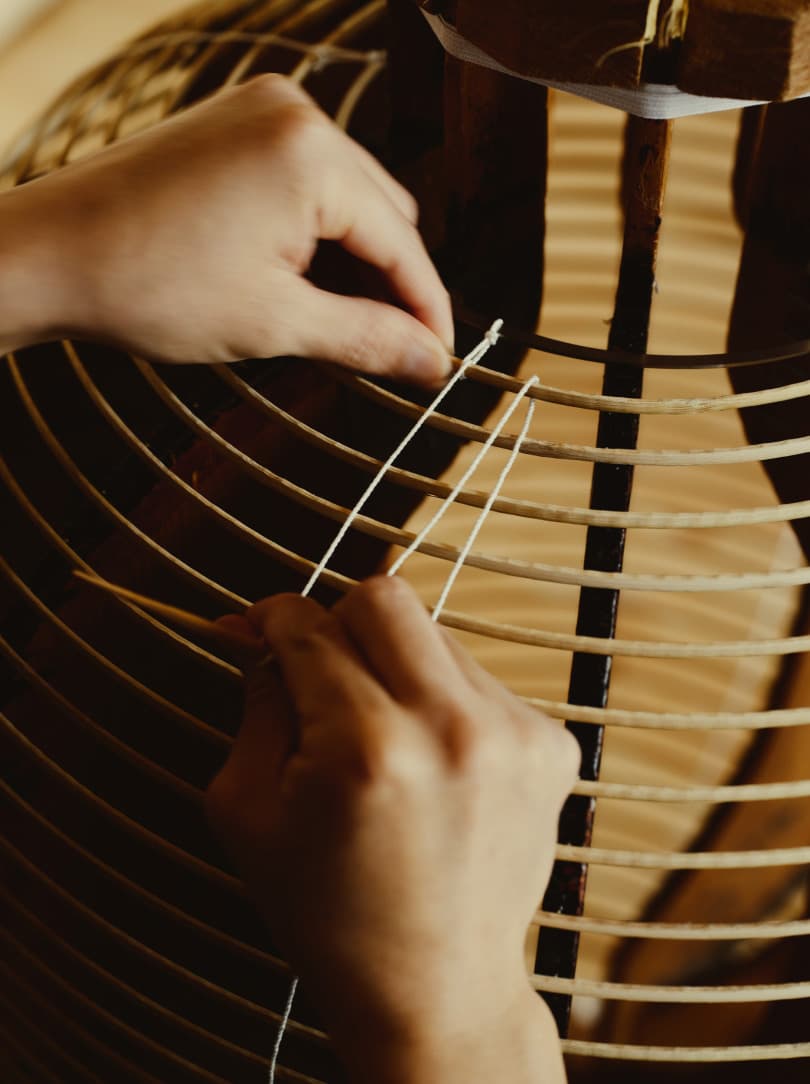
The thread is pulled tightly to keep the bamboo from shifting and to reinforce the lantern’s structure. “The biggest factor is strength,” he says. If the washi tears, the binding helps prevent the damage from spreading. Overall, it’s a tedious process, requiring patience and focus. Ryo’s father comes over to help, grabbing a cushion and sitting cross-legged opposite his younger son, the half-formed lantern connecting them as they work quietly.
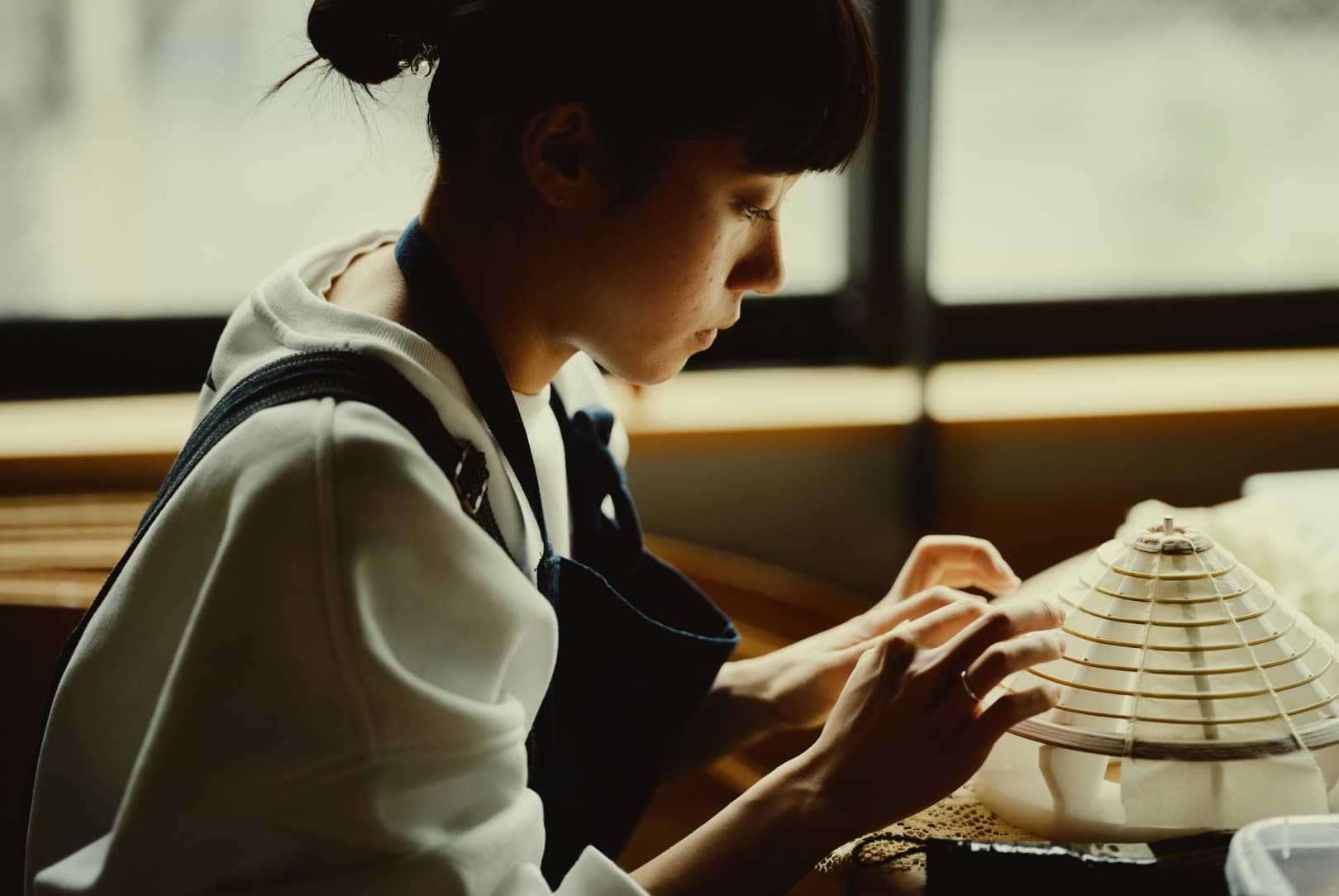
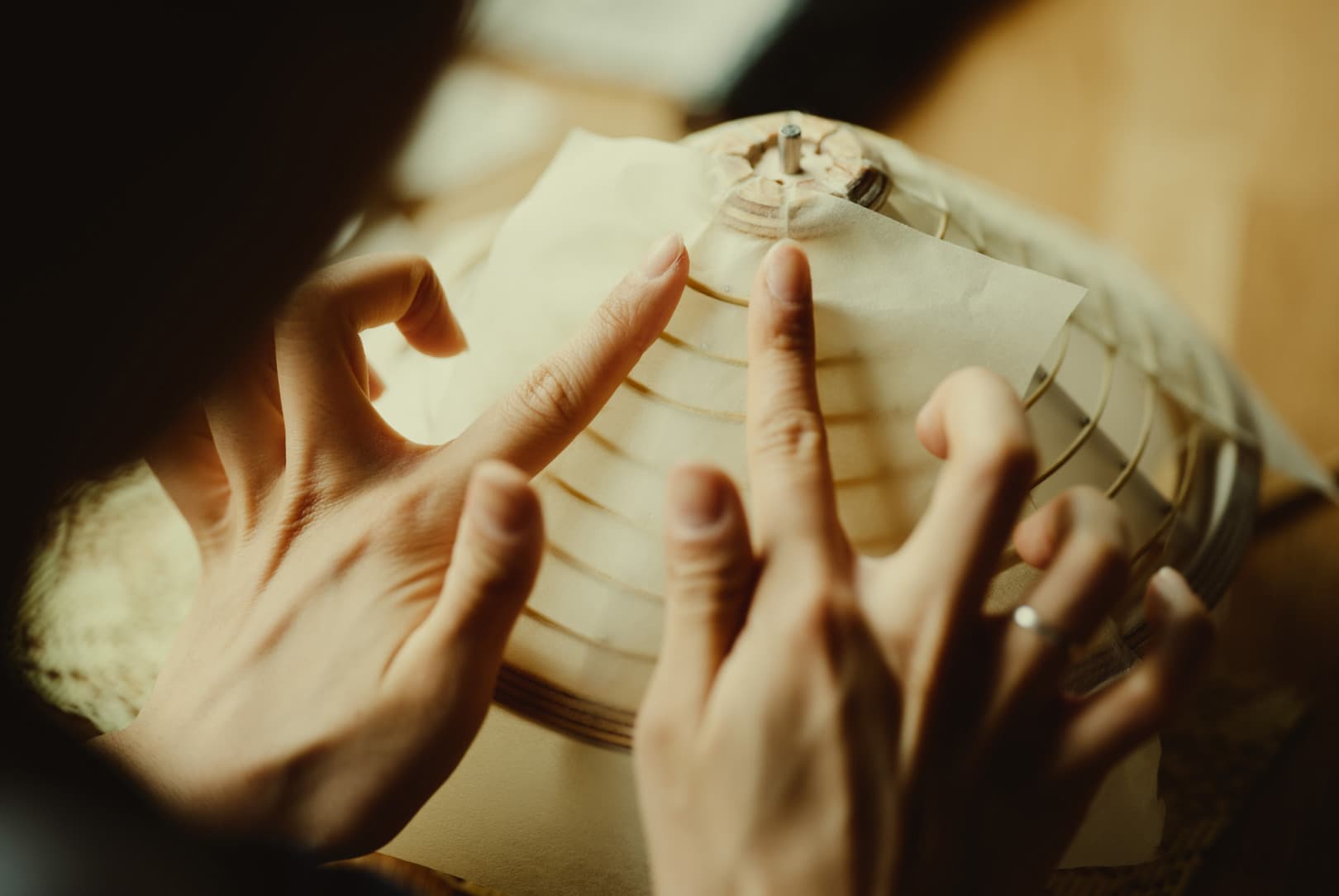
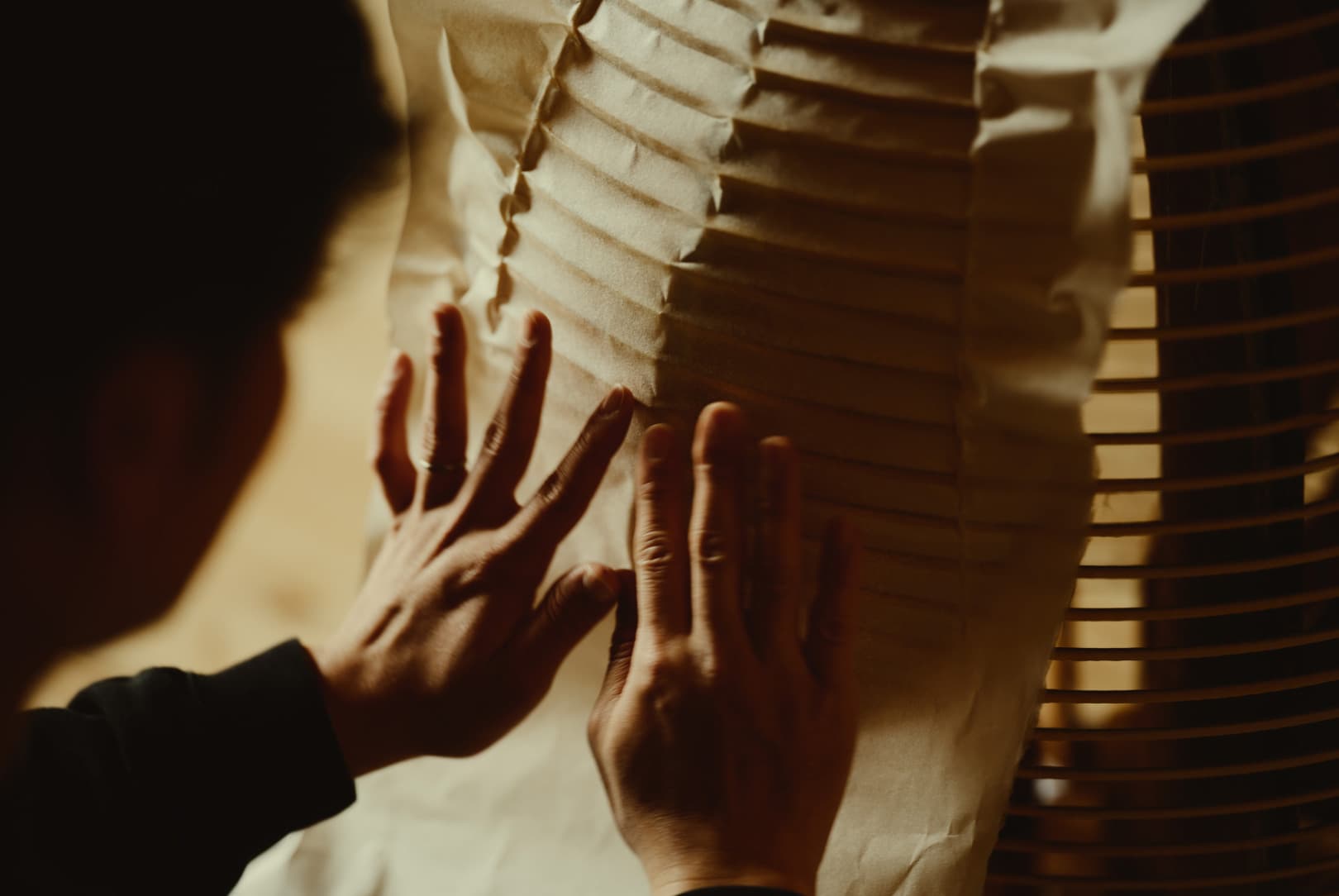
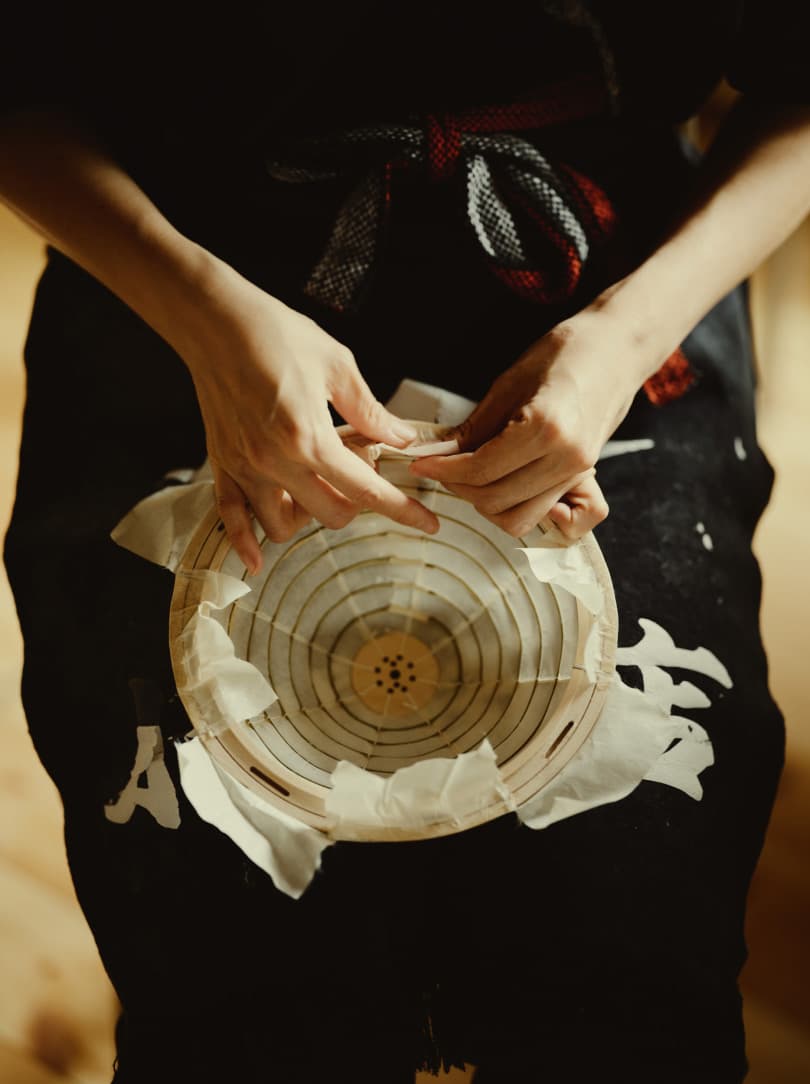
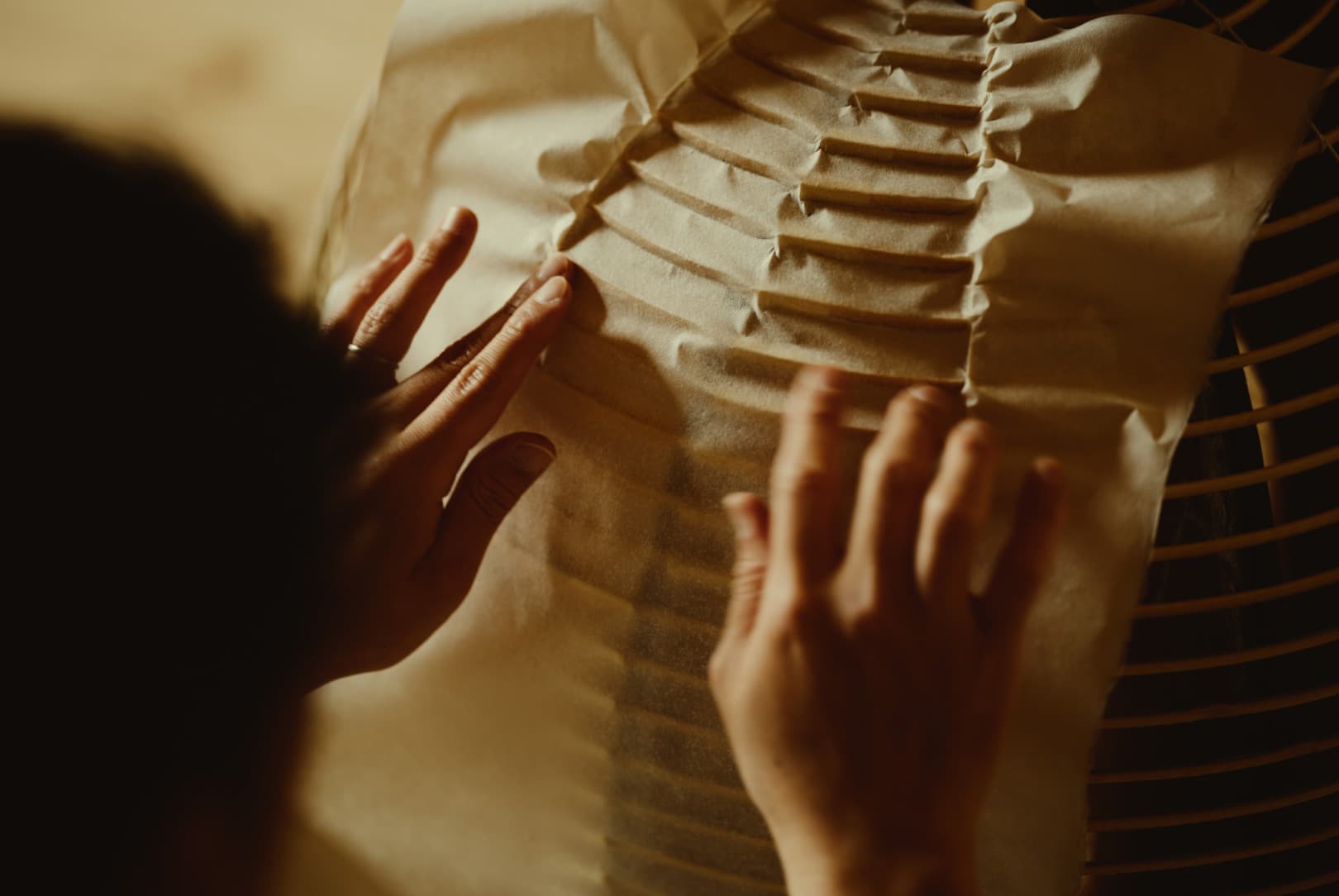
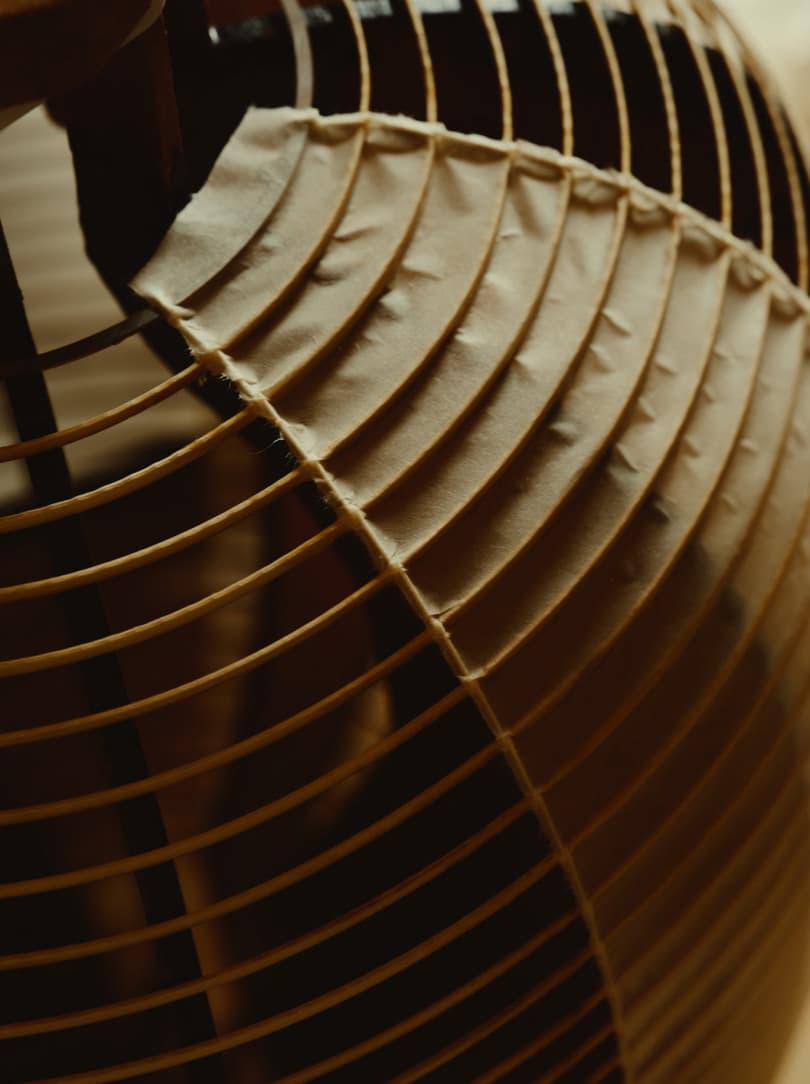
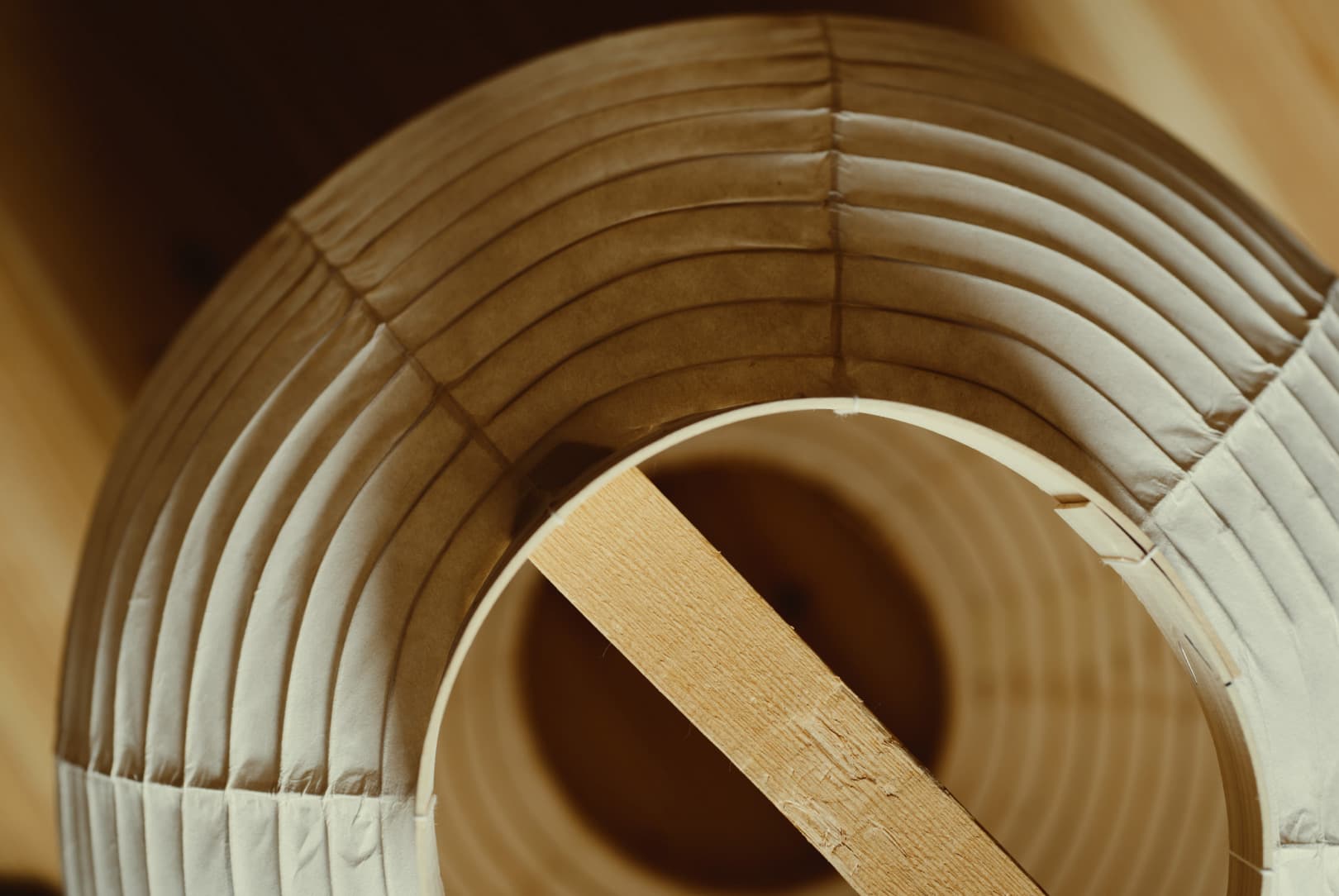
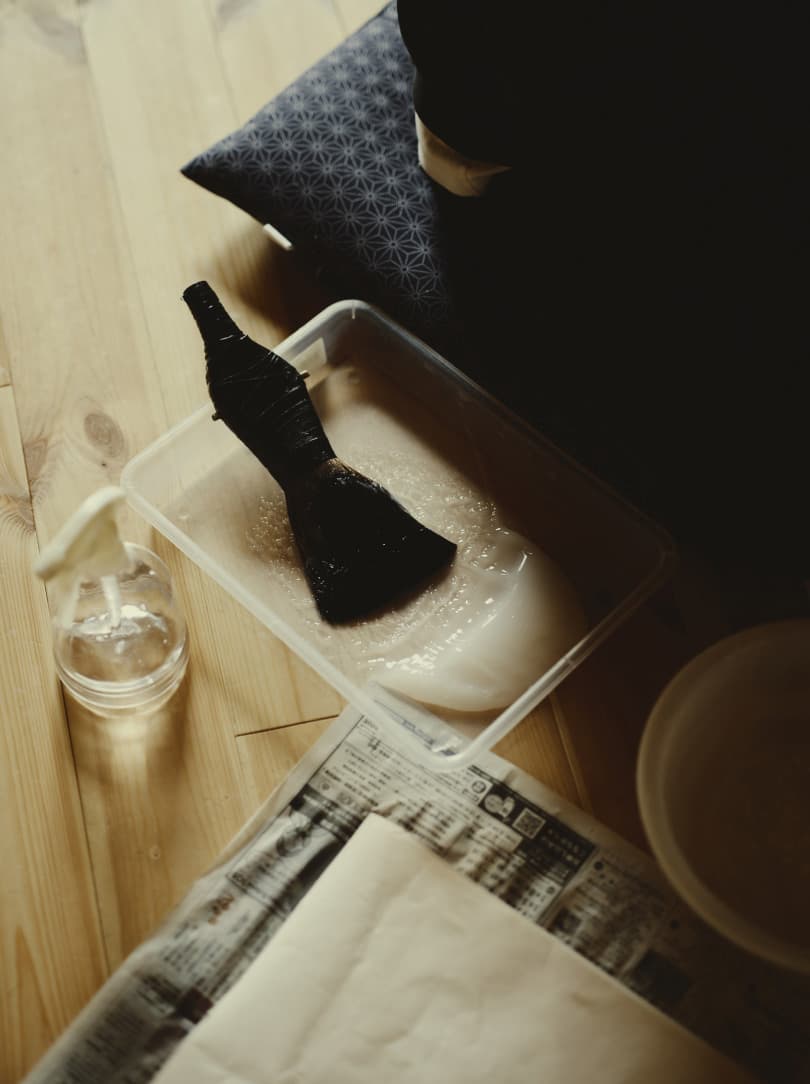
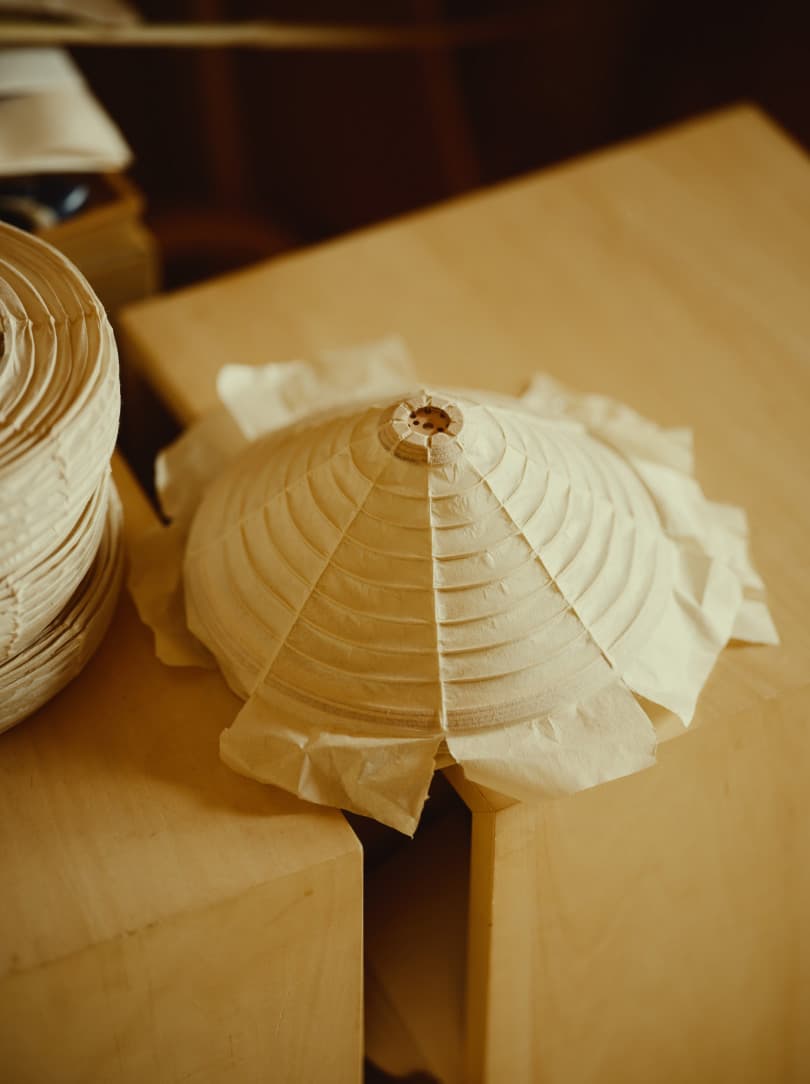
The fifth step is ‘Kami-hari’: applying the washi paper. Another stage that demands precision, patience and care. Beside the lantern sits a stack of long rectangular sheets laid over newspaper. Ryo dips a broad brush into a bowl of natural wheat-starch glue and gently coats the bamboo rings and thread before lightly misting a sheet of washi with water. Once pliable, it is lifted from the pile and attached to the frame between two lines of thread.
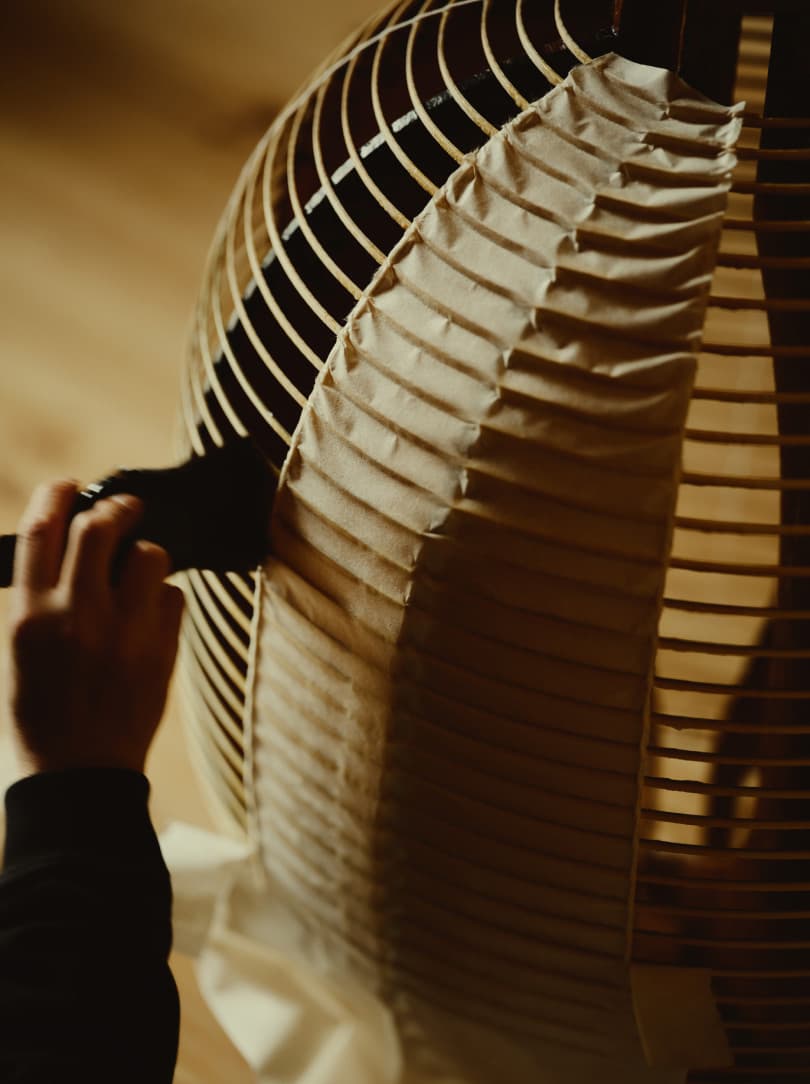
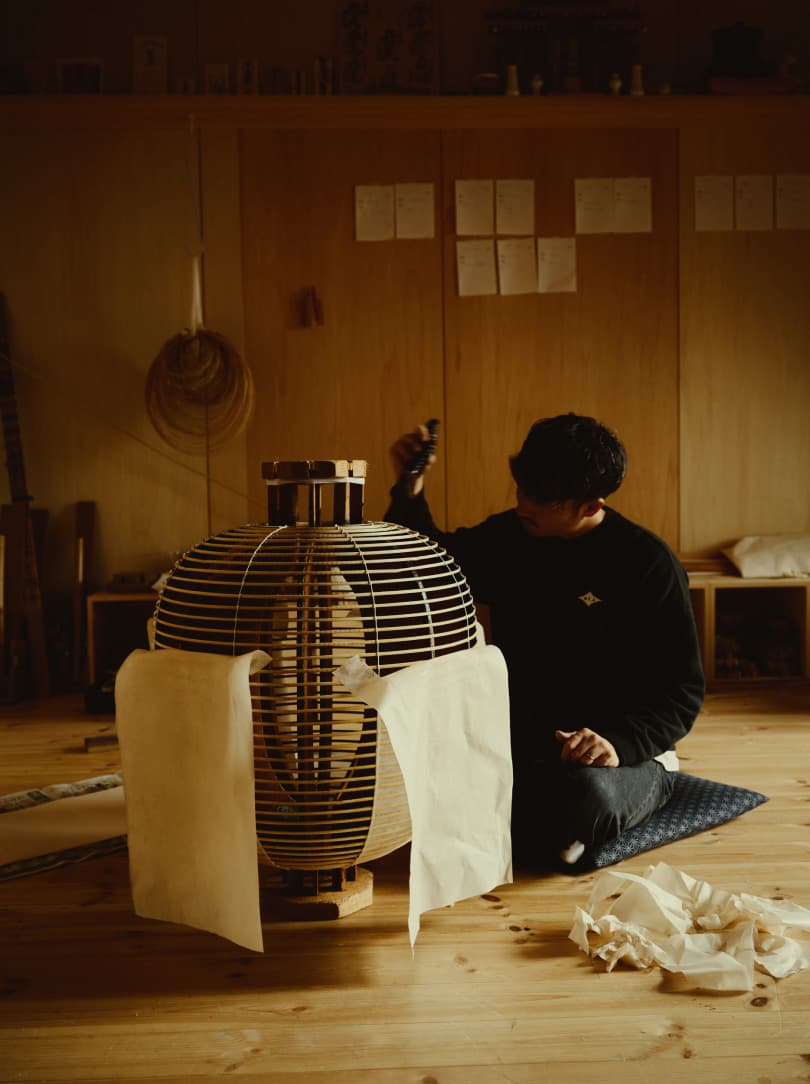
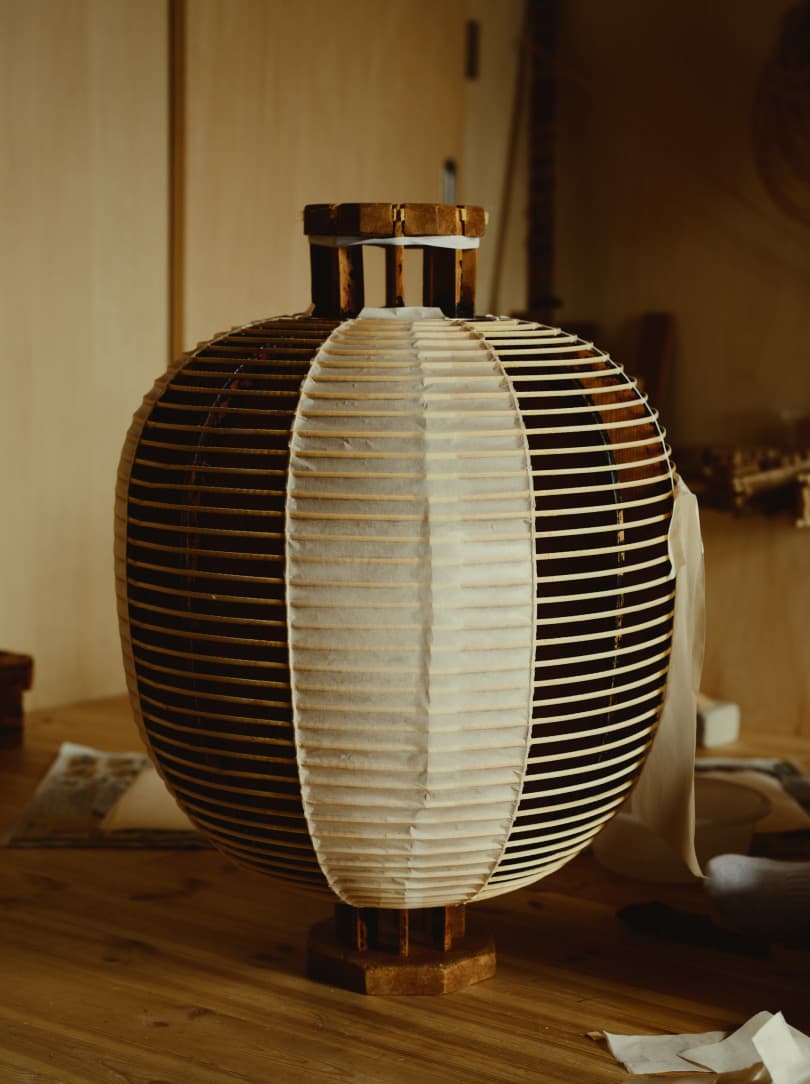
Working carefully, he smooths the paper over each ring with his fingertips, starting from the top. To prevent the damp sheet from sticking further down, he holds the loose end in his mouth until he is ready to press it into place. Gradually, the lantern disappears beneath a translucent skin of paper.
“At festivals in Japan, where lanterns are often used, seeing many of them together creates a great sense of excitement. But if there is just one lantern in a room, it creates a very calm space. I think the ability to create such extreme contrasts is one of the strengths of these lanterns.”
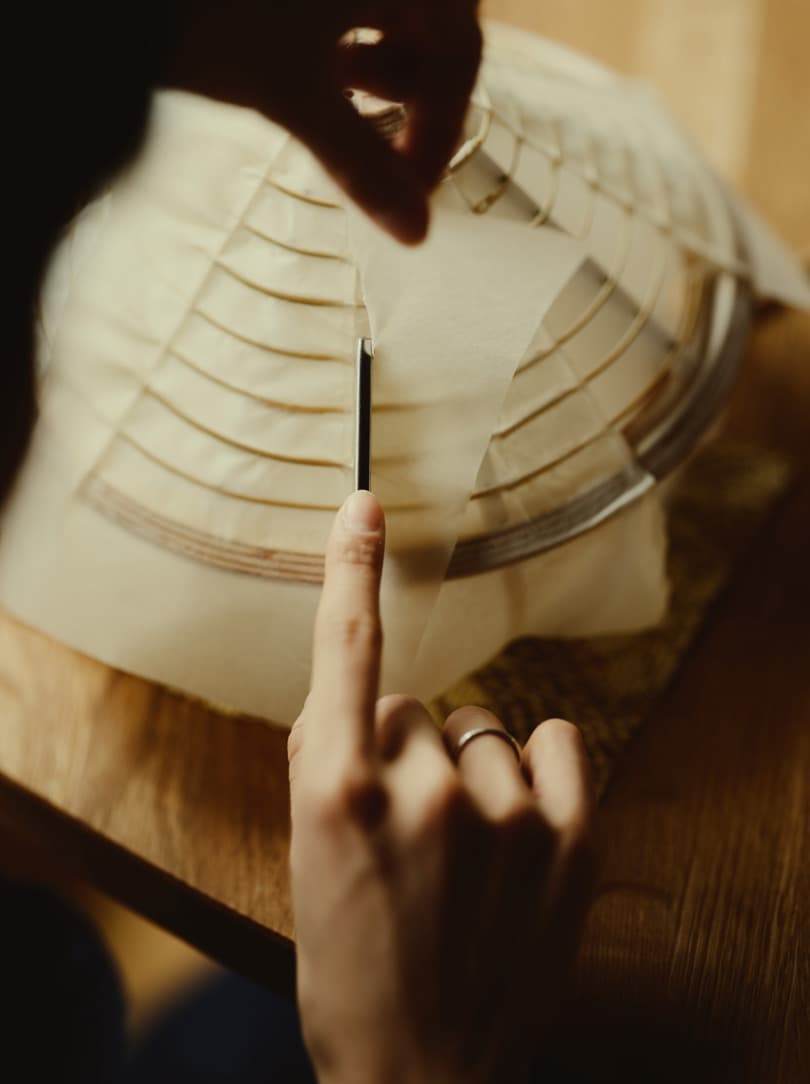
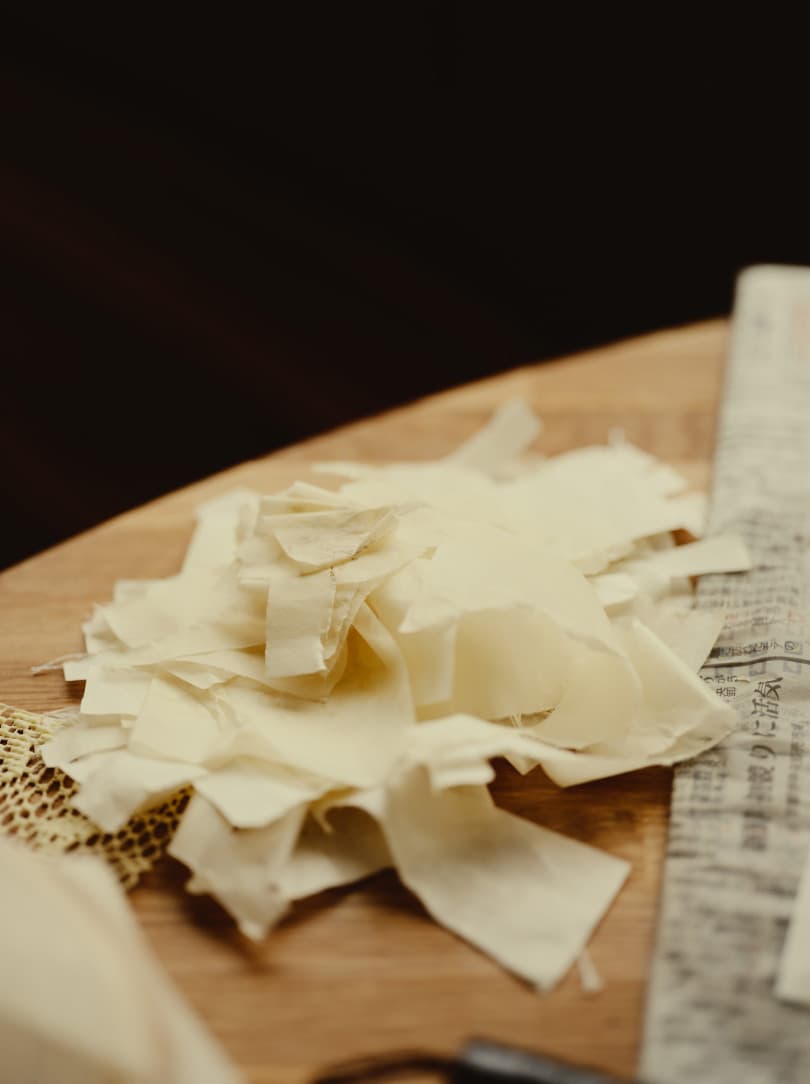
The mould is then flipped over and the process repeated in the opposite direction. The unstuck ends of paper drape downwards. More glue is applied, the washi dampened once again, and the remaining section carefully sealed. Finally, Ryo takes a small blade and trims away the excess, guiding it along the outer edge of the thread with practised precision.
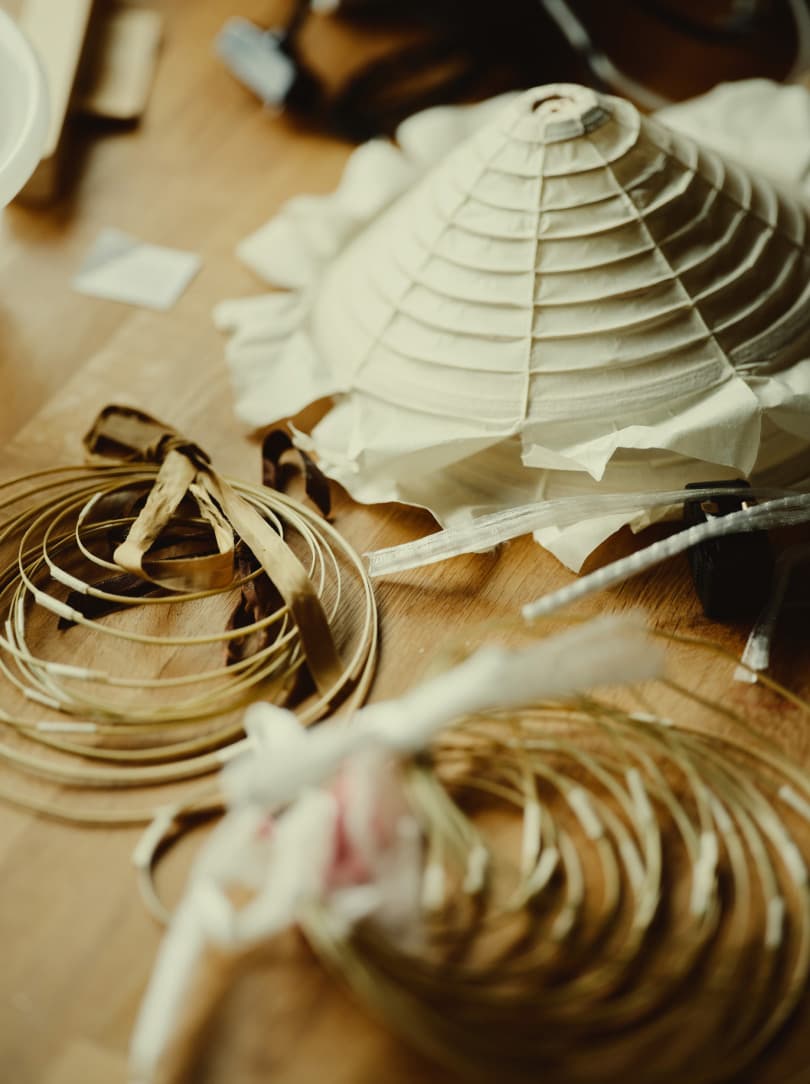
The bamboo skeleton may determine the lantern’s shape, but the washi ultimately determines the quality of its light. “The light that passes through washi becomes very soft and gentle,” Ryo says. “People from overseas often tell us how much they like that quality of light. At festivals in Japan, where lanterns are often used, seeing many of them together creates a great sense of excitement. You feel that something is happening there, that a wonderful festival is taking place. But if there is just one lantern in a room, it creates a very calm space. I think the ability to create such extreme contrasts is one of the strengths of these lanterns.
At this point, a much-needed lunch break is in order. We are warmly invited to join the family, along with a few of their craftspeople for a meal. Mamoru, smiling and jovial, makes a phone call to a long-time friend who owns a nearby neighbourhood restaurant, Yoshino. After an enthusiastic exchange, he confirms it’s all arranged, and we set off in two of their cars.
Hanging in the narrow passage between the street and the restaurant entrance, an elongated lantern painted with colourful kanji sways gently in the breeze. It was a gift from the Kojima family, we are told, to mark Yoshino’s 50th anniversary several years ago. Inside, the air is fragrant with noodles, pork and seafood sizzling on the teppan, mingling with the rich scent of sauce caramelising on hot iron. Mamoru and the owner greet each other joyfully as we gather around a long table with hotplates at its centre.
Before long, the chef delivers steaming mounds of ‘modan-yaki’ – Kyoto-style okonomiyaki, a crisp savoury pancake layered with yakisoba noodles – directly onto the teppan in front of us. From there, we serve ourselves in small portions, adding dried seaweed, chilli and other accompaniments as the hot iron keeps everything warm. Drinks are passed casually around from a refrigerator behind us, followed by a second helping of modan-yaki. It is a warm, familial atmosphere: food shared from the centre of the table, conversation flowing easily. The two Kojima brothers sit beside their father at the head of the table, and for a moment the scene feels almost timeless.
“Sometimes when I’m working alone at night, it feels really calm. My dad always says that working alone at night is when you make progress, so it’s quite common for us to do that.”

Back at the workshop, refreshed and re-energised, we return to find the next stage already underway. While we were eating, the paper and glue had been left to dry, helped along by fan heaters humming quietly around the room. The wooden mould concealed within the lantern is now carefully dismantled and removed piece by piece. All that remains are the final decorative stages: sketching the design in pencil and painting it by hand.
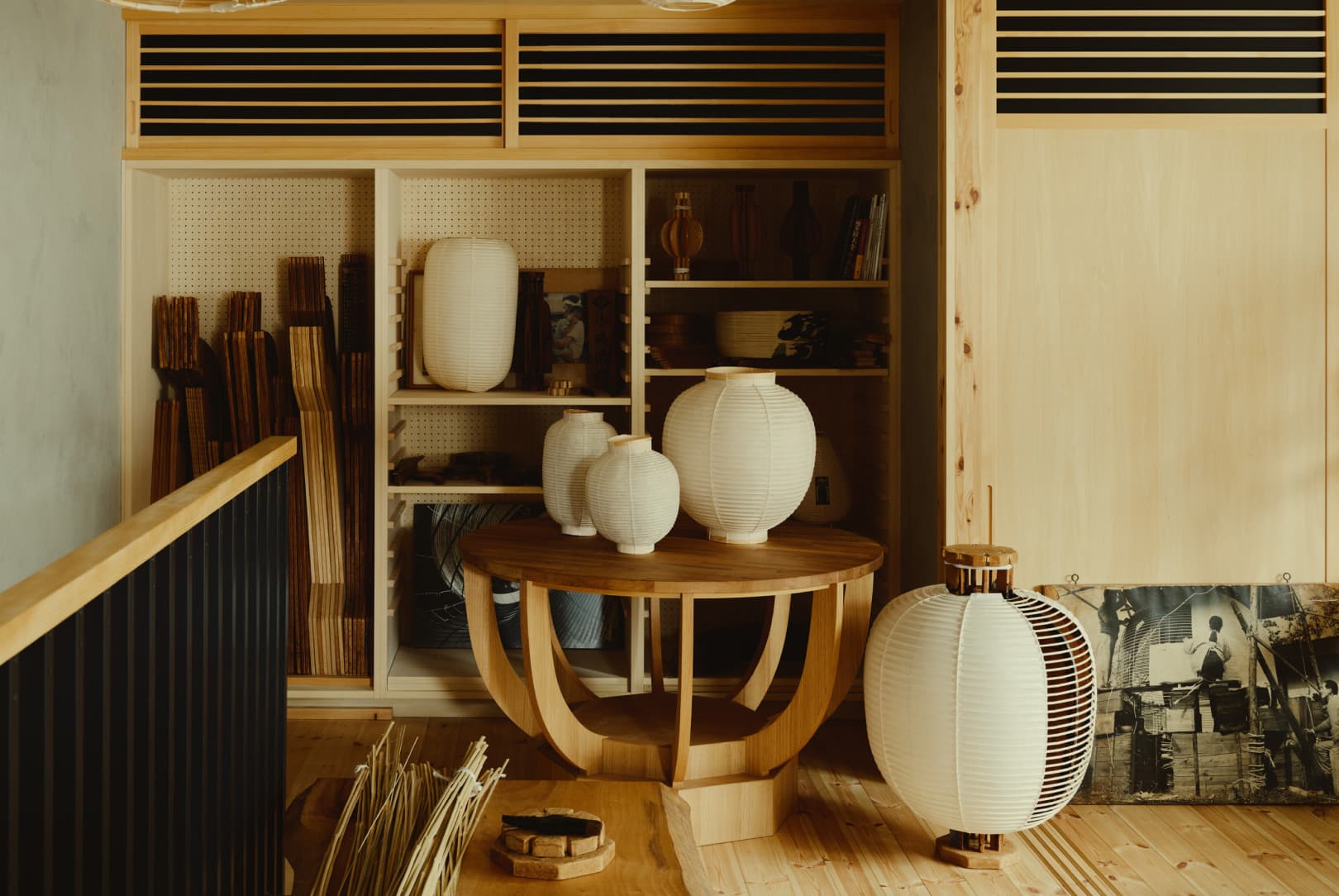
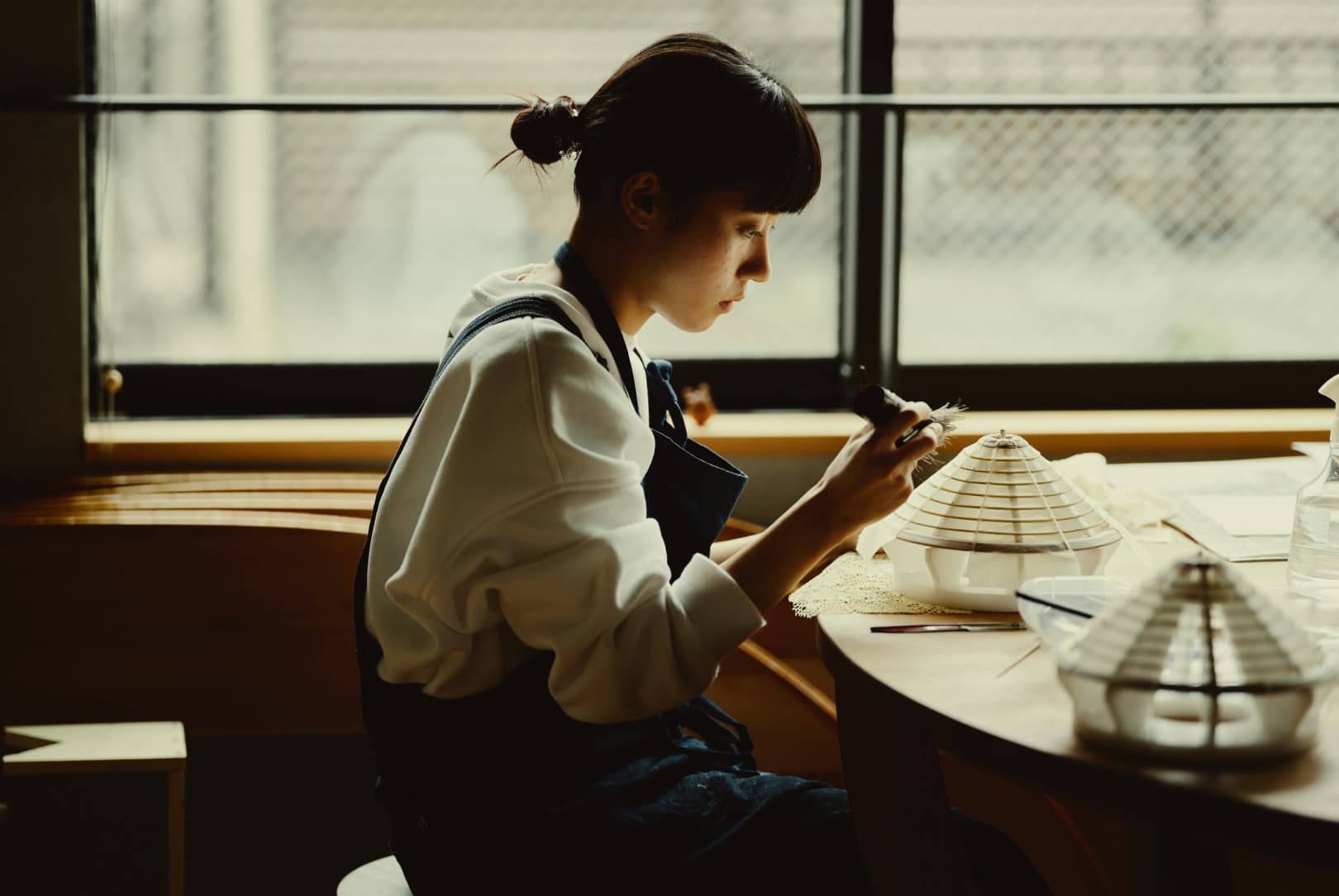
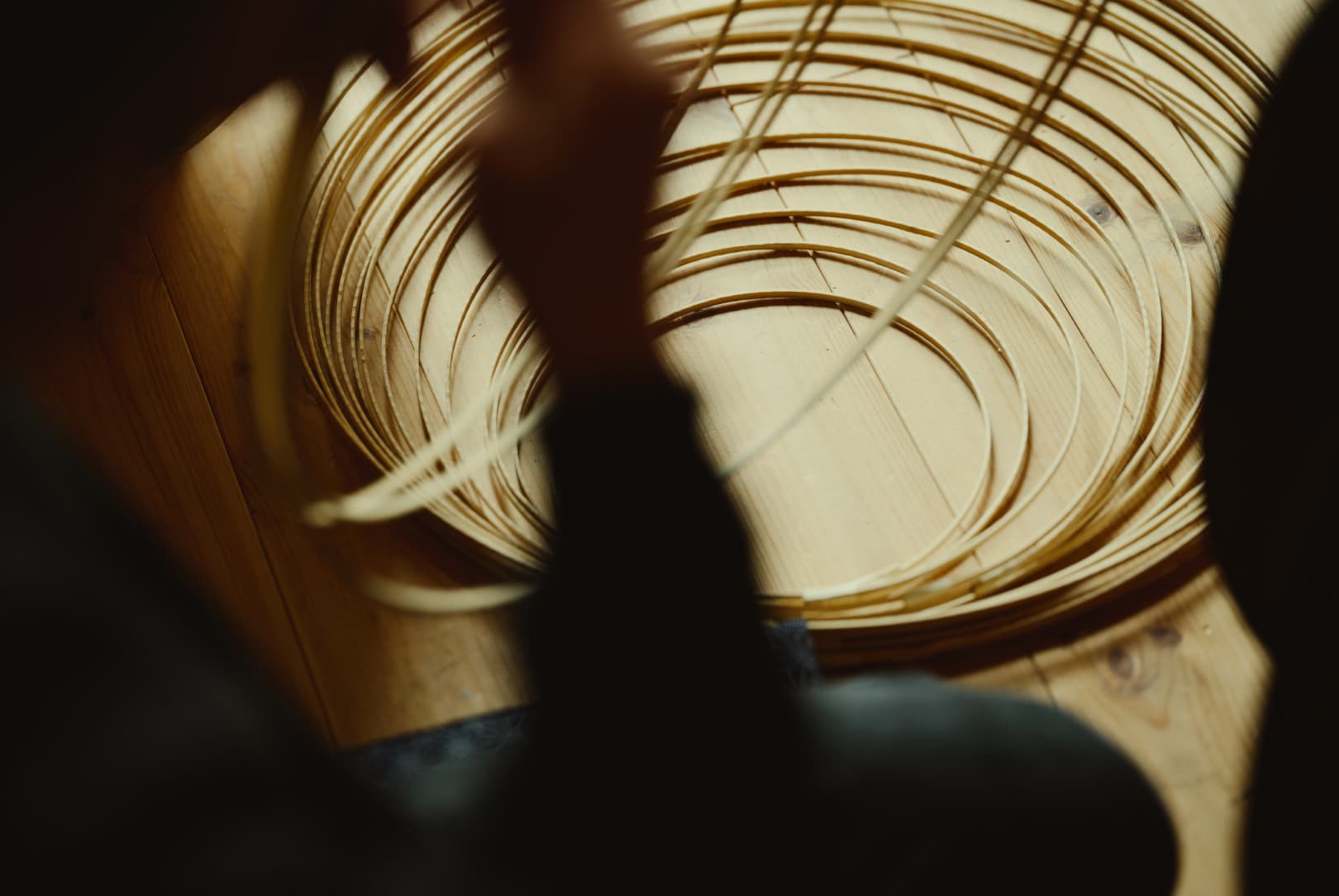
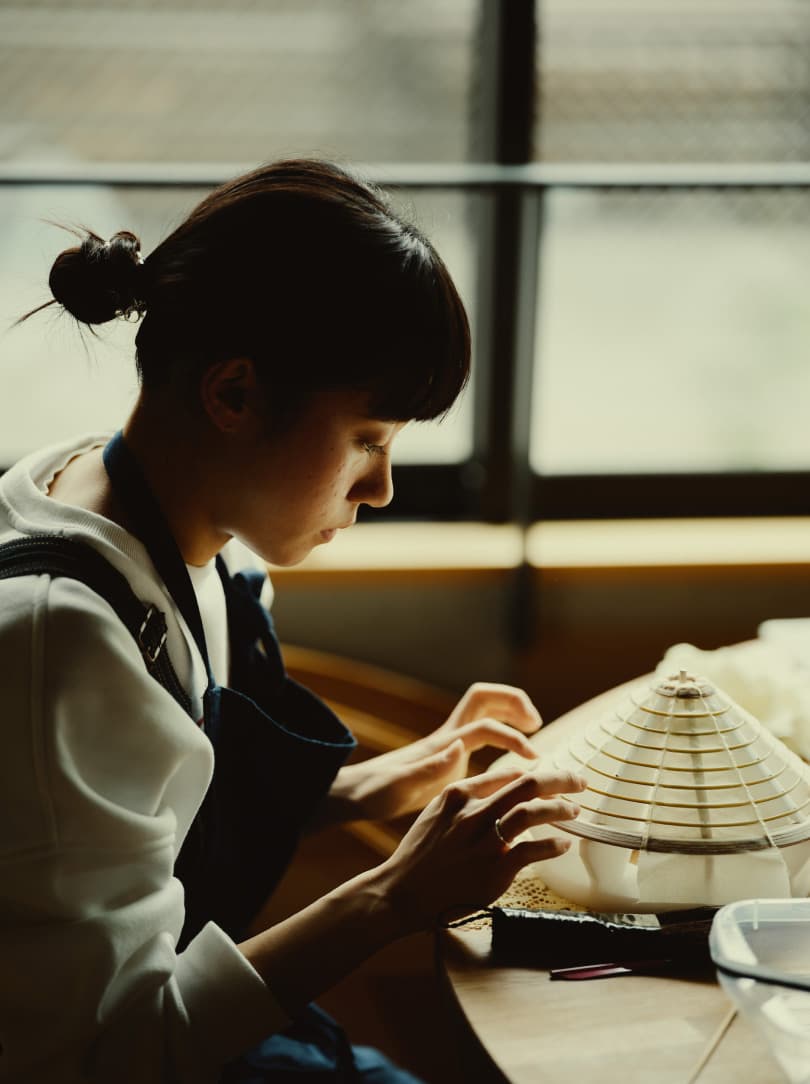
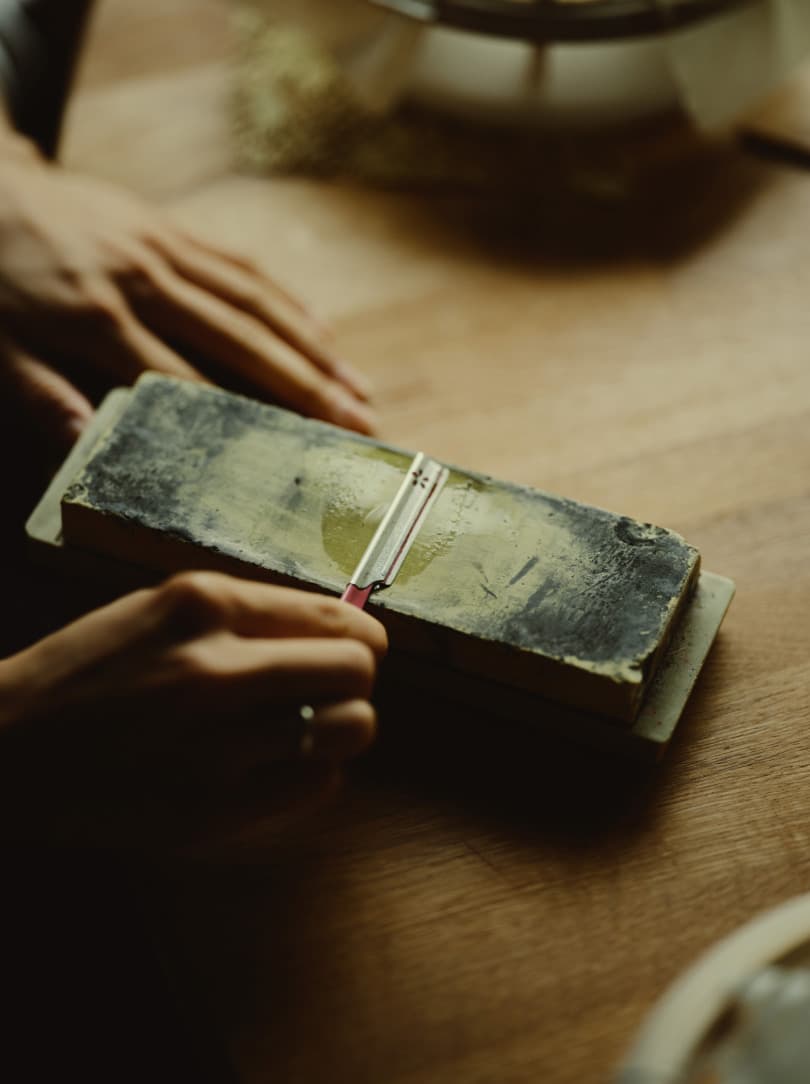
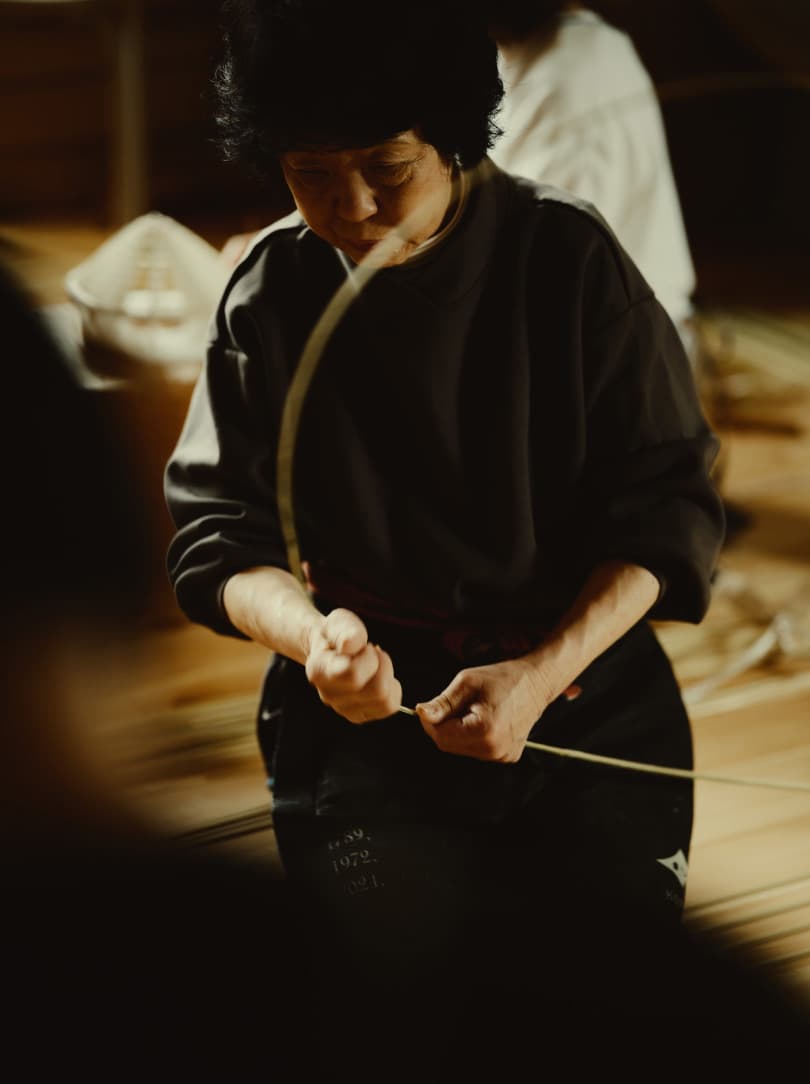
The upstairs workshop is another hive of activity. Lanterns of every shape and size hang serenely from the ceiling. Five women are seated around the room – on a long bench, on cushions on the floor, at a table – each absorbed in a different task. One applies finishing touches to small conical washi shades for table lamps, while another bends long bamboo strips into circles and secures them with tape. Their hands rarely stop moving. Conversation drifts across the room, followed by a burst of laughter. There is an industrious yet relaxed energy here. Watching the work unfold, it is difficult not to feel drawn in and find ourselves wishing, in some small way, to be part of it.
The pace varies depending on the scale and complexity of the lantern. With so many stages involved, and several craftspeople often contributing to a single piece, precise timings are difficult to calculate. A small lantern might be completed in two or three hours, while the largest commissions can take five days or more, with four craftspeople working on them simultaneously.
Ryo now appears at the top of the stairs and shows us one more stage in the process. Seated on the floor, a thick glove protecting one hand, he feeds a bundle of freshly formed bamboo rings through a small wooden jig. With each pump of the lever, the rings flex and spring, gradually settling into smoother, more consistent curves.
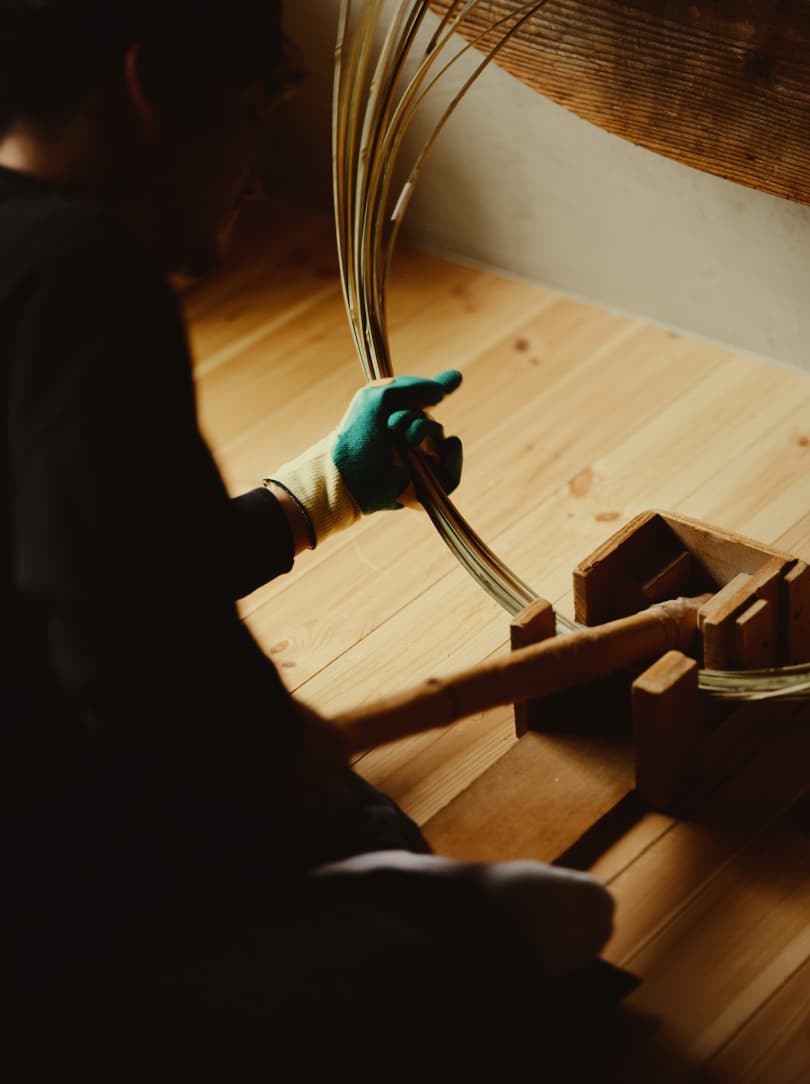
The rhythm of the craft has a repetitive, almost meditative quality. Ryo says he often returns to the workshop after dark to focus on what needs to be done. “During the day,” he says, “everyone has things to do while chatting with the craftspeople, but sometimes when I’m working alone at night, it feels really calm. My dad always says that working alone at night is when you make progress, so it’s quite common for us to do that.”
For all the workshop’s recent success, Ryo is conscious that some of the skills and materials that sustain the craft are becoming increasingly difficult to preserve. The bamboo splitting demonstrated by his brother, Syun, is one example. “There are hardly any people who do bamboo splitting anymore,” he says. “I think that kind of technical skill might disappear.” Previous generations, he explains, could rely on local farmers who split bamboo in their spare time, creating a network of knowledge that extended far beyond the workshop itself. Today, much of that expertise survives through only a handful of specialists. “The technique is now being passed down from an old craftsman to my brother,” he says. “I wonder whether that knowledge will disappear, too.”
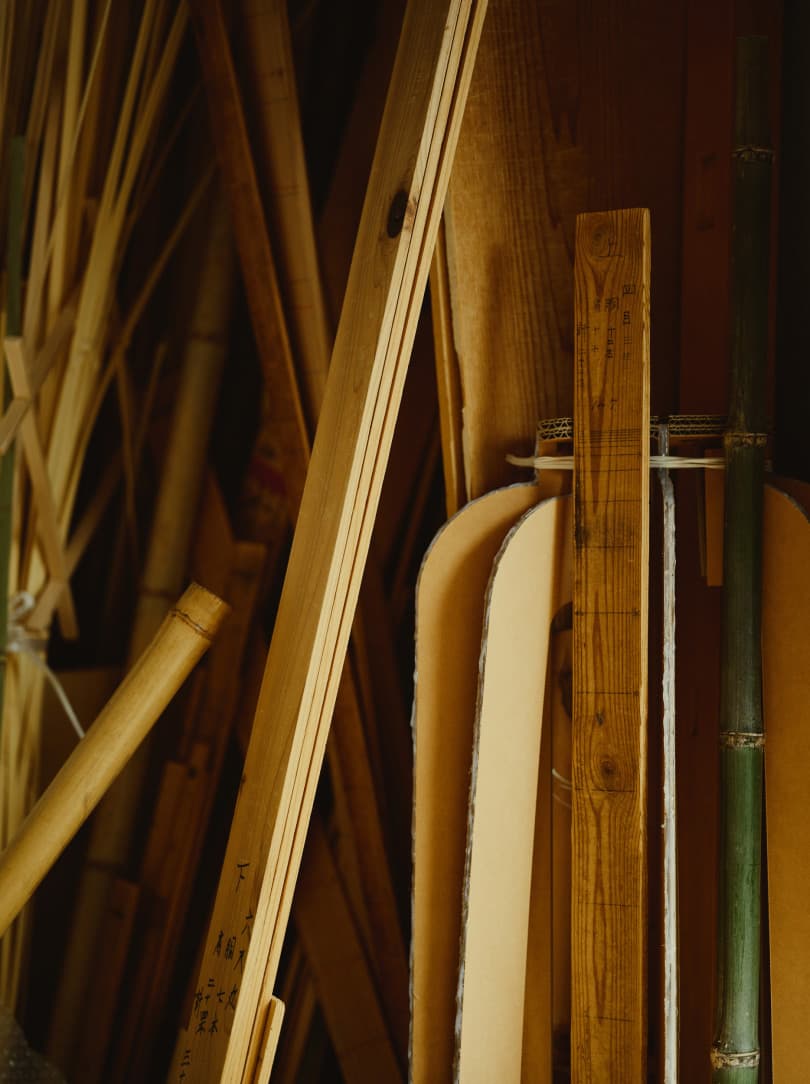
“Large lanterns are gradually becoming harder to make.”
Similar pressures exist elsewhere in the production chain. Kojima Shoten’s washi paper comes from specialist makers whose numbers are also dwindling. As handmade washi has become increasingly valued as an art form in its own right, prices have risen and commercial supply has become less certain. “Large lanterns are gradually becoming harder to make,” Ryo says. The challenge, then, is not demand, but the shrinking number of people able to supply the materials and skills they require.
Yet his relationship with the workshop has never been defined by a sense of obligation. Growing up, lanterns simply formed part of the landscape of everyday life. “The workshop was like a playground,” Ryo recalls. “I was always playing with friends on the second floor, so the lanterns were always close by.” He remembers following his father back to work after dinner, sometimes playing nearby while he worked. Although he says he was more interested in sports than making things as a child, the workshop remained a constant presence. “When I came home, I would play next to my dad while he was working,” he says. “The lanterns were always around.”
That experience partly shaped the design of the family’s new premises. Having his home behind the workshop was a decision Ryo made deliberately when planning the building. “When I built this workshop, I wanted to create an environment where my own children can also always have lanterns close by,” he says. Nevertheless, he is careful not to place expectations on the next generation. “We want them to do what they love. If my wife and I are enjoying our work, they might want to do the same.” For now, his goal is simply to create the conditions that allow that possibility. “I’m just providing that environment and leaving the rest to the children. It’s important for them to develop their own thinking and make their own judgements.
“When I built this workshop, I wanted to create an environment where my own children can also always have lanterns close by.”
Working alongside family every day inevitably brings moments of disagreement, but Ryo speaks about it with humour rather than frustration. “It’s the same with couples,” he says with a laugh. “No matter how much we argue, work keeps coming in, so we have to keep doing our best together.” The brothers have distinct roles within the company, yet there is a mutual understanding that the work matters more than any disagreement. “No matter how much we fight, there’s always the need to do it again soon. Each of us can take responsibility for our own part.” He pauses before adding, “Maybe this kind of culture is simply part of the artisan way of life.”
As the workshop whirrs away, the afternoon light gradually begins to fade until it is finally time to down tools. Staff members leave just as cheerfully as they arrived, waving and smiling as they head home. One cycles away; others walk together down the narrow street. We step outside too, greeted by the cool evening air.
Standing across the road, where Ryo’s son was riding his bicycle this morning, we turn back towards the grey building. Through the upper window, the enormous paper lantern now glows softly against the gathering dusk, suspended like a luminous full moon. Below it, the workshop itself has become a lantern of sorts. The sweeping curve of the ceiling frames the warm amber light spilling through the lower window, illuminating the figures still moving inside. For a moment, the building seems to embody the very thing it produces: bamboo, paper, craftsmanship and light, brought together in a single glowing form.
As we leave, we find ourselves thinking back to something Ryo said earlier about the workshop’s willingness to embrace the unknown: they regularly receive requests that at first seem impossible, but never turn them down. “We are always challenging ourselves to figure out how to make those requests a reality with our methods,” he said. “As a result, we receive new jobs and have lots of meaningful encounters."
And in Ryo’s words, it is hard not to see the lantern as more than an object: not simply something that gives light, but something that has illuminated a path. “Through this work, I feel like I’ve been taught the importance of working seriously and not cutting corners, almost as if I’ve been guided by a lantern.”