Play Movie


CONTEMPORARY RYOKAN
Azumi Setoda
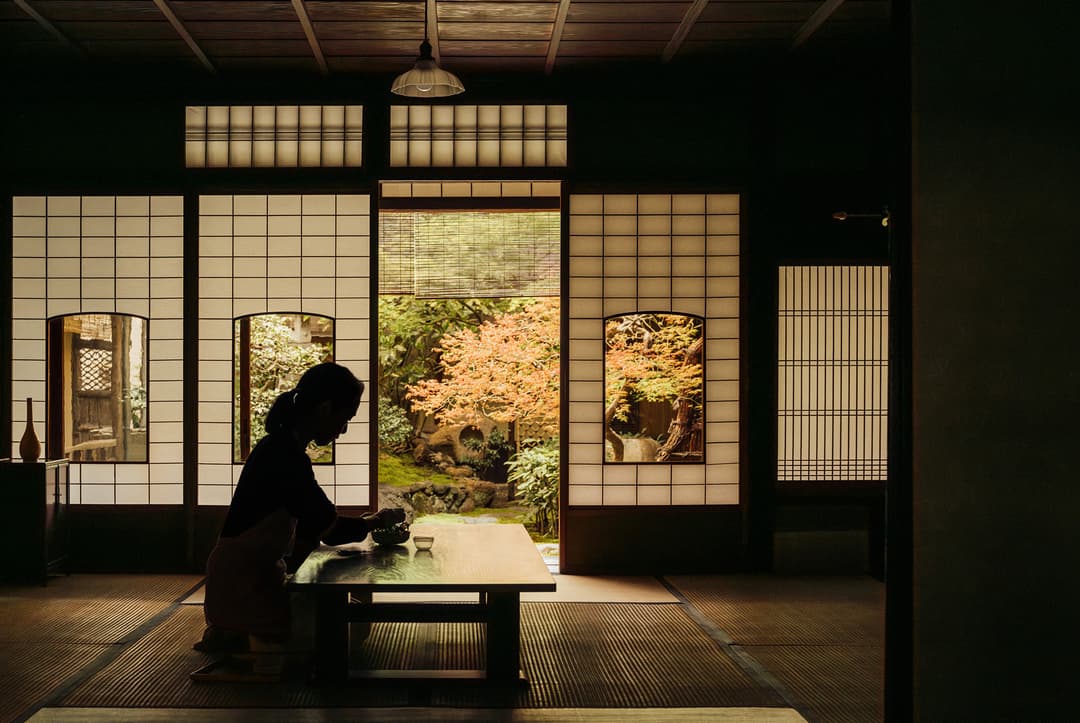
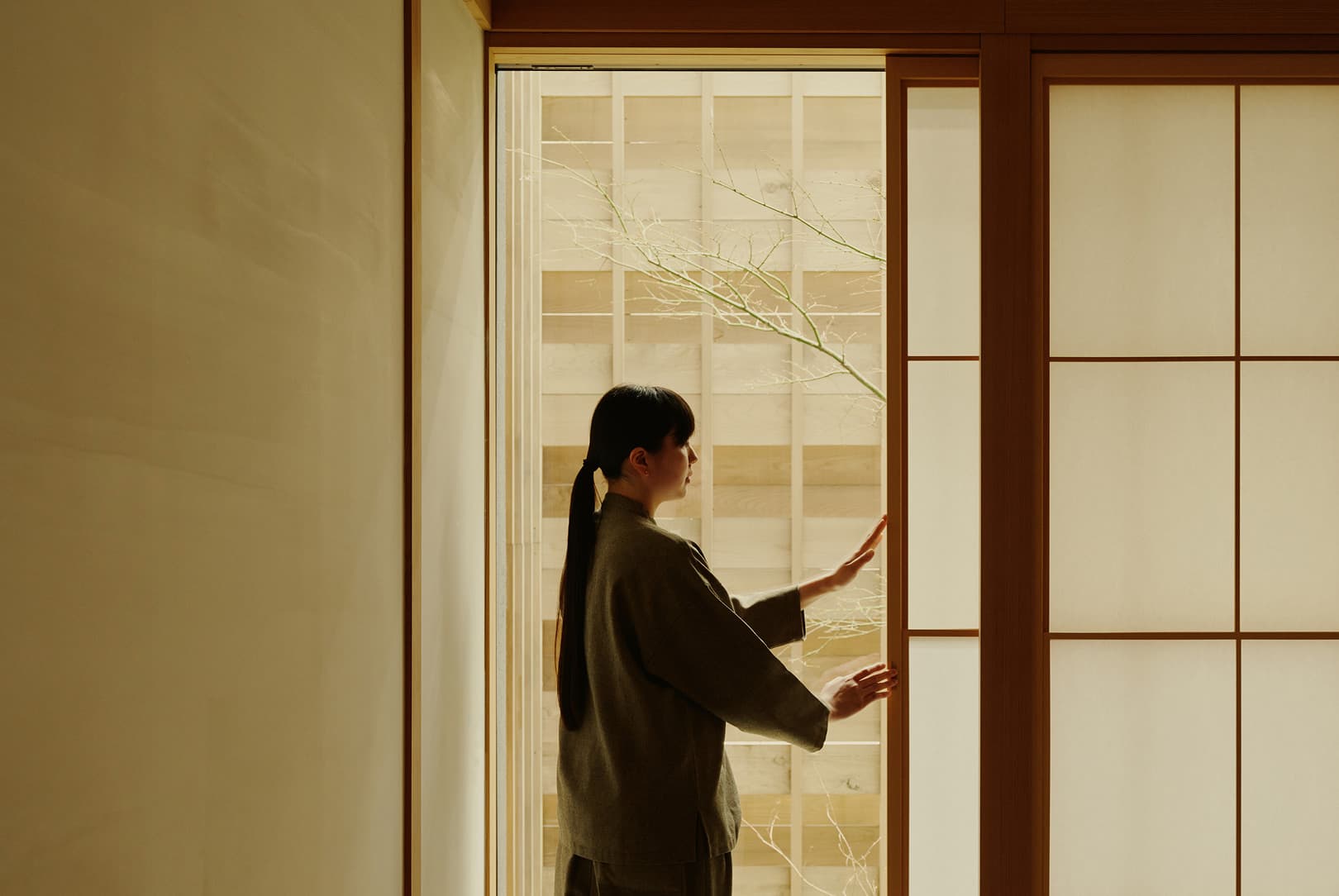
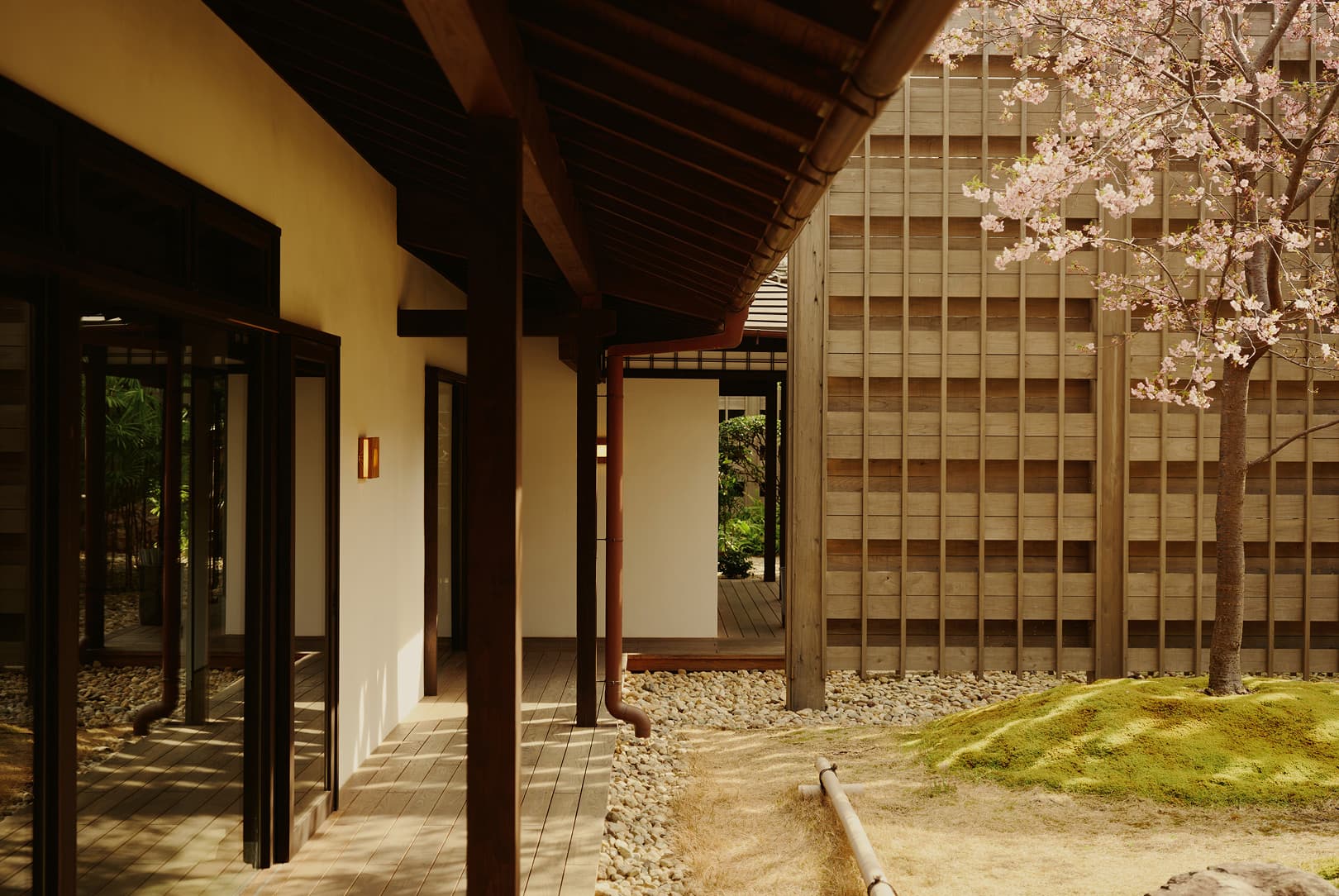
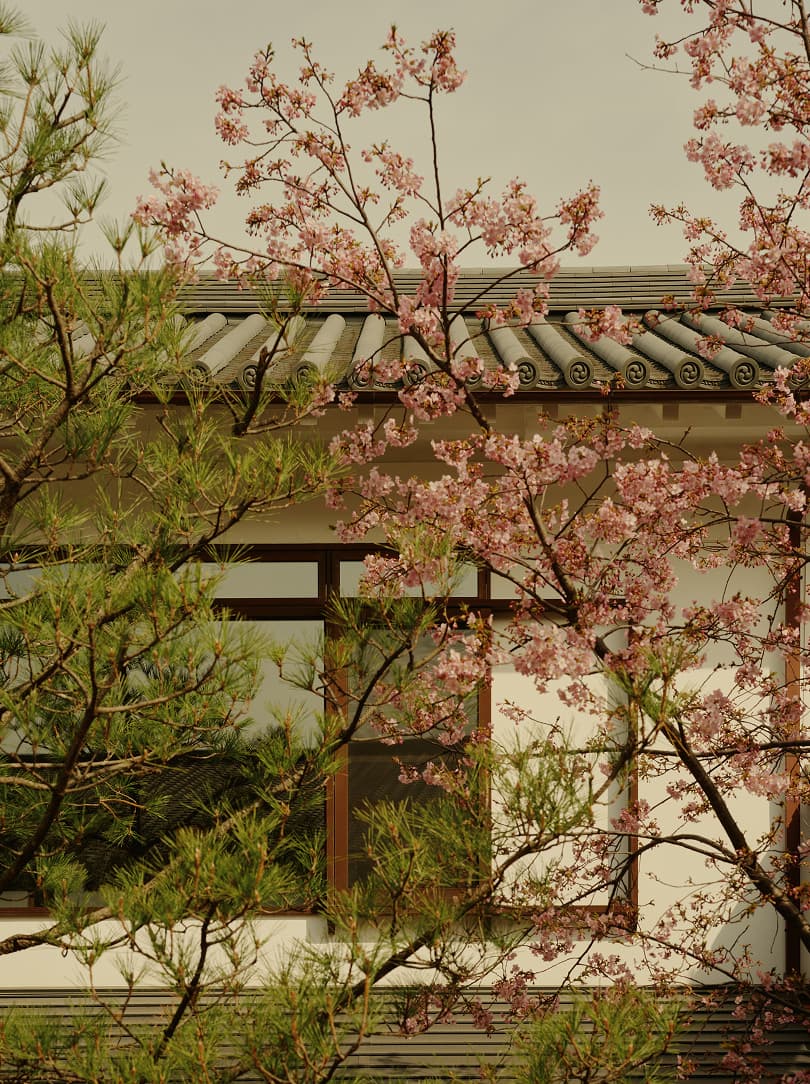
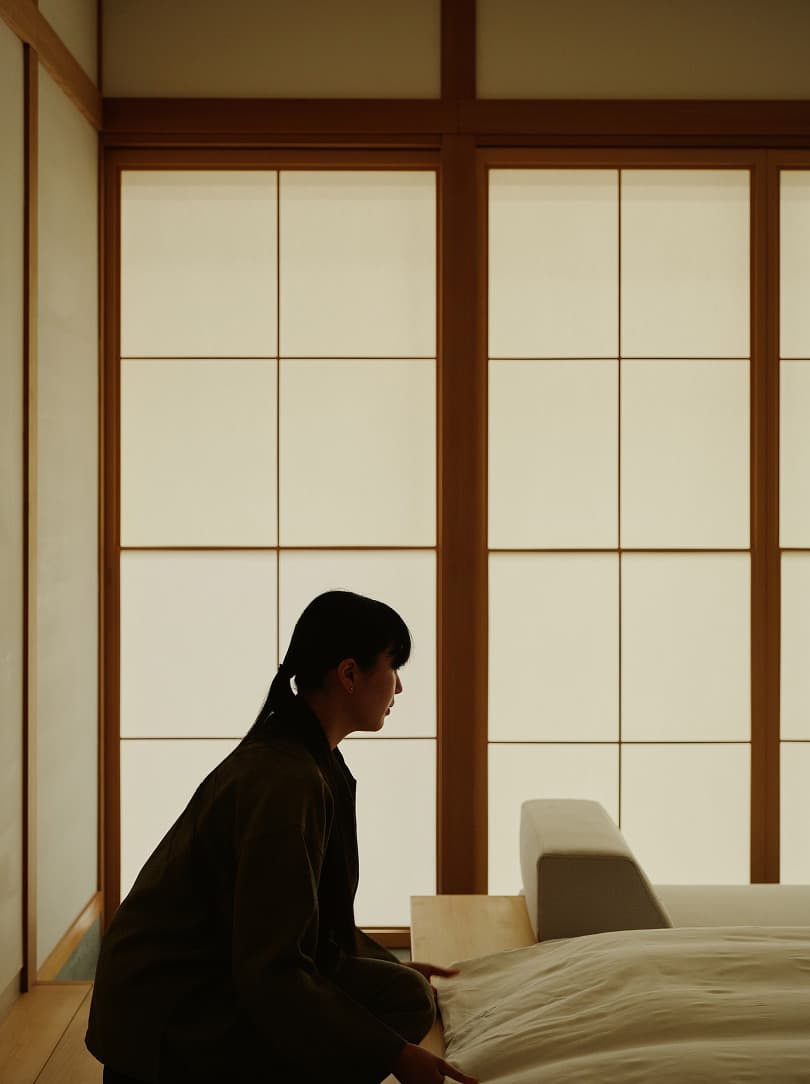
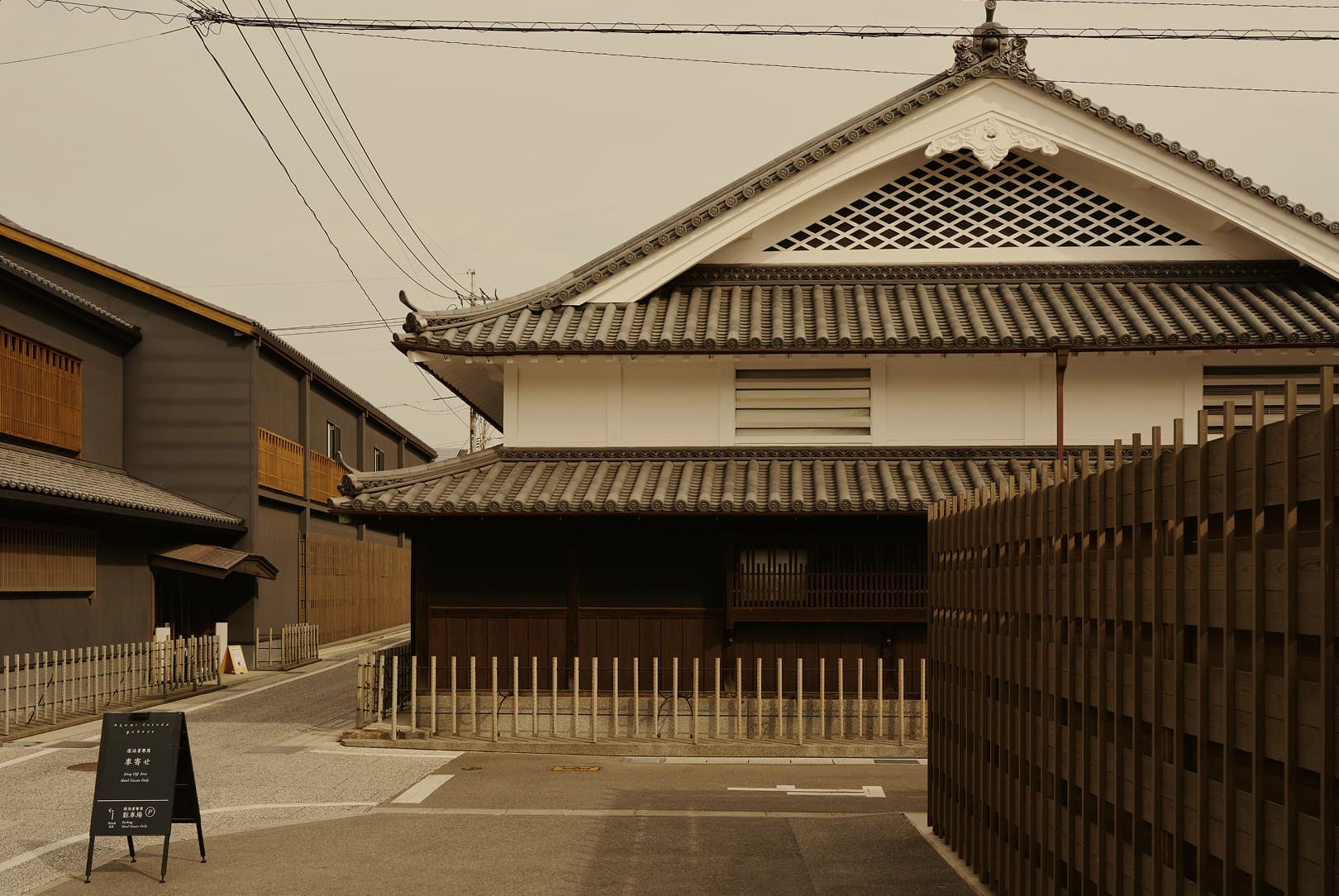
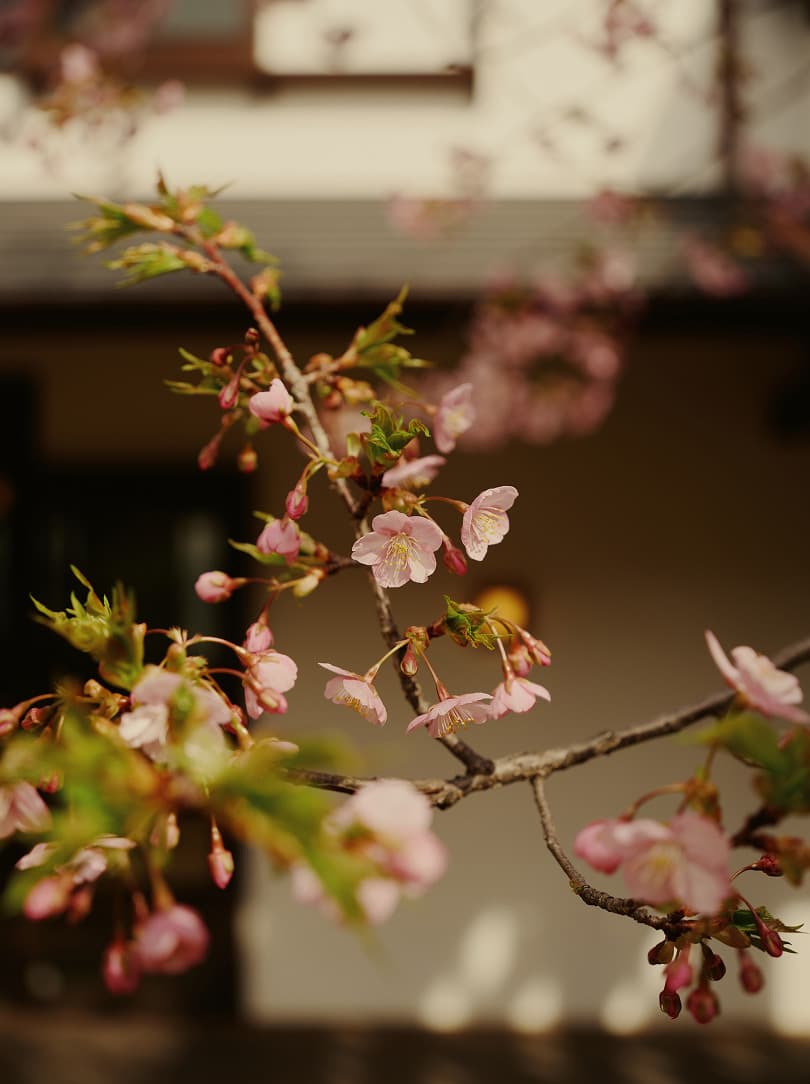
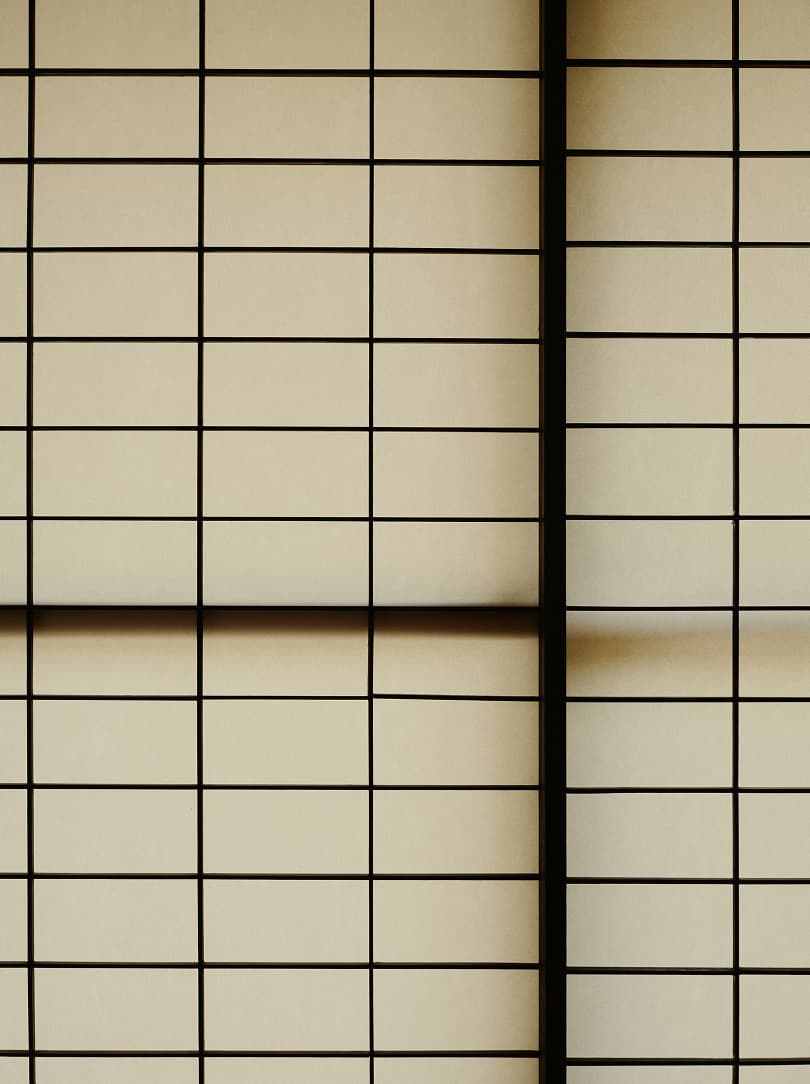
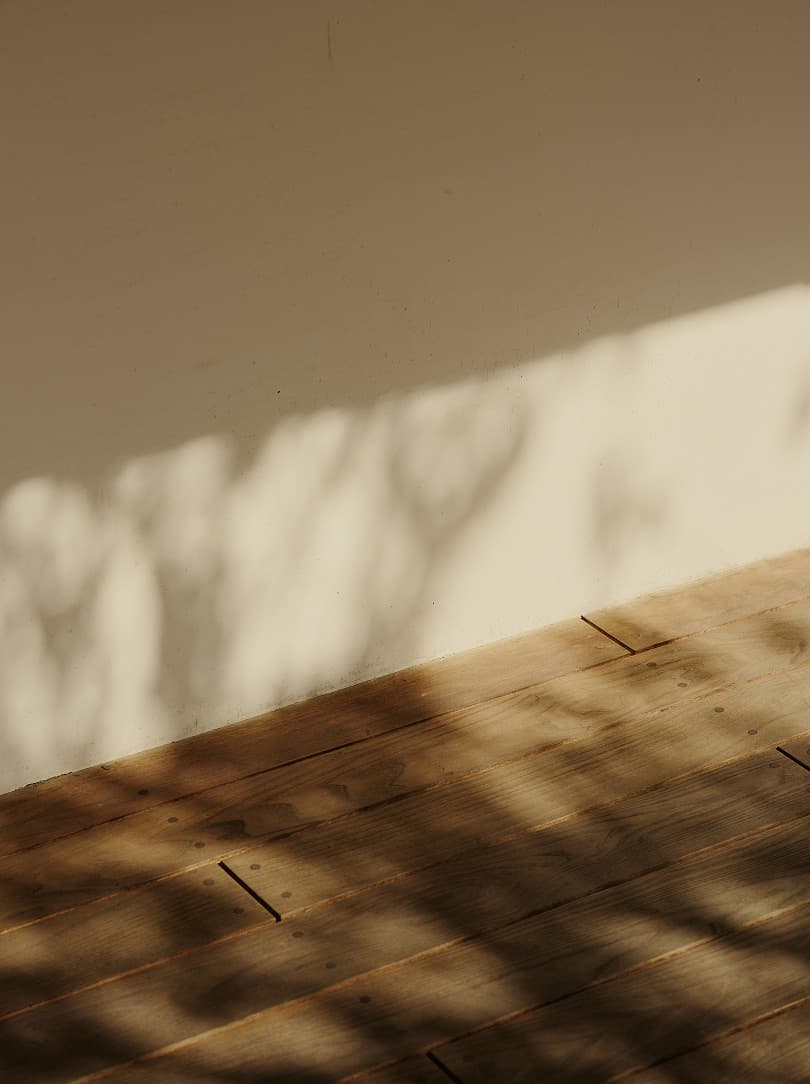
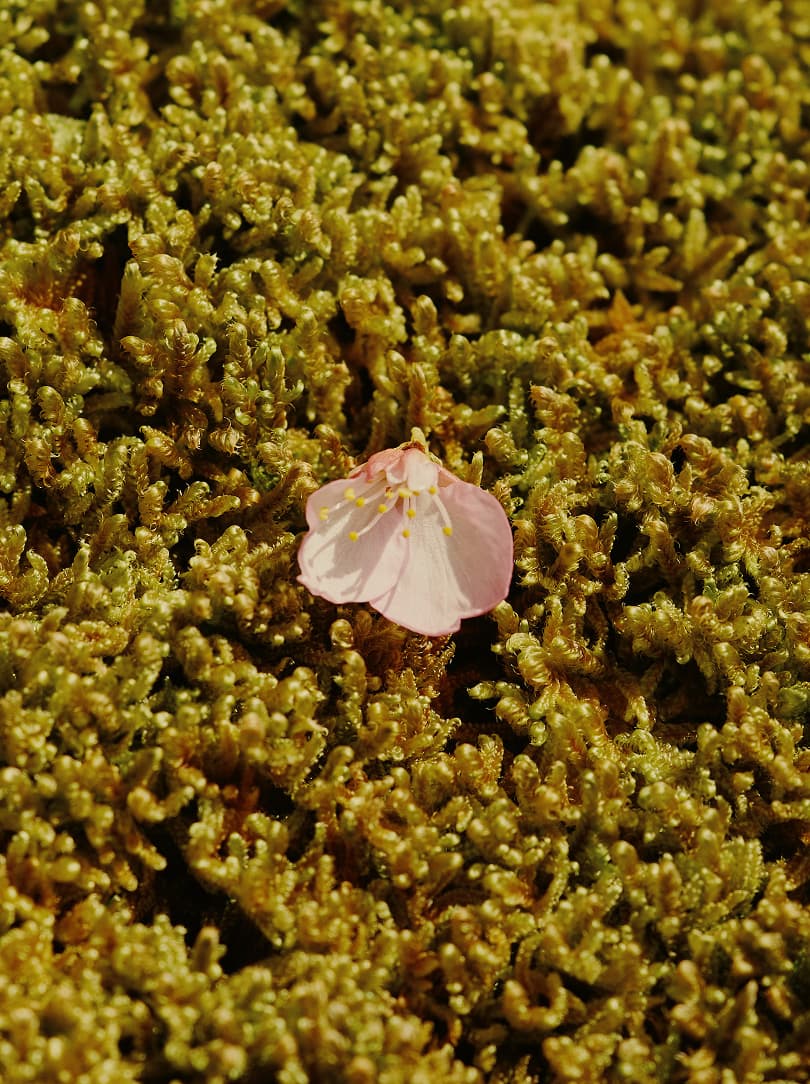
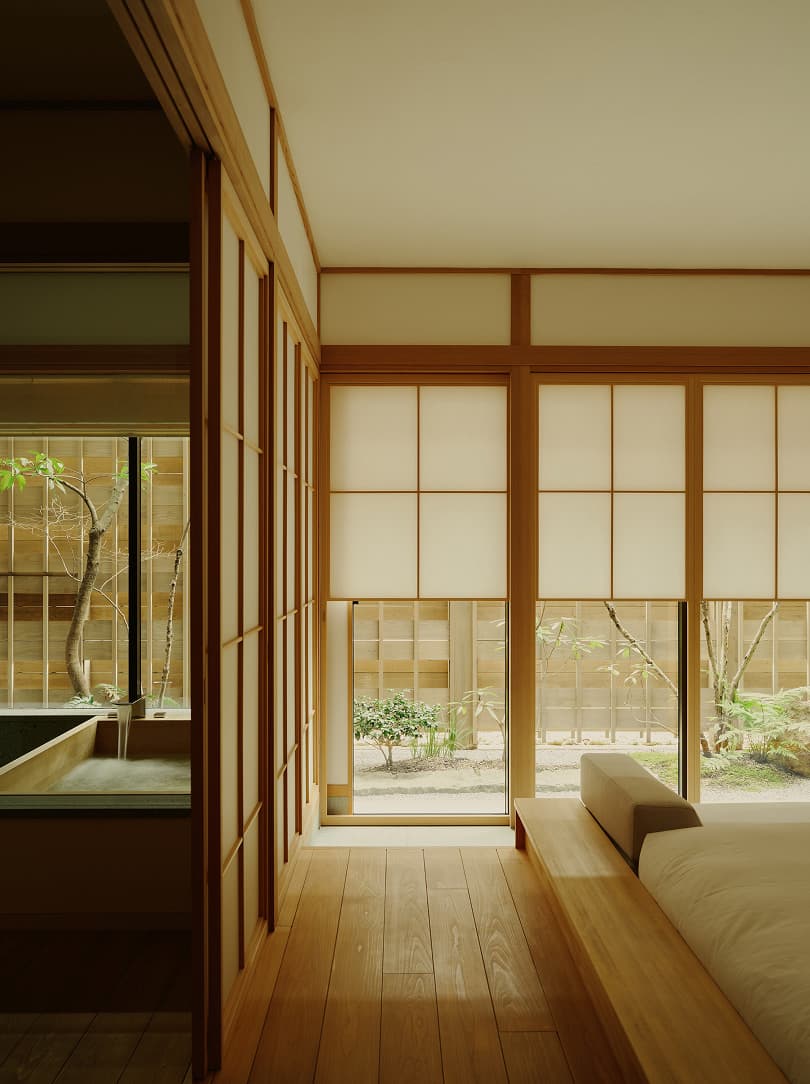
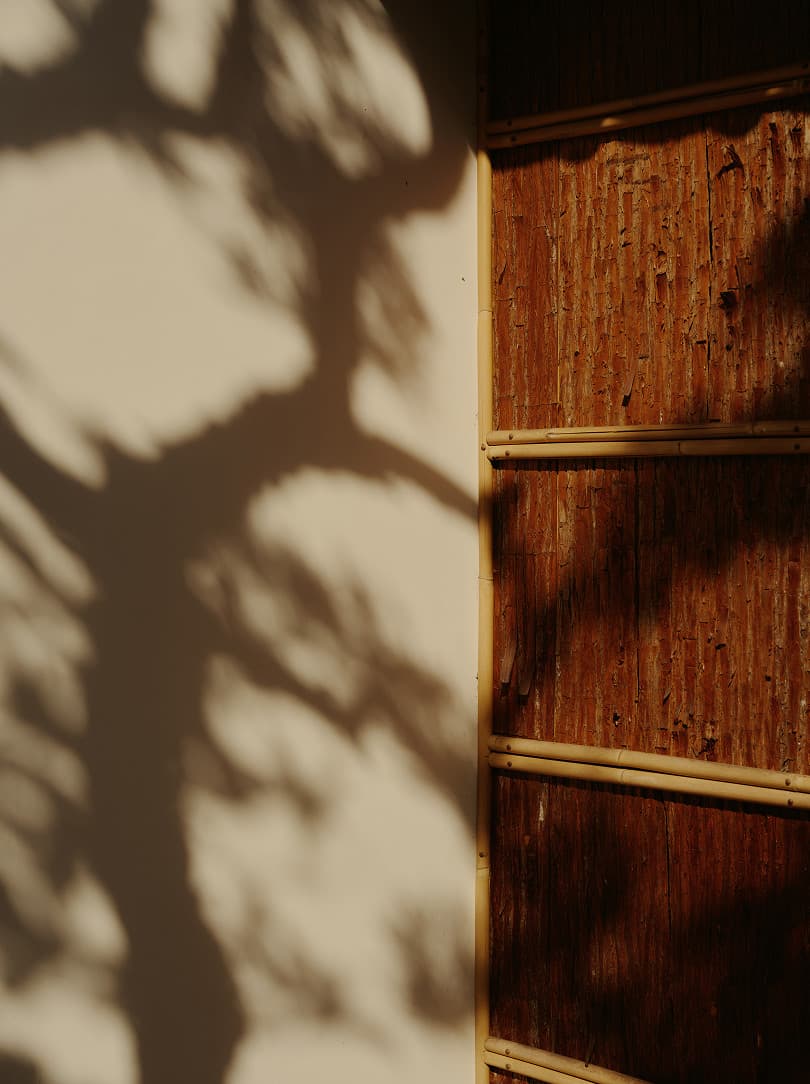
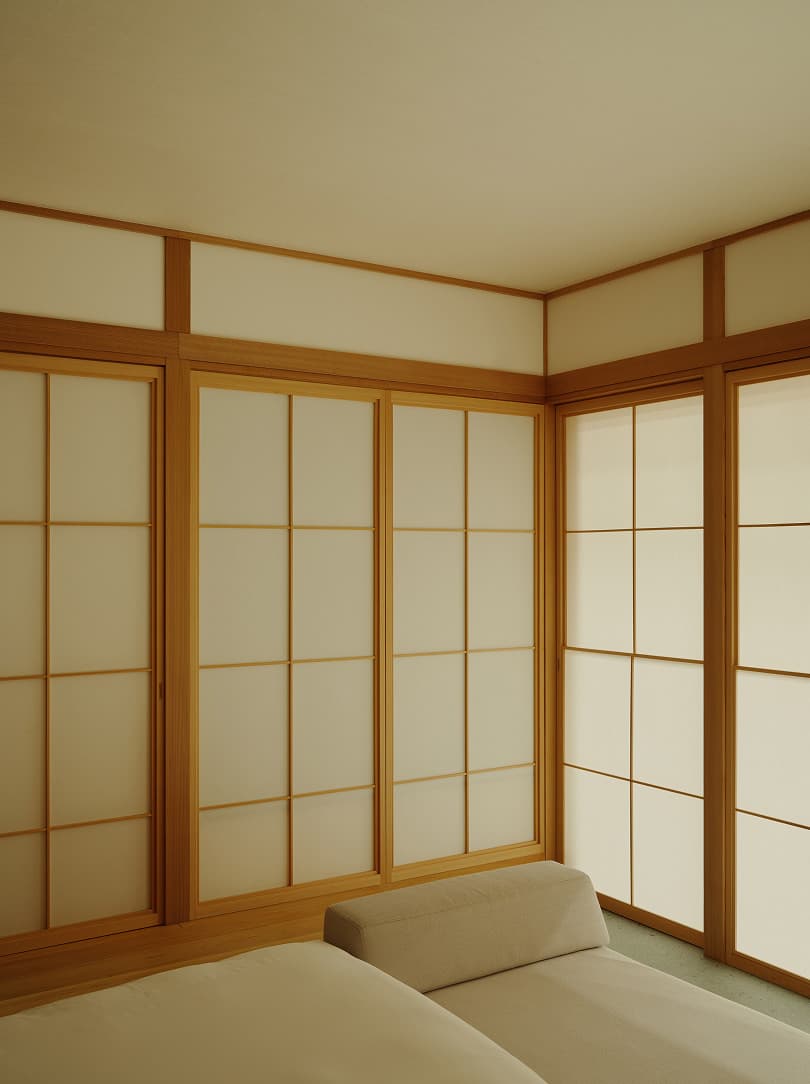
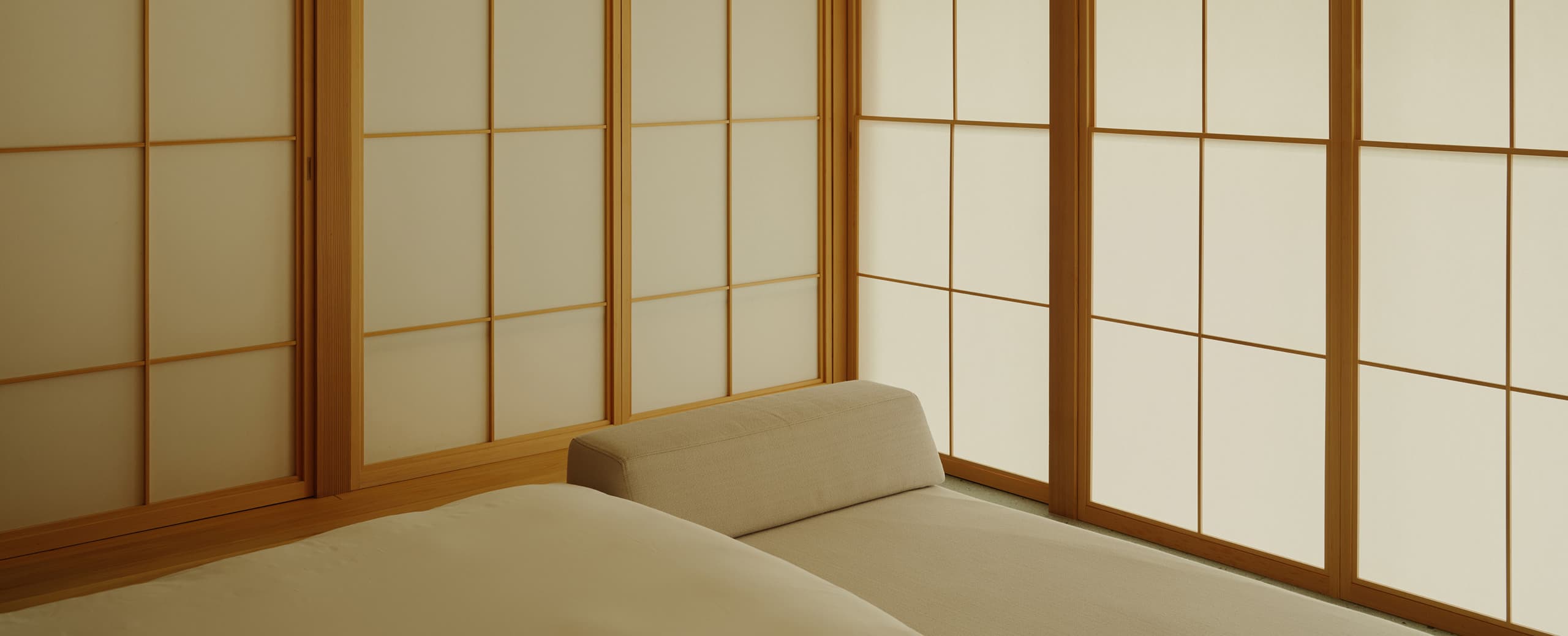
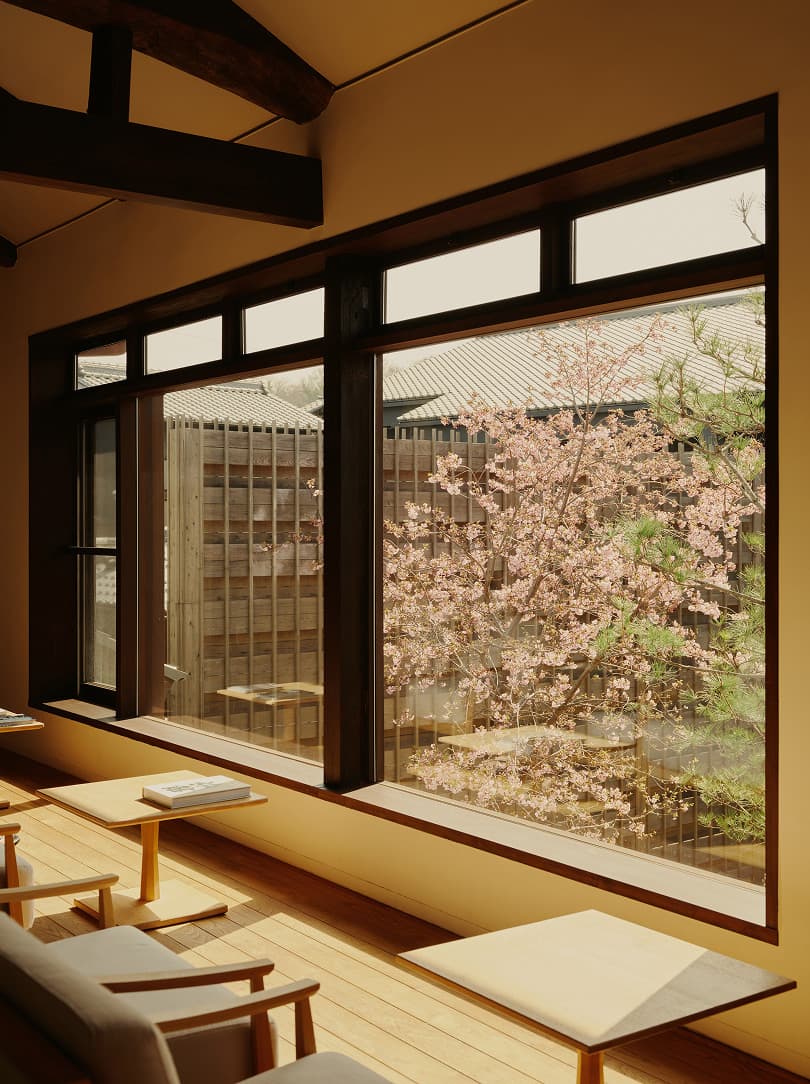
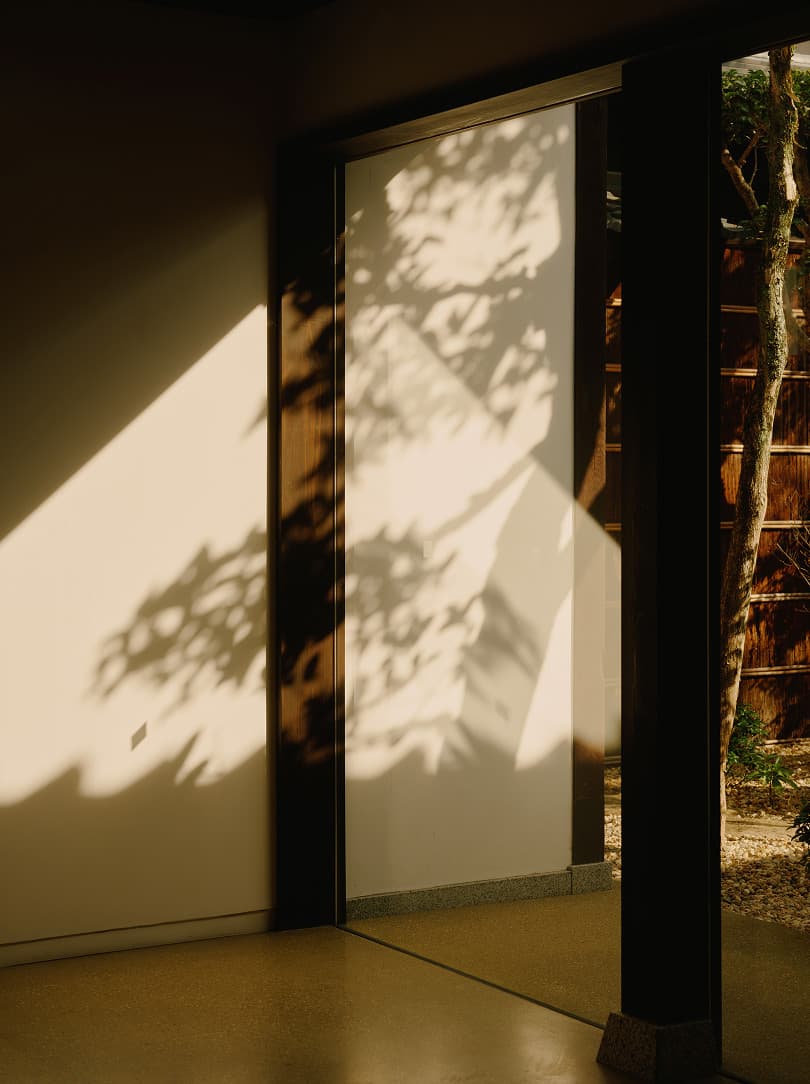
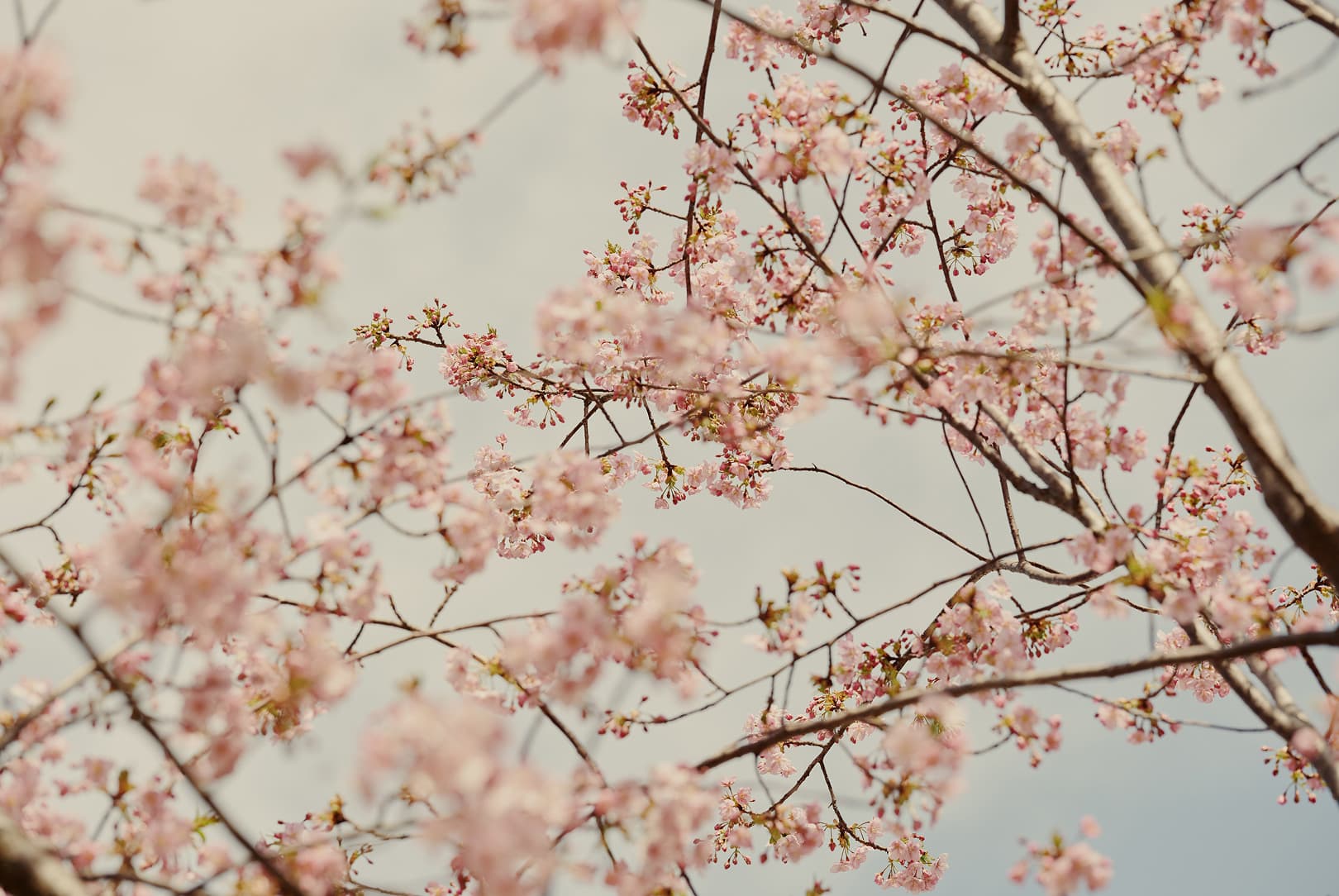
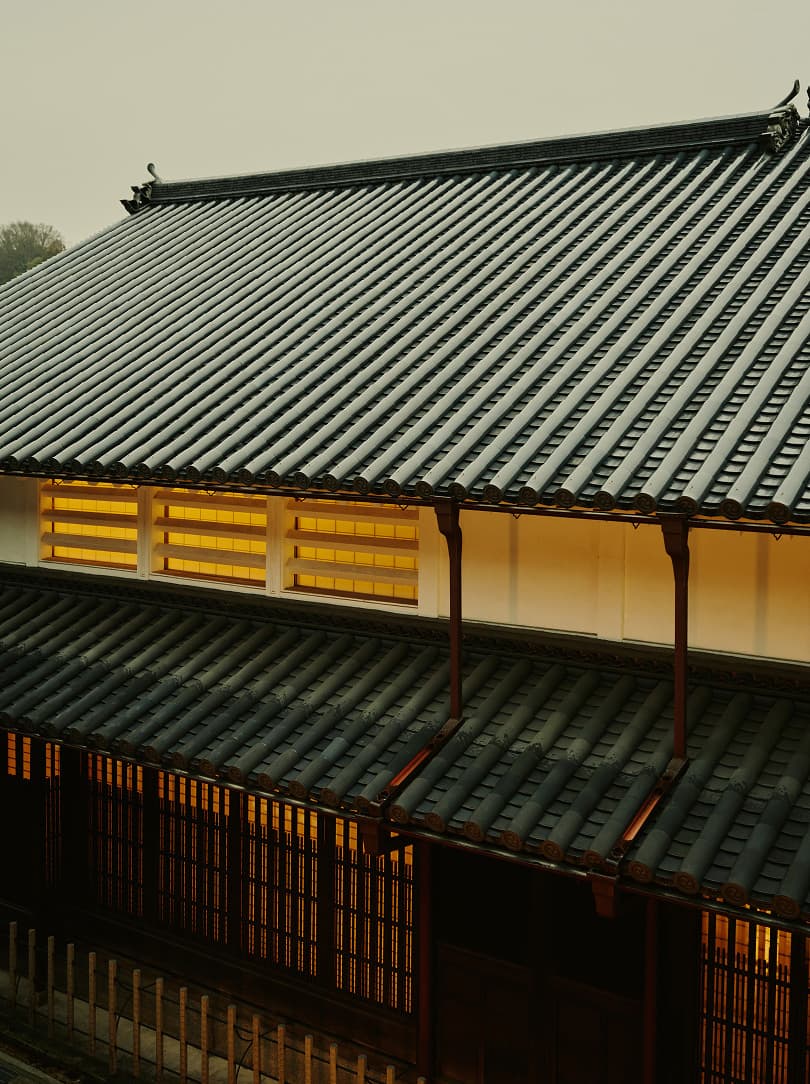
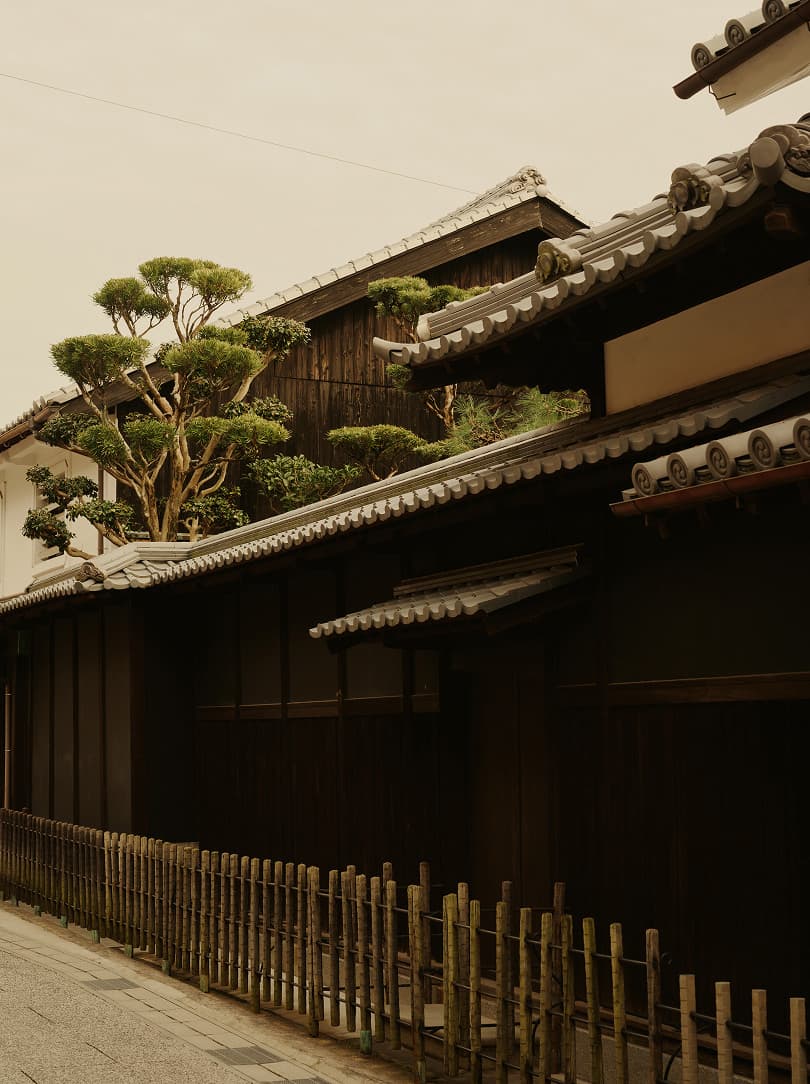
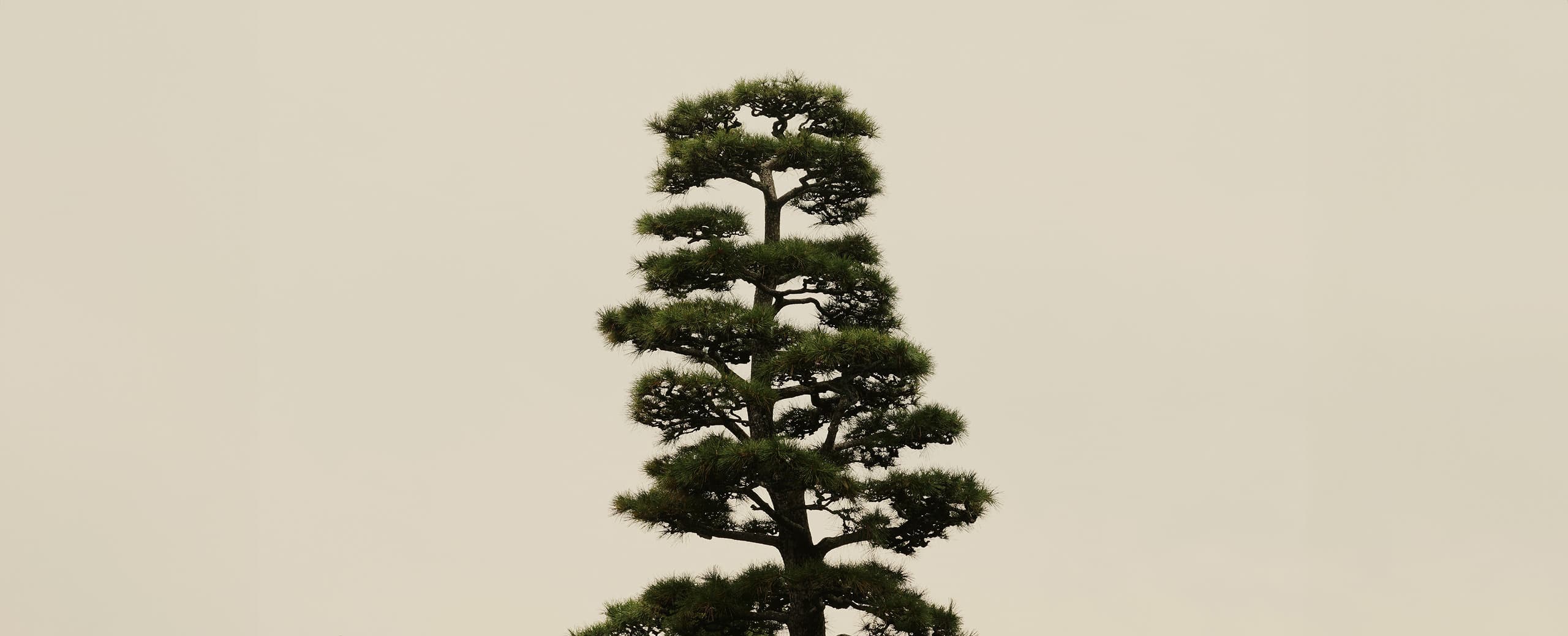
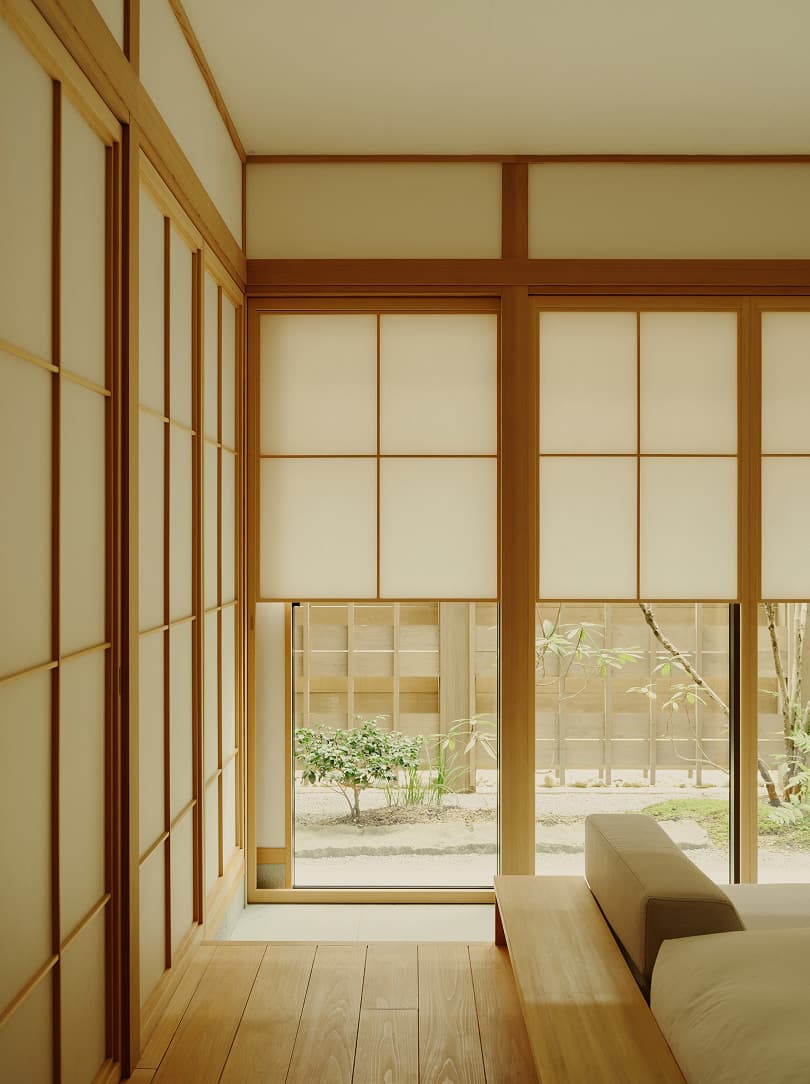
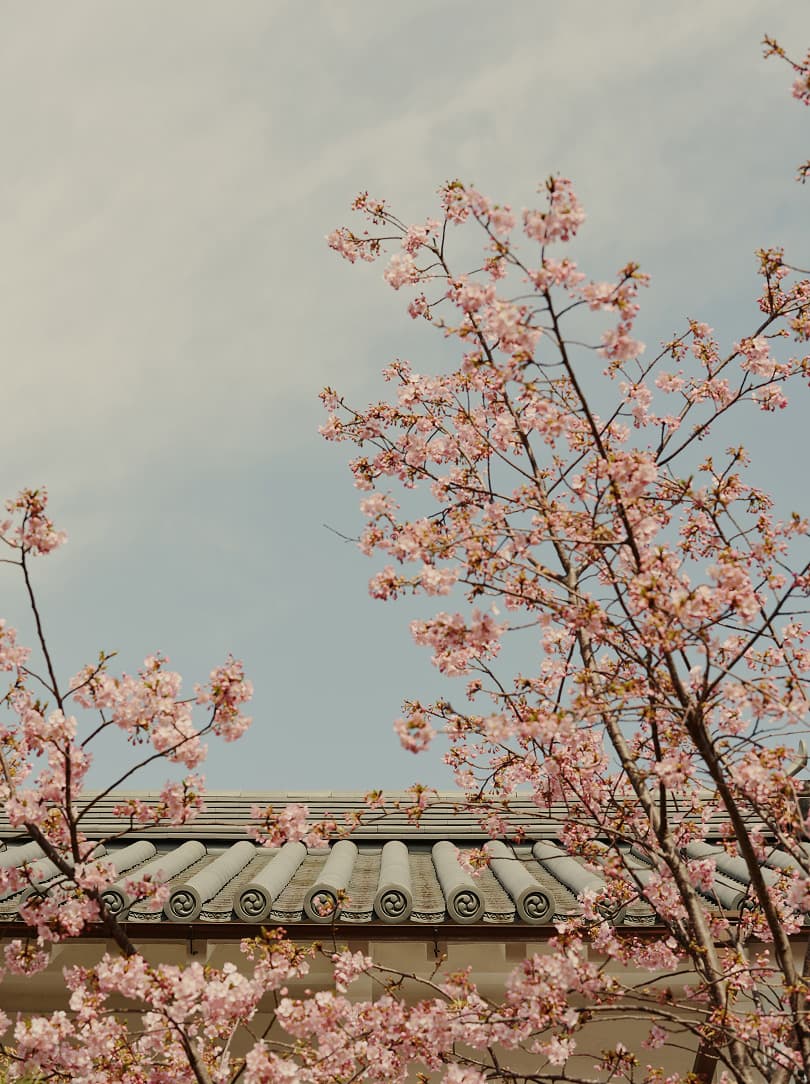
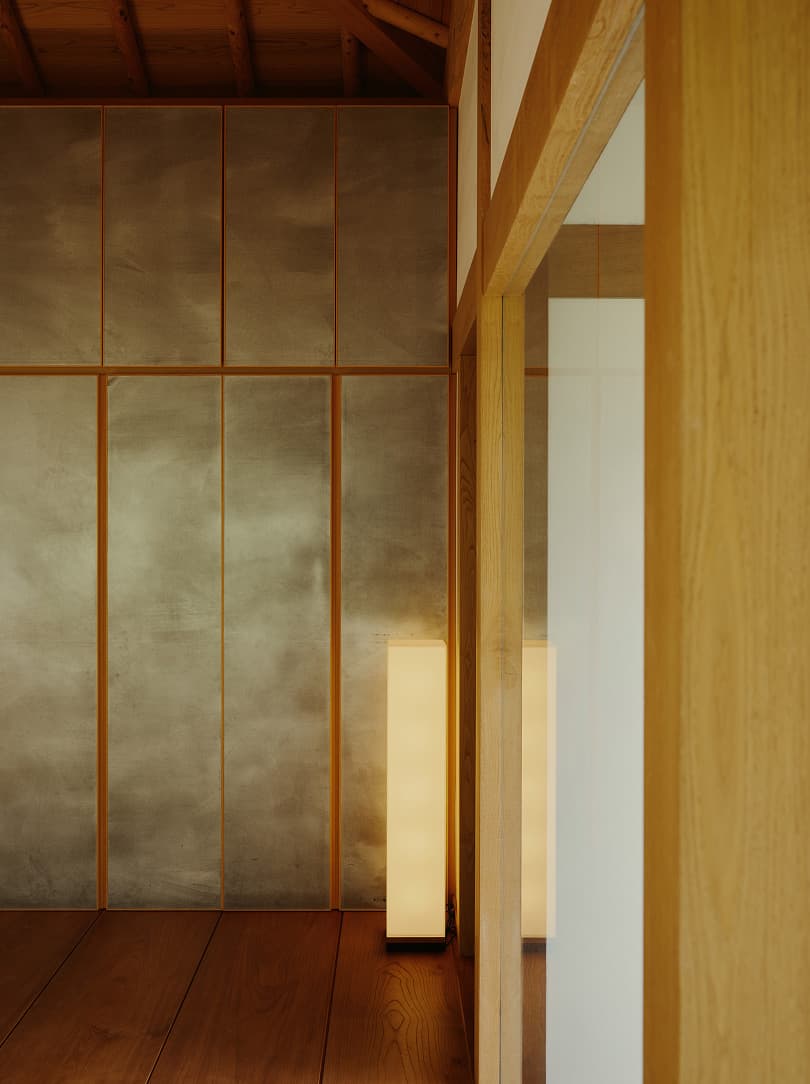
Shoji screens diffuse the morning light as it settles into the room, rousing us naturally from sleep. It falls softly across white sheets, cedar panelling and tatami. All is quiet as we slide open one of the screens and pull back the glass door for a breath of fresh air, faintly laced with the sea. No one walks along the street below. There is only the view ahead: the tops of Japanese ‘matsu’ pines, pruned into layered, cloud-like forms, and a delicate bloom of cherry blossom set among the undulating grey ‘kawara’ rooftops of Azumi Setoda – a 150-year-old former salt merchant’s house. It is a kind of quiet that feels increasingly rare.
In recent years, as the ability to travel has steadily returned, the conditions of hospitality have also shifted. Staffing remains a challenge, the pace has quickened and the space for slower, more attentive service has narrowed. While commercial success needs to manifest faster than ever, even boutique and luxury hotels have turned to technology – automation, mobile systems, increasingly sophisticated forms of AI – not only to support operations, but also to meet the rising expectations of their guests. At the same time, a growing emphasis on sustainability is reshaping how hotels operate, even as the divide between high-end and everyday experiences becomes more pronounced.
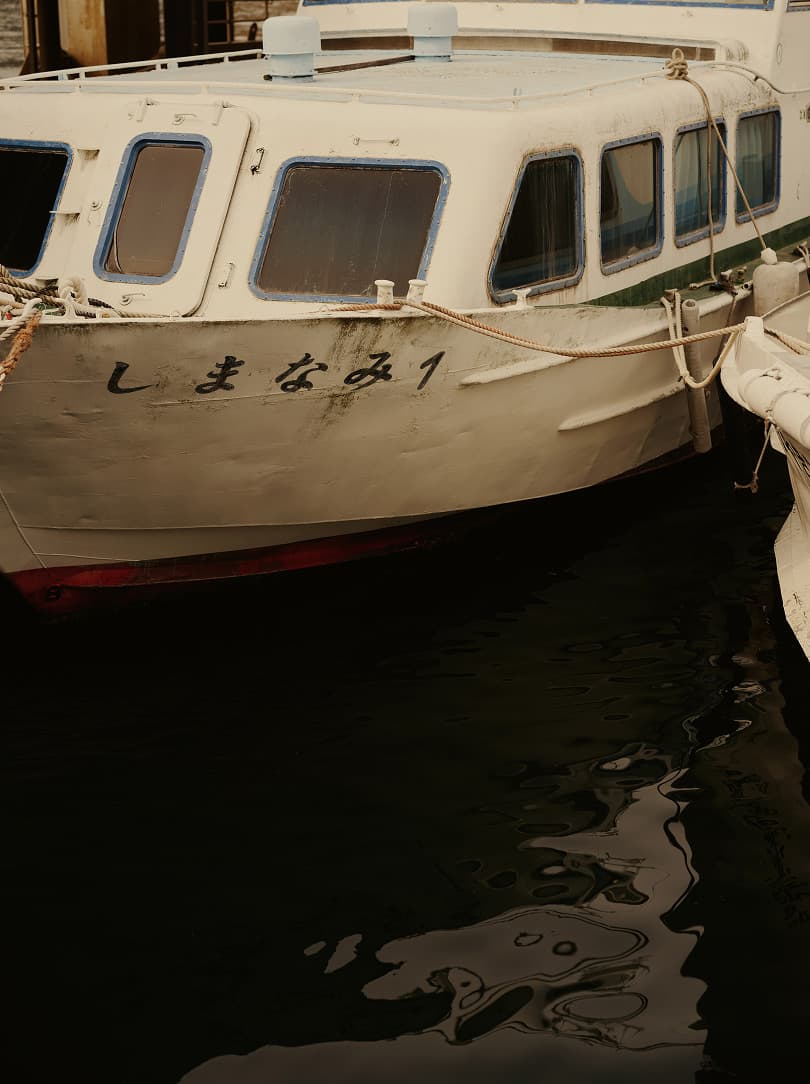
What emerges is a landscape that is more efficient, more responsive, yet ever more removed from the human gestures that once defined the core of its industry. Across Japan, however, there are signs of a quieter shift: the traditional idea of the ryokan – a home that receives guests – is finding renewed relevance, with new houses developing from these long-held traditions of hospitality. One such example can be found in Setoda, a port town on a small island in Japan’s tranquil Seto Inland Sea.
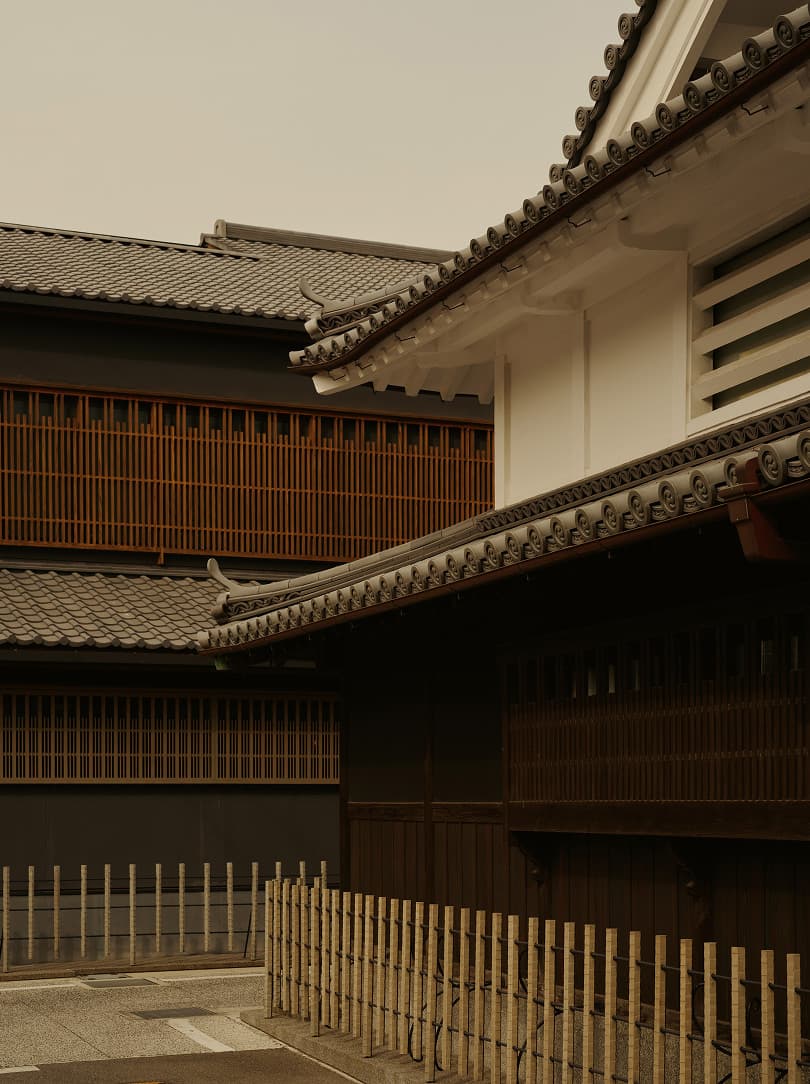
Housed within a carefully restored historic building, Azumi Setoda is a contemporary ryokan. In traditional form, the boundary between host and guest softens, and hospitality is expressed through small, attentive gestures, not overt service. At Azumi, these conventions are gently reinterpreted. Staff do not wear kimonos and the rituals are less prescribed, but the underlying intention remains: to create a sense of ease, where guests feel not hosted, but received.
“Because it carries such a long history, I think it’s something we must cherish. I feel it is a great honour to inherit something with history.”
YOSHI KUBOTA
The project forms part of a new direction by Adrian Zecha, founder of Aman, the luxury hospitality group known for its quiet, design-led approach. His work has long been defined by a sensitivity to place and a resistance to excess. Originally trained as a journalist, he has been guided less by market trends than by observation – an instinct to build around what is already there, rather than impose upon it. After his years leading Aman, this thinking continued in more distilled forms, often at a smaller scale and with closer engagement with the local context. Rather than a standalone destination, Azumi Setoda was conceived as part of the town itself, where a stay extends beyond the building and into the streets, the pace of daily life and the people who live on the island. This is most tangibly evident in Yubune, the newly built bathhouse, open to both guests and locals.
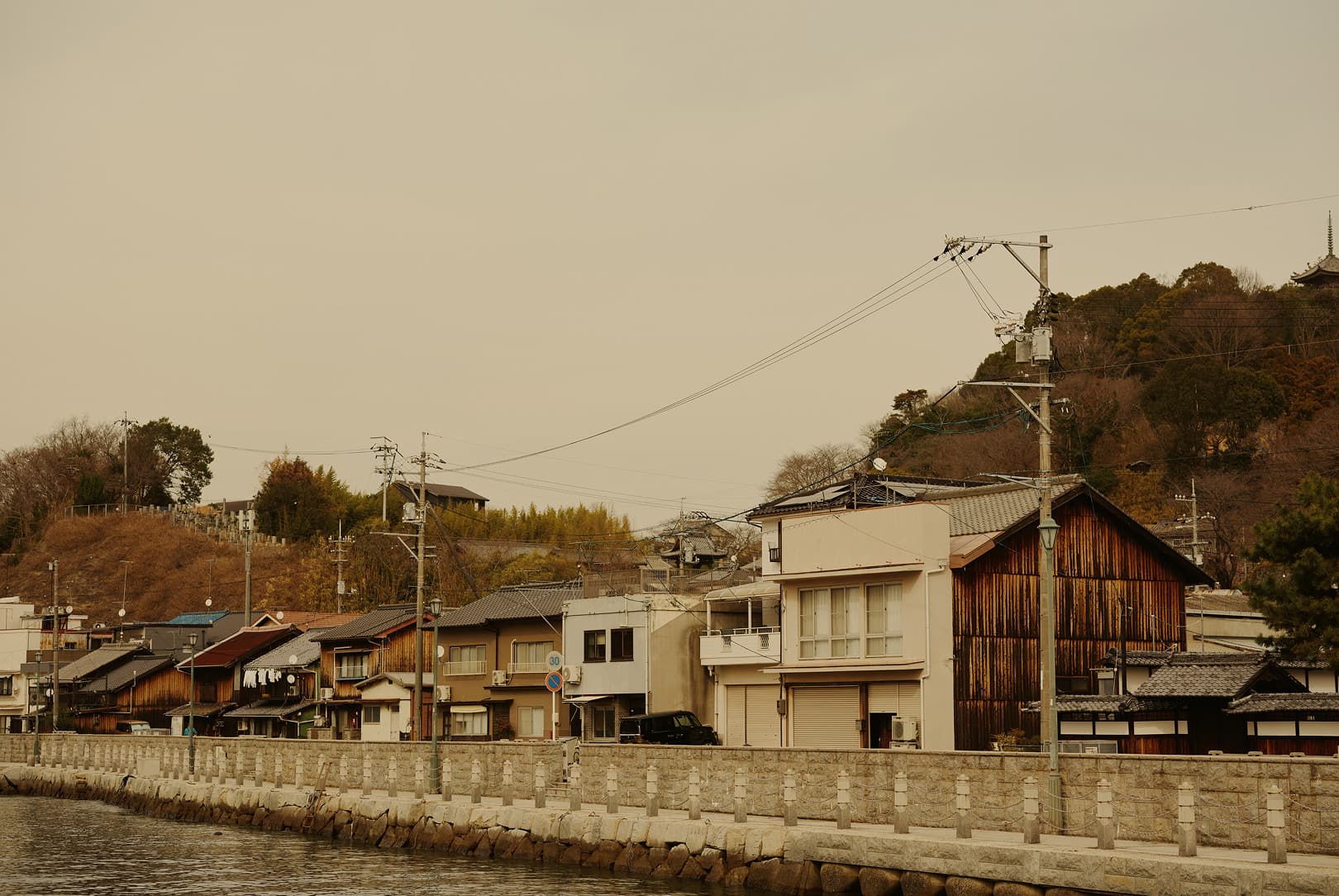
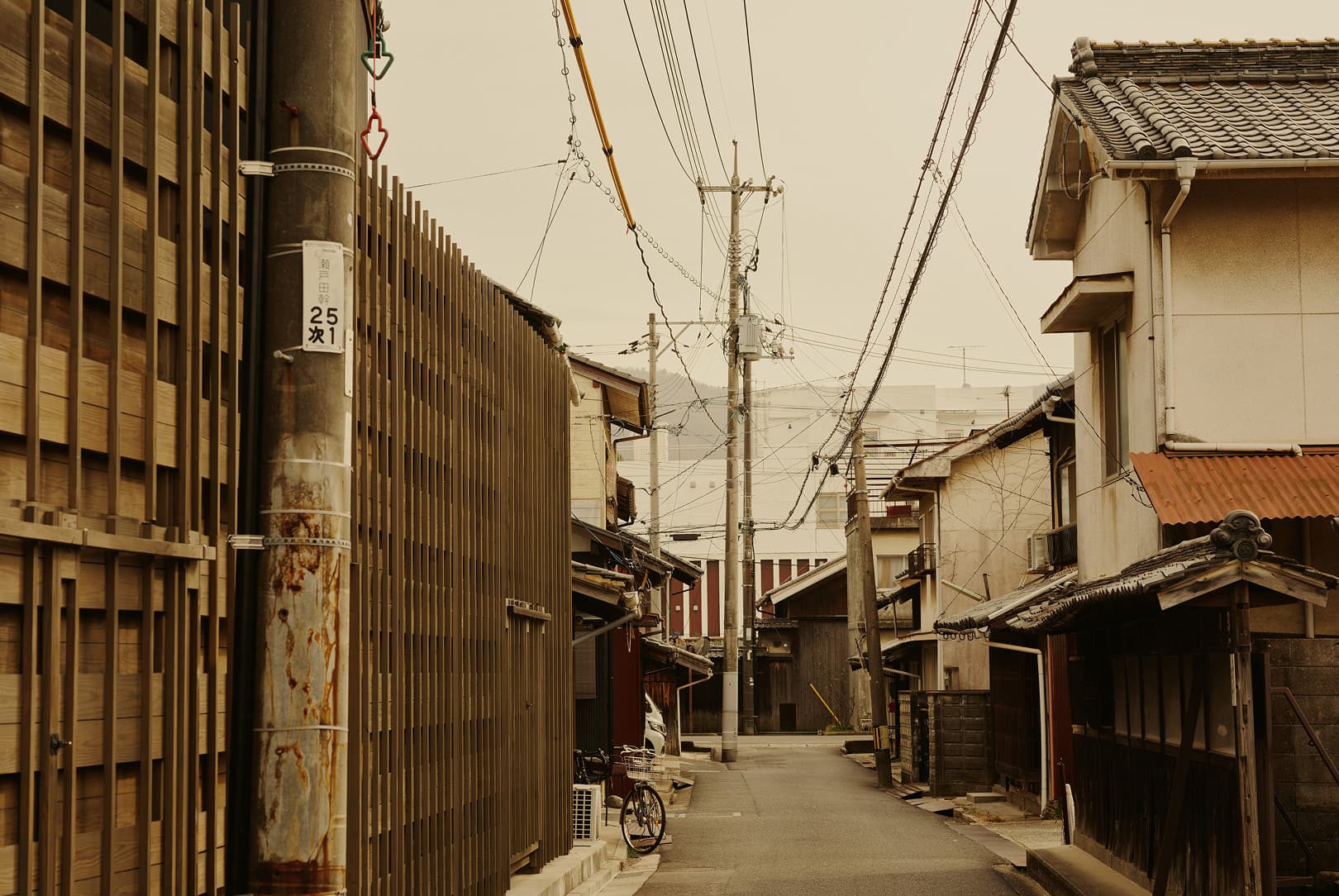
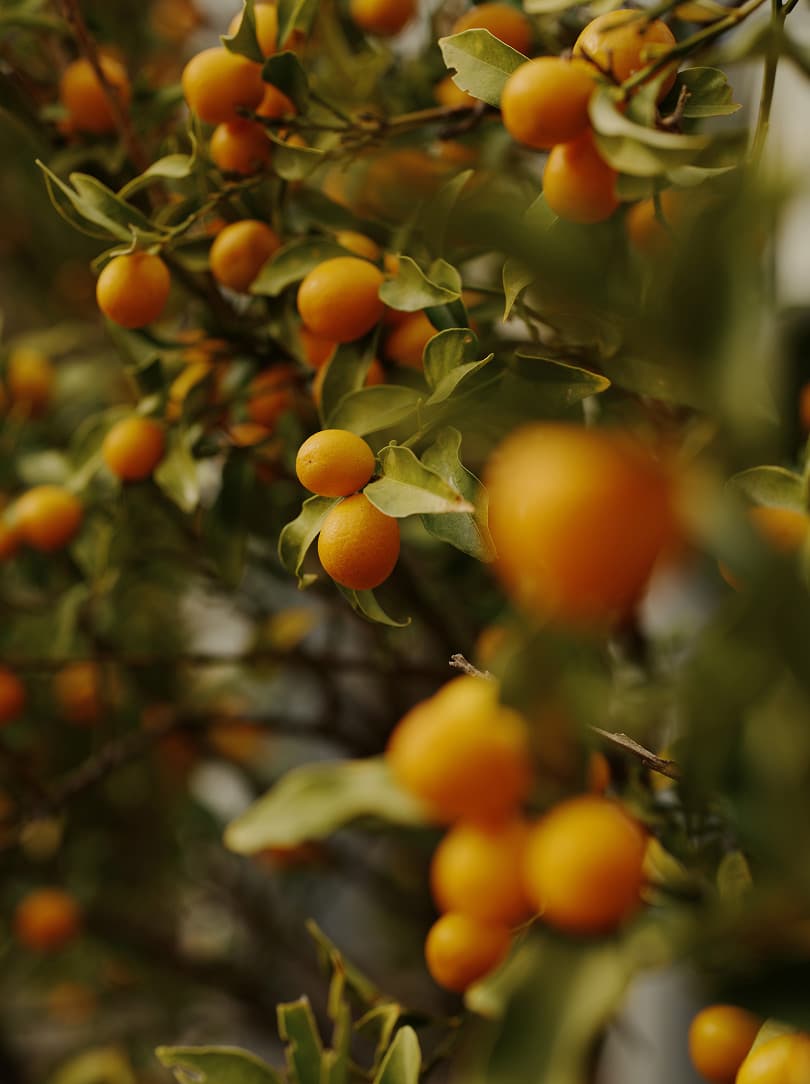
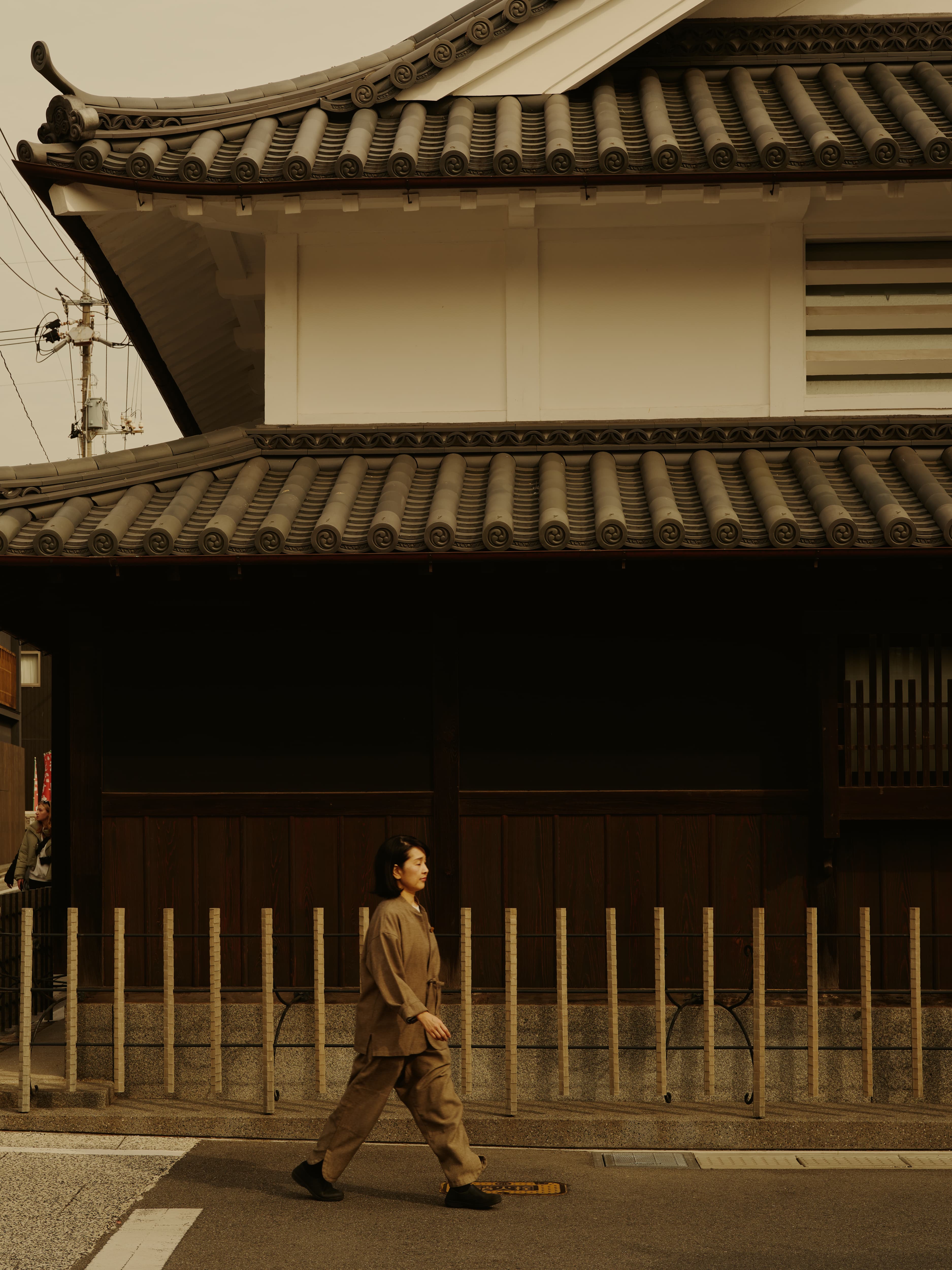
What first drew Adrian to Ikuchijima was the island’s abundant citrus groves, its sheltered position in the Seto Inland Sea and, eventually, the presence of an atmospheric old house: weathered yet intact, and still beautifully carrying the story of its past. Known for its mild climate and clarity of light, the island, in Hiroshima Prefecture, provides ideal conditions for citrus cultivation. As such, it is often referred to as ‘Lemon Island’ and is Japan’s leading centre of lemon production. In spring, the fruit blossoms fill the air with a heady fragrance that wafts through daily life. Time moves more slowly here now, but Setoda, the island’s main town, was once a thriving port, where ships carried salt and coal alongside goods such as kombu kelp, herring and cotton, linking the Inland Sea to a wider network of trade. The influential Horiuchi family were part of that flow, responsible for much of the country’s salt trade during the Edo and Meiji periods. It was here, near the port, that they built and lived in this house.
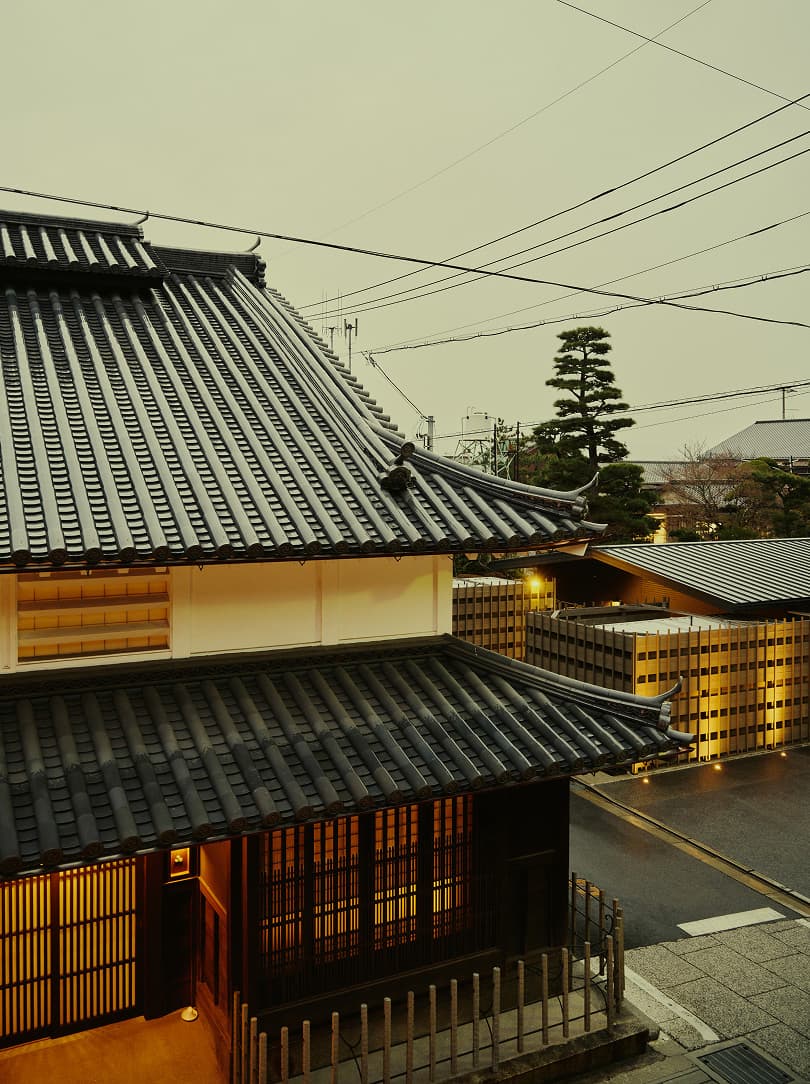
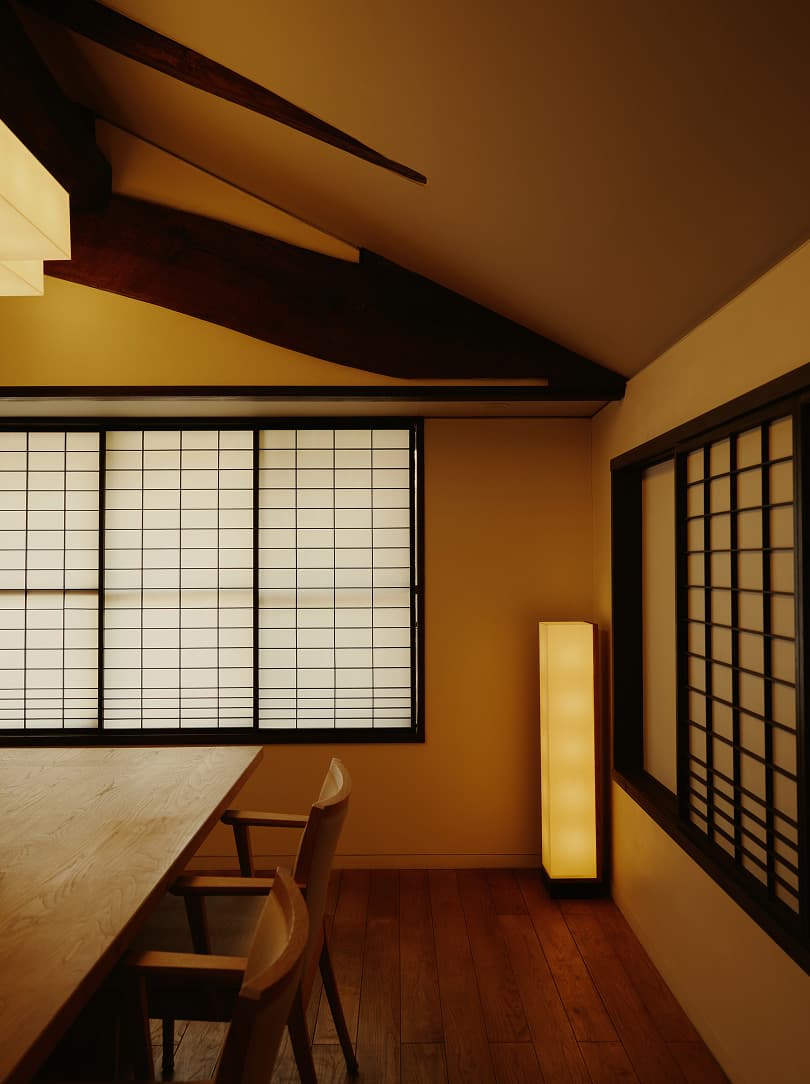
Today, the house remains in many ways unchanged, its structure, façade and contents carried forward instead of being set aside or discarded. It is not preserved as a museum, but lived in as it was meant to be – the rooms in use, the details encountered and appreciated in passing. Many of the family’s ceramic vessels once stored away in wooden boxes have been returned to daily life, used in service and for celebratory meals, as they might once have been, their surfaces enhanced with time rather than protected from it. As general manager Yoshi Kubota explains, there is a quiet responsibility in this continuity. “Because it carries such a long history, I think it’s something we must cherish,” she says. “I feel it is a great honour to inherit something with history.”
“Adrian Zecha often says guests should be welcomed as if they were family. But that only has meaning if it’s genuine. Each person is different, so hospitality has to be personal.”
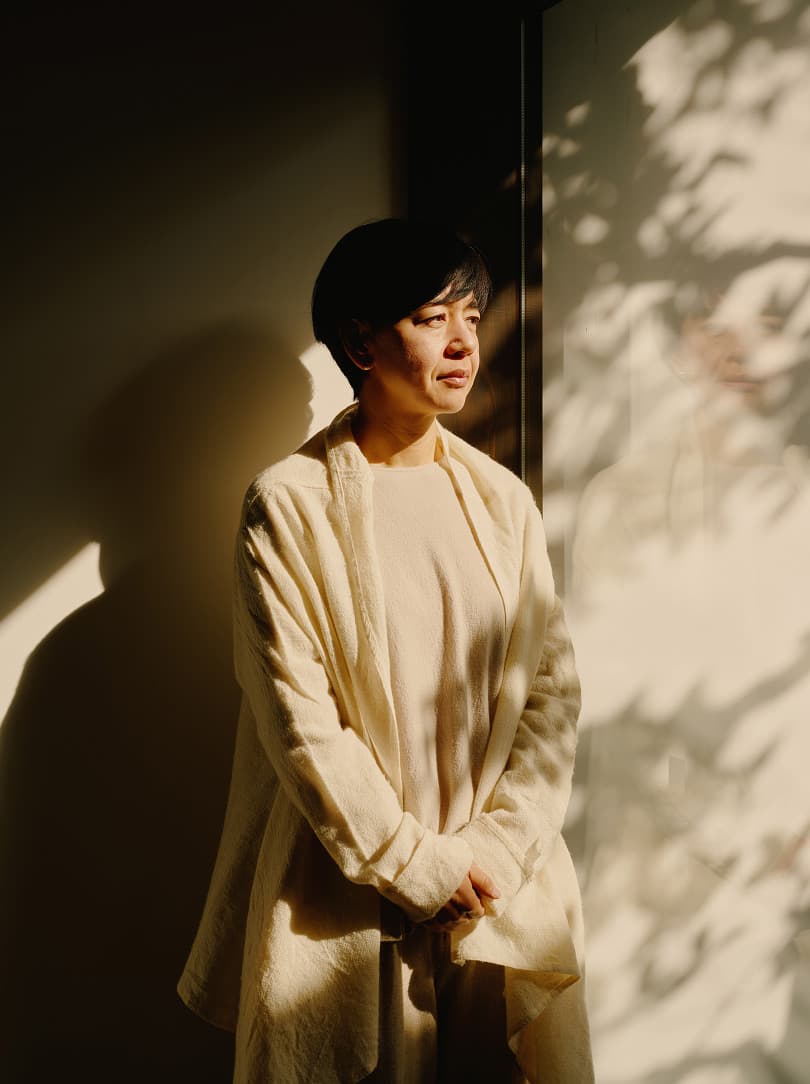
Kubota-san moves through the house with a quiet assurance, attentive without ever imposing. Dressed in an airy linen ensemble of beige trousers, a cream top and a shawl-like jacket that lightly drapes and floats around her, she appears to hold the atmosphere rather than direct it. When she speaks, it is with warmth and charisma, as well as a calm clarity that reflects the place itself. Having spent much of her career with Adrian at Aman, Kubota-san, originally from Tokyo, brings a deep understanding of his philosophy. And it is here, on this small island, that she feels most at ease – drawn to its restful rhythm and closeness to nature. “When I saw this old house in Setoda,” she recalls, “I naturally felt that I could live here, which is why I decided to come to this island.”
Despite being from a big city, Kubota-san prefers the intimacy of Japan’s smaller regions, which chimes with Azumi Setoda’s style of service. “Mr Zecha often says guests should be welcomed as if they were family. But that only has meaning if it’s genuine. If your own grandmother came to stay, you would think carefully about what she needs, and act accordingly. It’s the same with guests: each person is different, so hospitality has to be personal.”
It is a way of working that depends on time and on the space to notice, to respond, to adjust. Yet that space is not always available. As visitor numbers grow and expectations shift, the pace of hospitality has changed, and with it the nature of the interaction itself. Many people begin working in hospitality for simple reasons, Kubota-san explains – to connect, to see a guest smile, to feel that small moment of satisfaction when someone says thank you. “That feeling is very important, but it can become difficult to hold on to,” she continues. In busier places, where the tone is set by volume rather than exchange, something of that intimacy can slip away. “When 20 people are waiting, you can’t really meet your guests.”
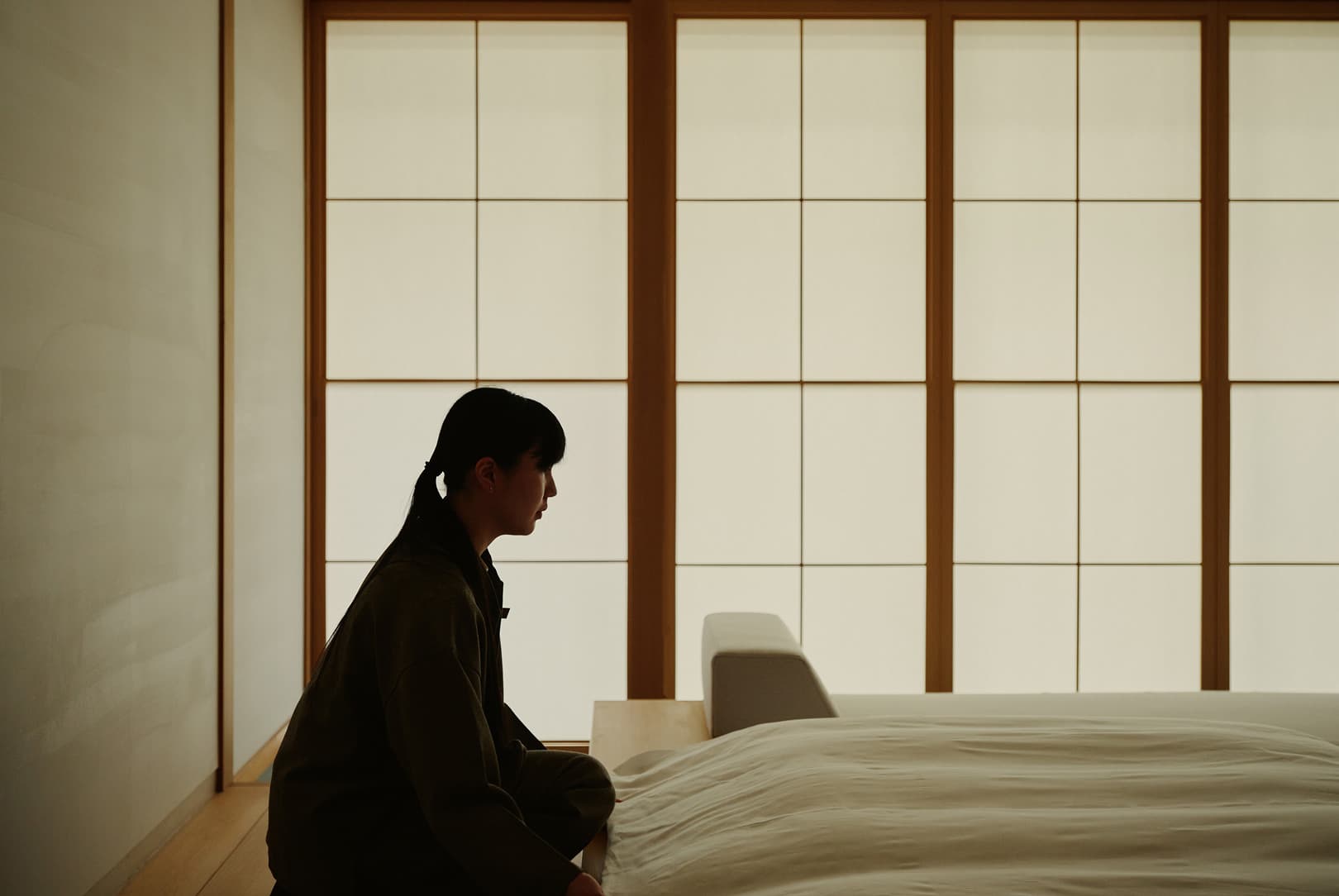
Staffing reflects a different set of priorities. While some arrive with formal training, others come without experience, drawn by a simple desire to work with people. As Kubota-san explains, the ability to serve here is defined by intention, not perfection. “Even if they do not have experience, they can serve our guests,” Kubota-san says. “They want to make people happy. That is the basis of what they want to pursue.” In a rural setting, where hiring is more challenging, this openness becomes essential – creating a place where local people can find a role and grow into it over time.
For guests, the effect is immediate. With almost all staff from Japan, interactions remain rooted in the culture, rather than mediated through a more globalised service language. “I think the environment here allows guests to feel as if they are in a foreign country,” she reflects. Conversations unfold more slowly and guests respond in kind. “They respect this land and enjoy speaking with each member of staff.”
“For me, the most important part of travel is communication with local people.”
It is this that gives places like Setoda their particular resonance. Here, where the pace is slower and the local community is close-knit and welcoming – from a time stretching back to its days as a hub of foreign trade – hospitality can return to something deeper, more engaging. “For me, the most important part of travel is communication with local people,” Kubota-san says. “That’s when guests really feel they are somewhere else, somewhere meaningful.”
Within the tradition of the ryokan, this understanding of hospitality is often described through ‘omotenashi’ – a form of care rooted in attentiveness and anticipation. Rather than following a fixed set of rules, it relies on a sensitivity to what is needed before it is asked, shaping the experience in response. The emphasis rests on presence and on the quality of attention given to each guest.
In practice, this takes form through a continuity of care. Guests are often looked after by the same person throughout their stay, creating a familiarity that softens the sense of transaction. Around this sits a more personalised layer of oversight – traditionally held by the ‘okami’, or proprietress – through which the experience is guided as a whole. A relationship begins to take shape over time and guests are drawn into a shared rhythm, defined by attentiveness and a willingness to engage.
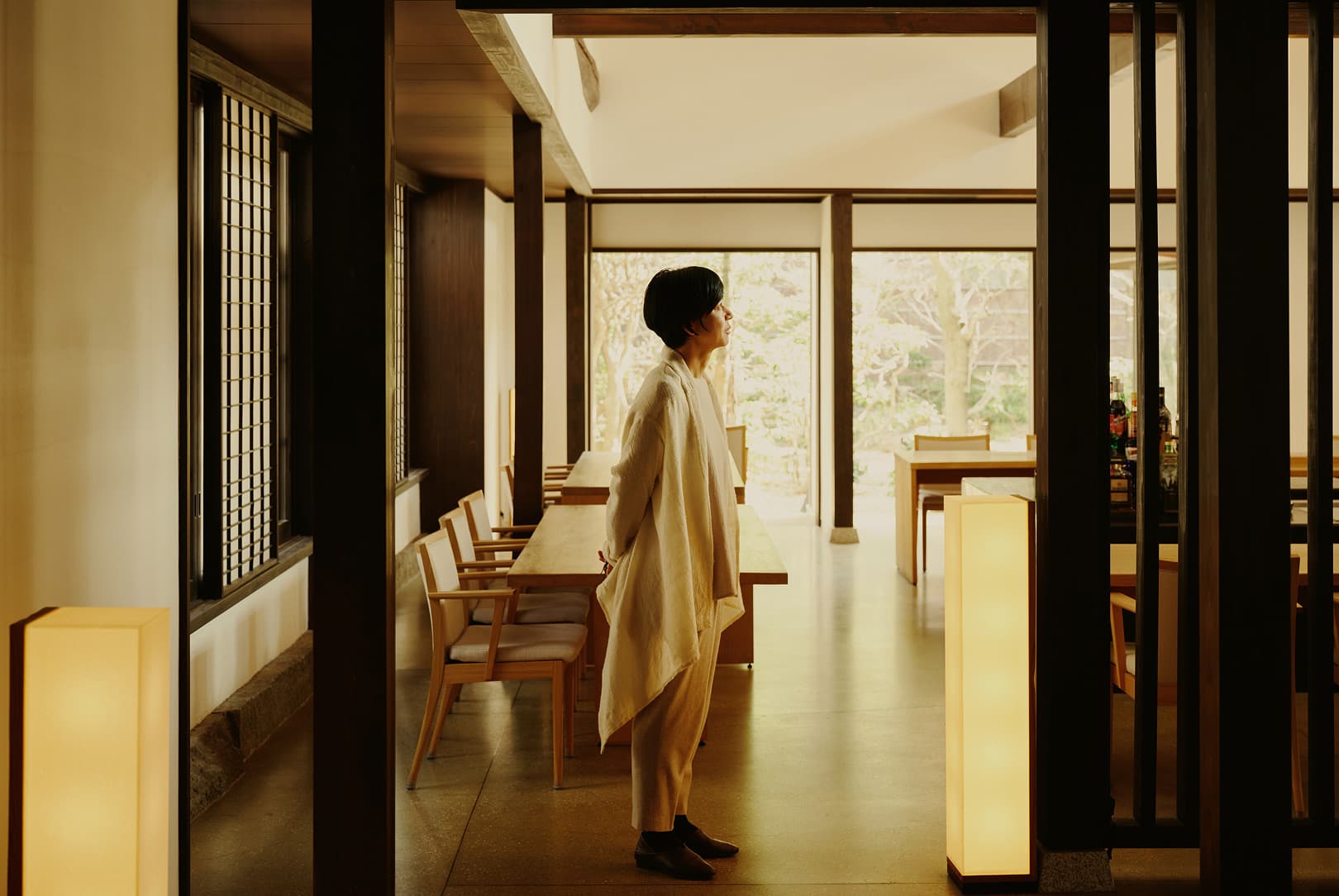
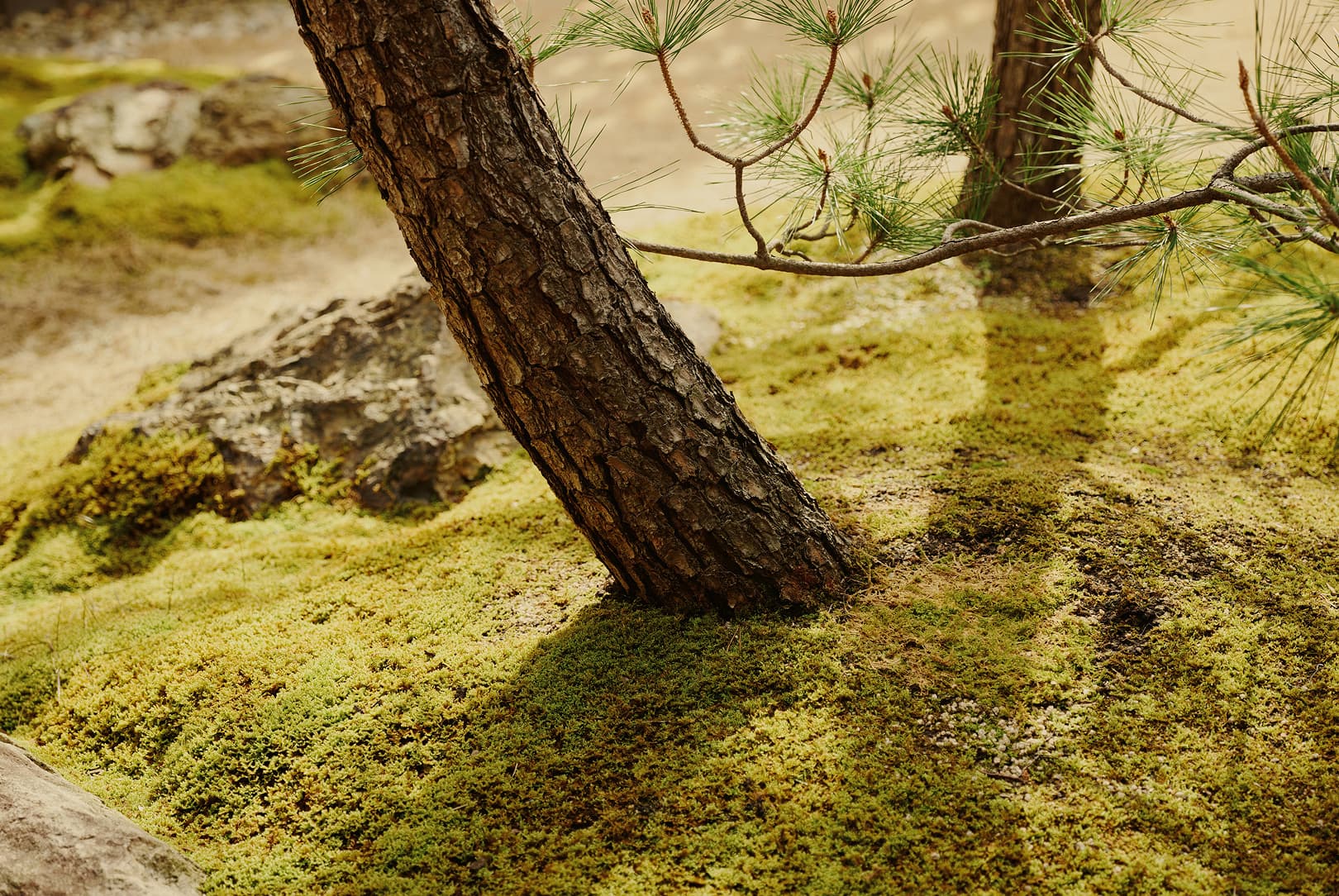
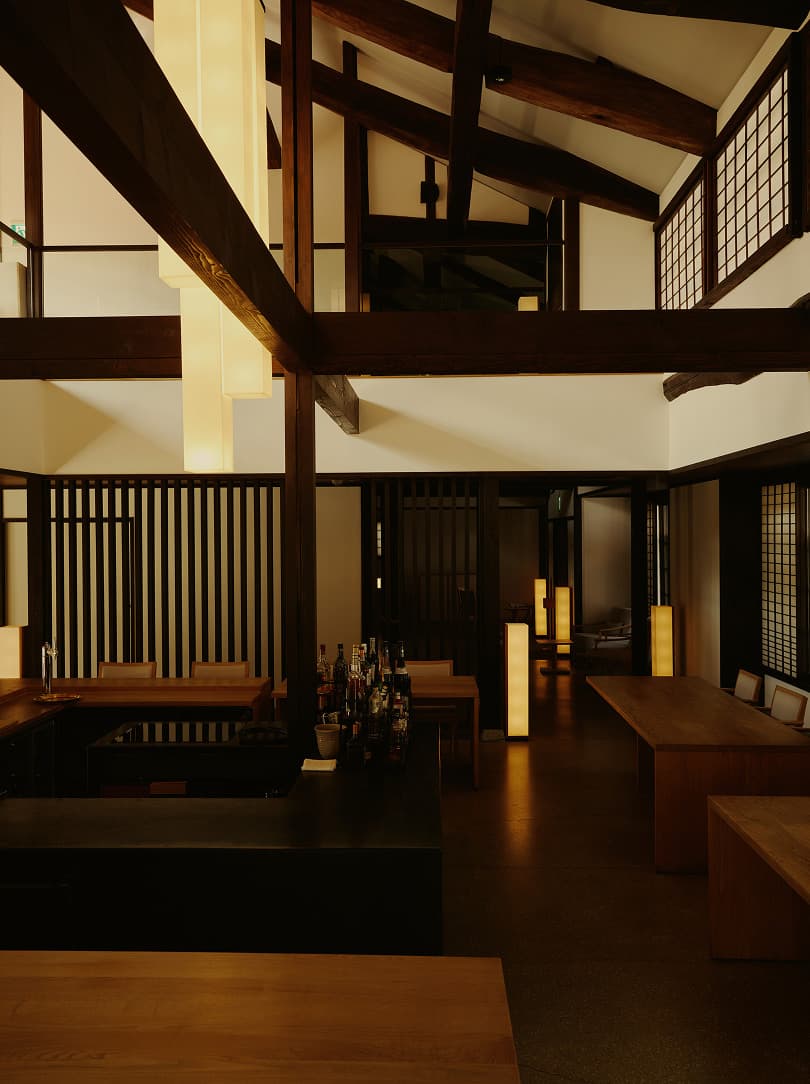
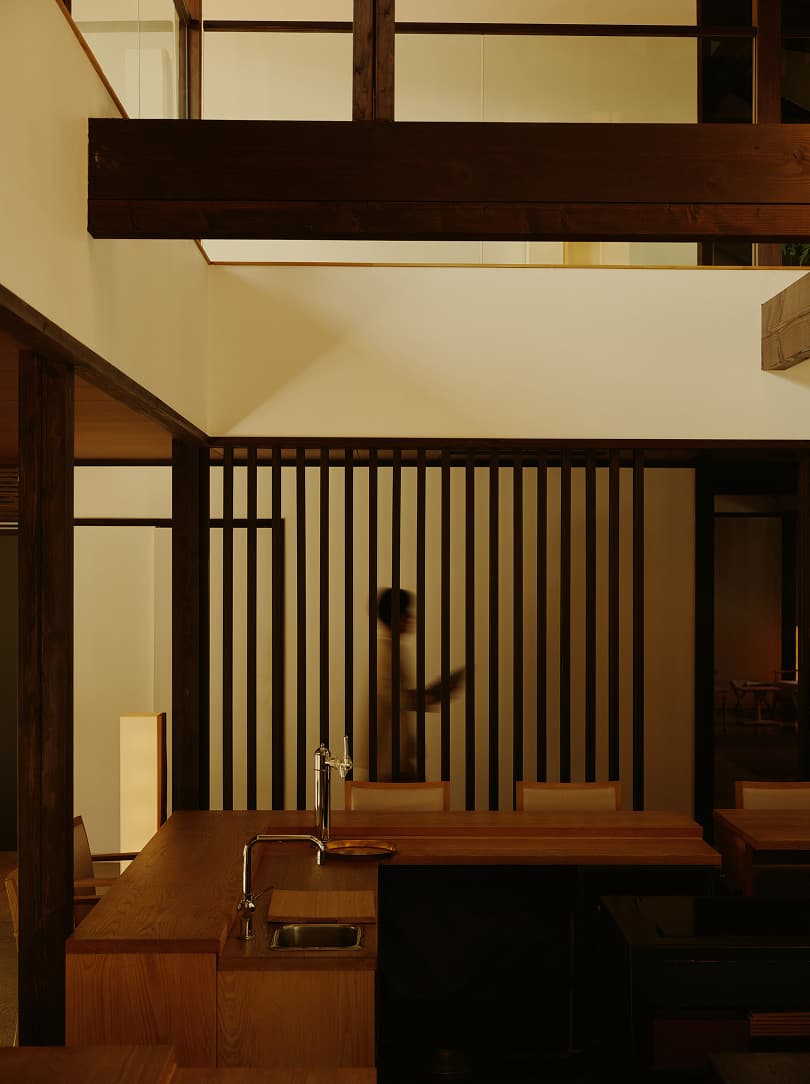
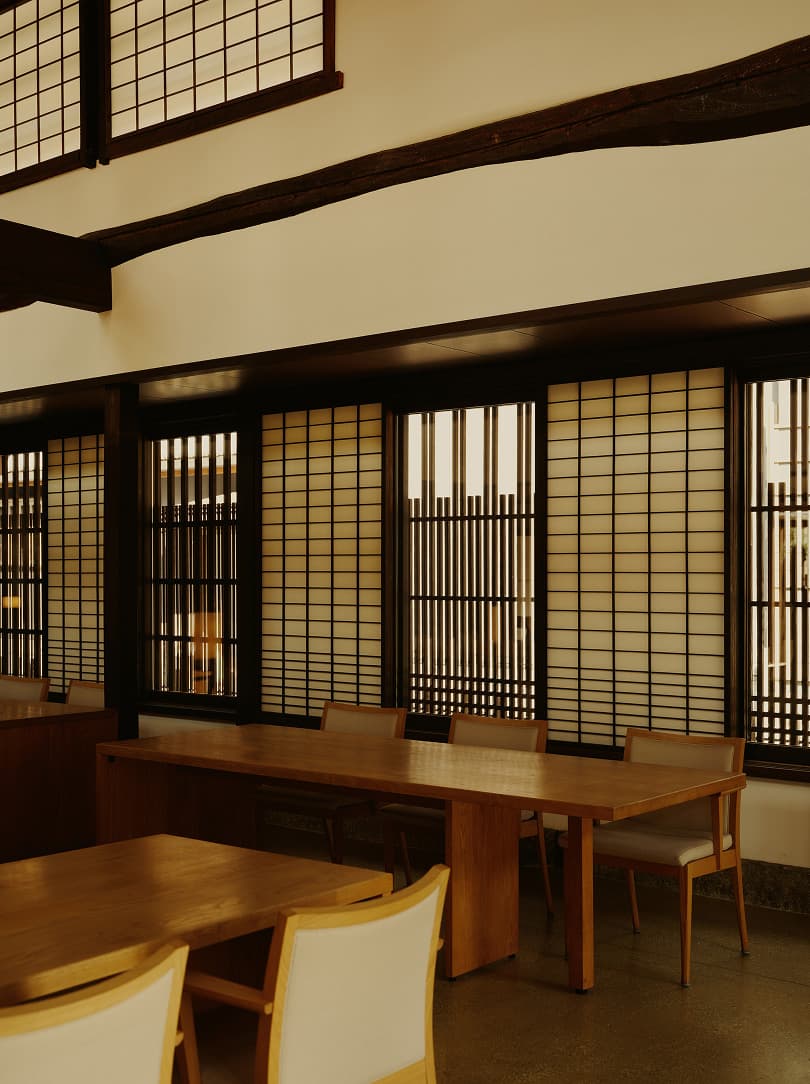
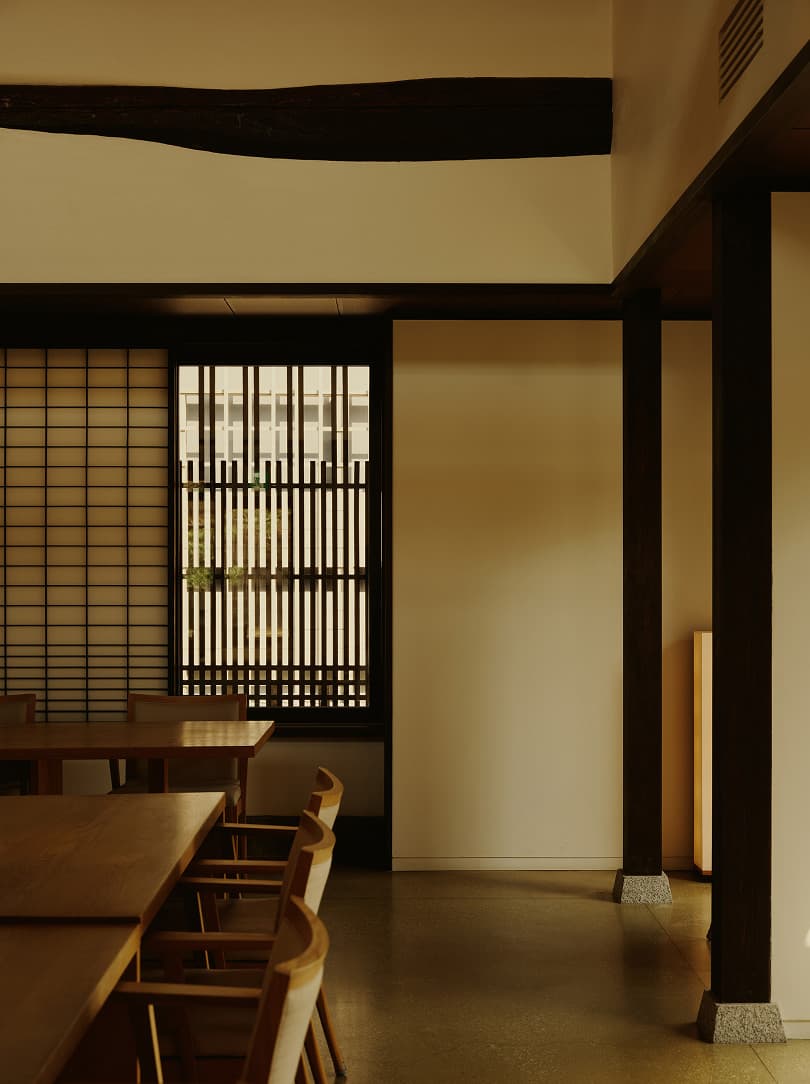
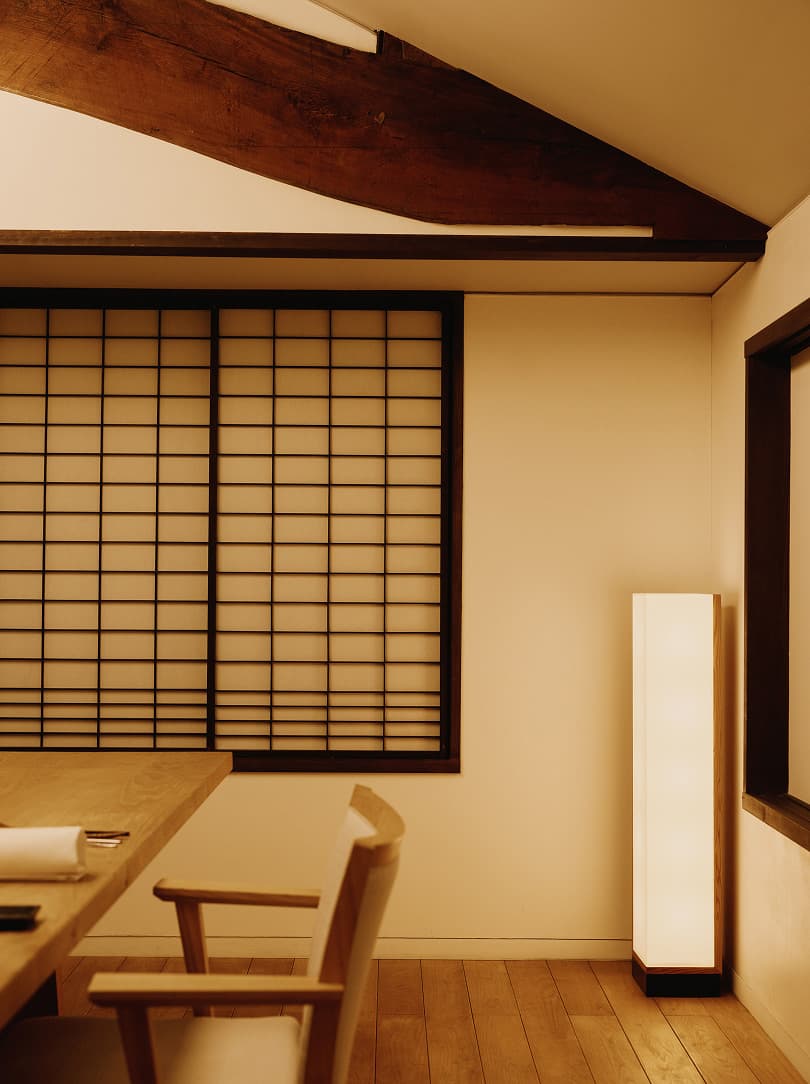
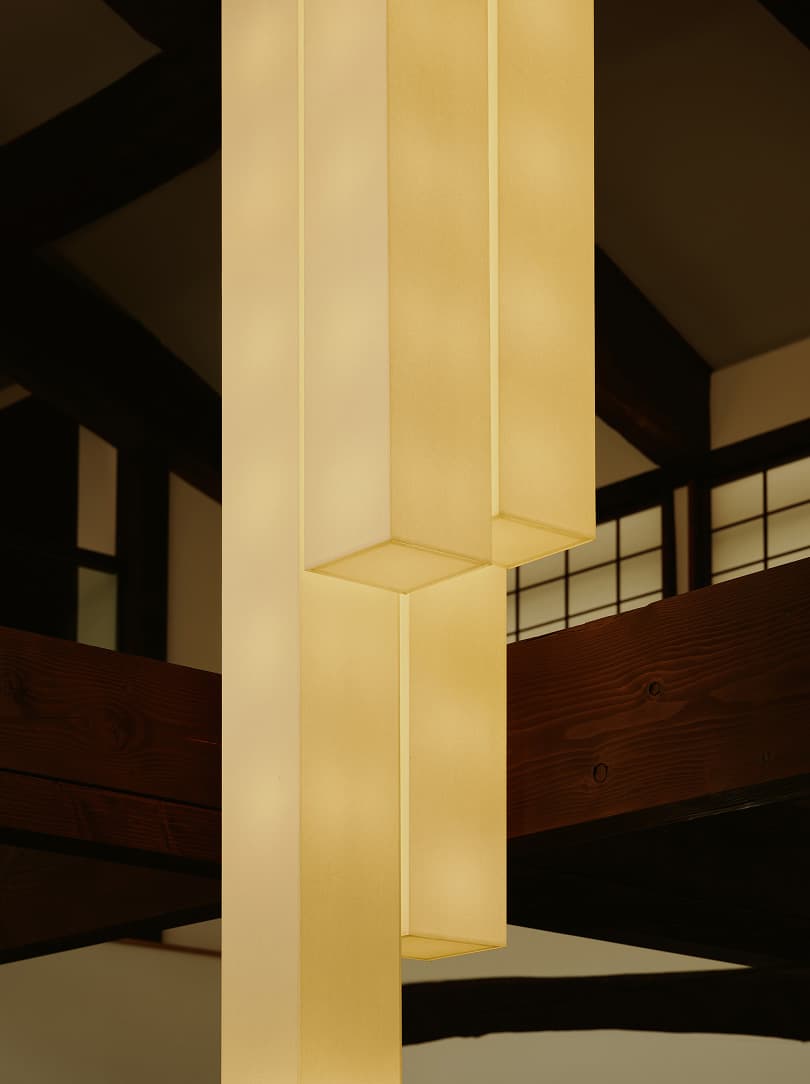
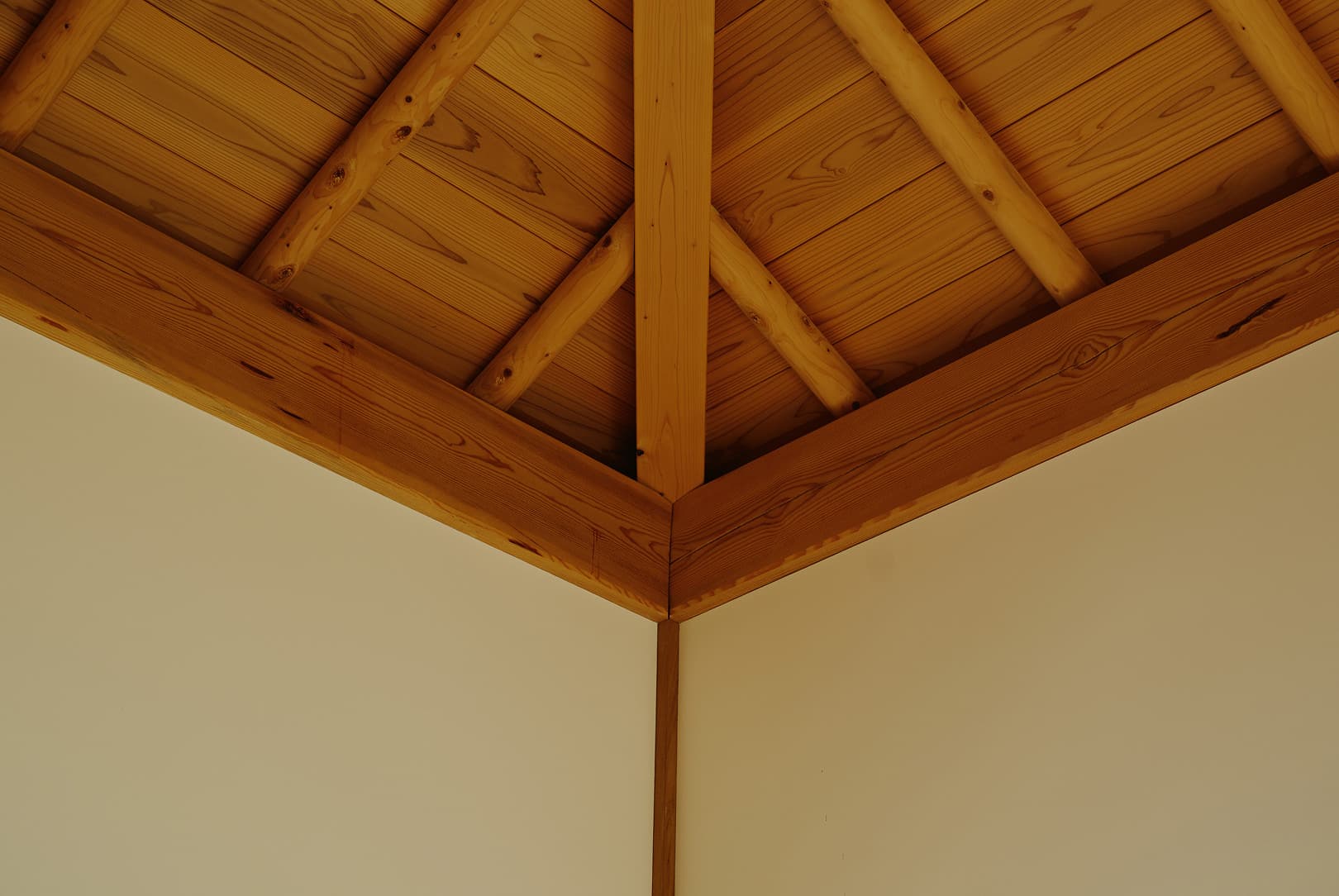
At Azumi, this same attentiveness extends beyond service, informing the spaces themselves. Architect Shiro Miura, who is based in Kyoto and specialises in ‘sukiya’ architecture and thoughtful restoration, preserved whatever could be retained – heavy wooden beams, delicate shoji screens, carved ranma panels.
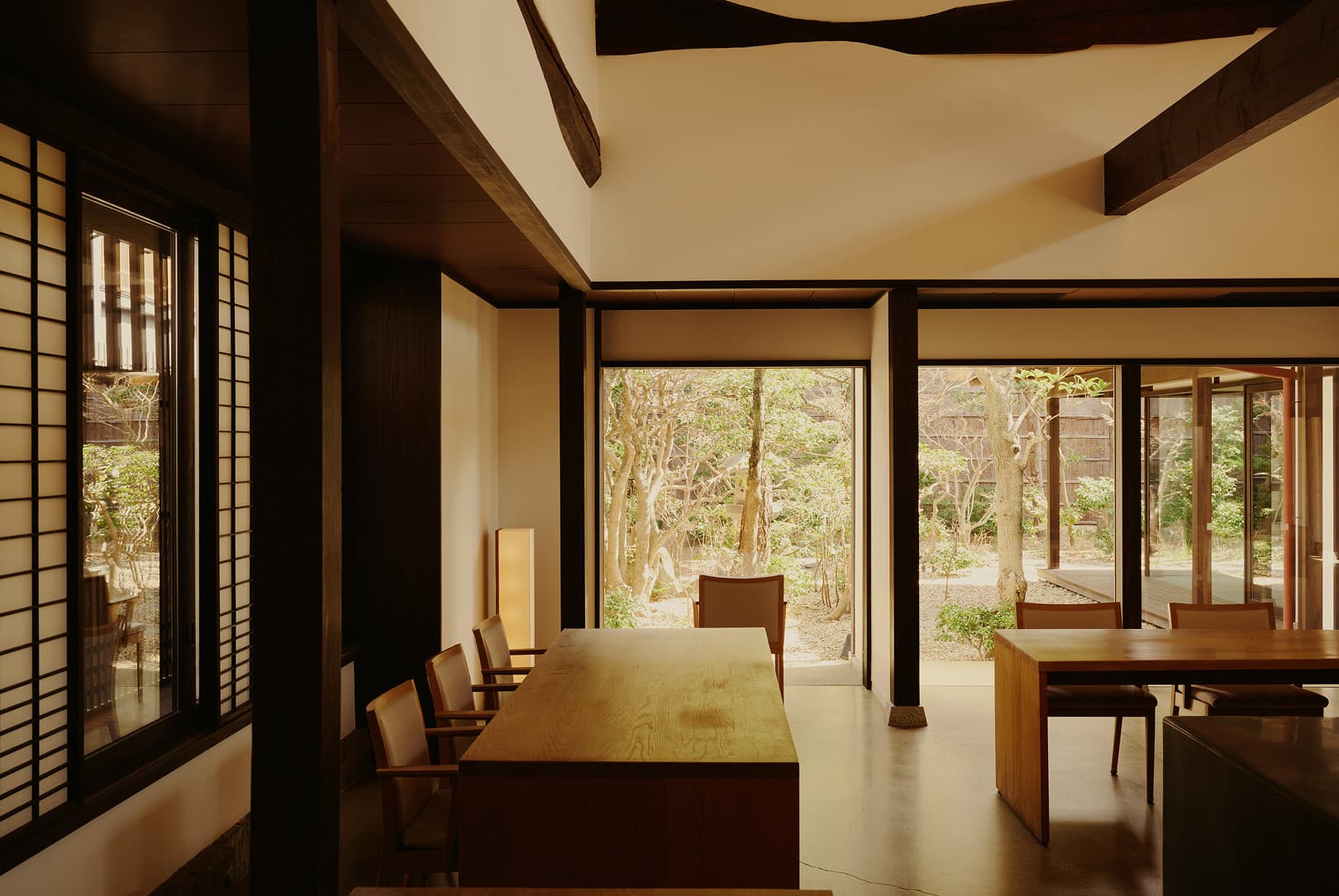
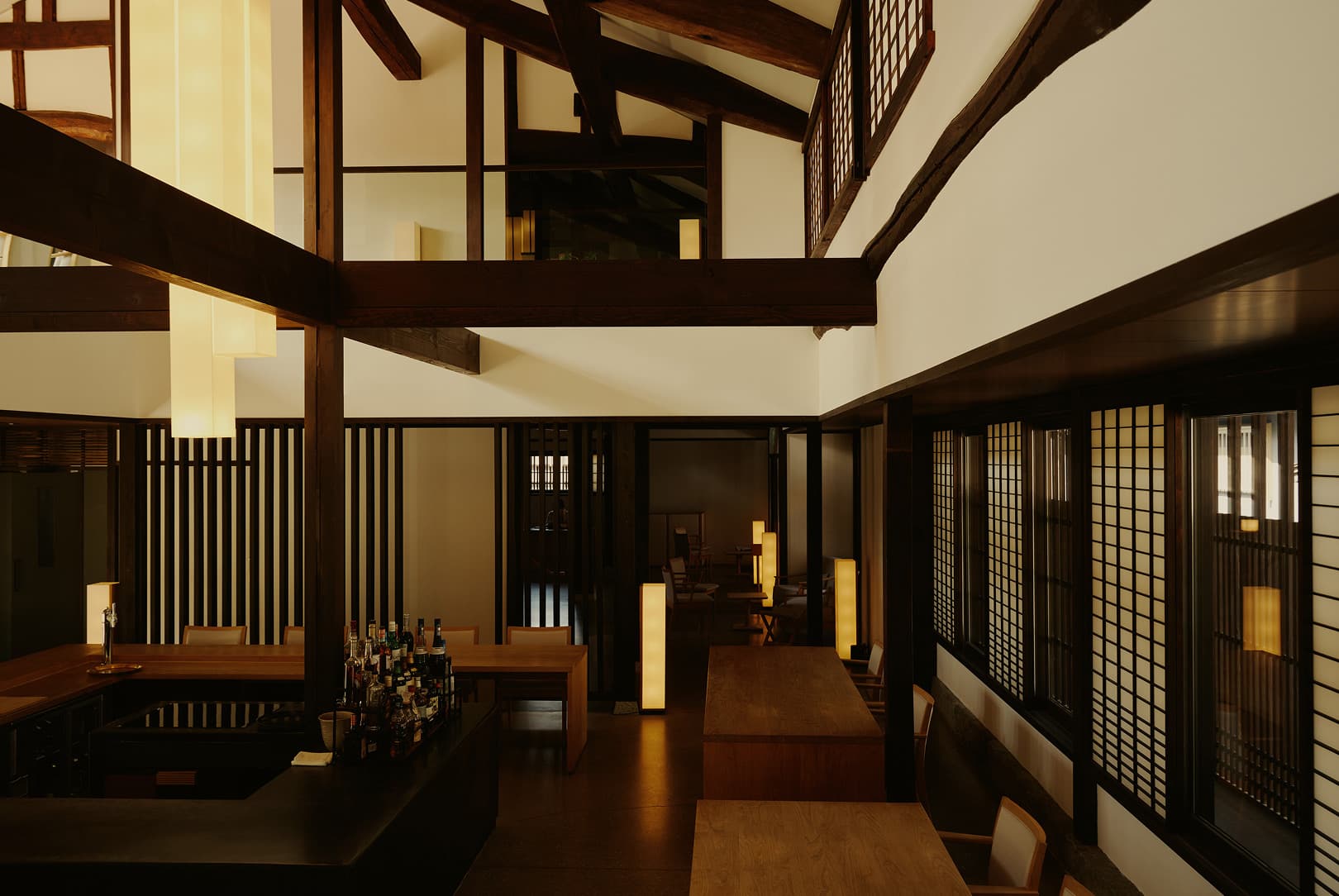
More recent interventions are woven in with restraint, quietly reinforcing the structure beneath its existing exterior. When he first encountered Horiuchi-tei, the family residence at the centre of the project, it was the quality of its construction that struck him. The building had what he describes as “great bones”, and in its intricate detailing he recognised the hand of Kyoto carpenters, a tradition he chose to continue, working with both Kyoto craftsmen and local Setoda builders.
“Buildings are meant to be lived in and used, not simply preserved.”
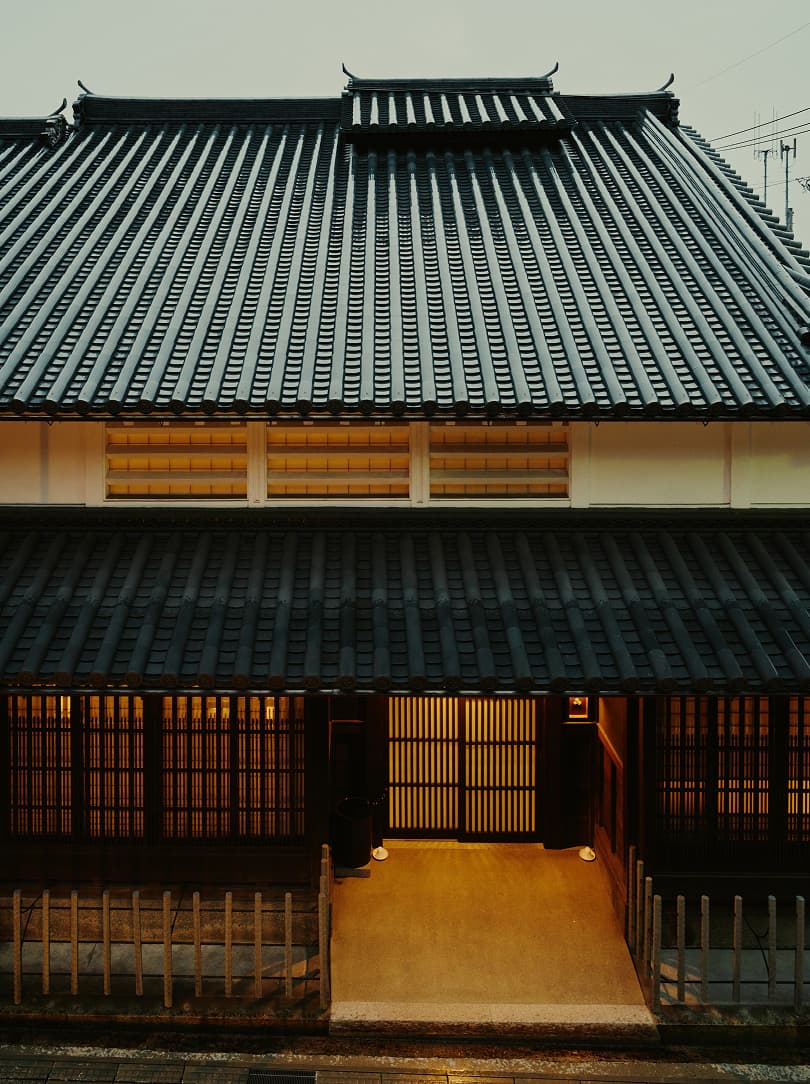
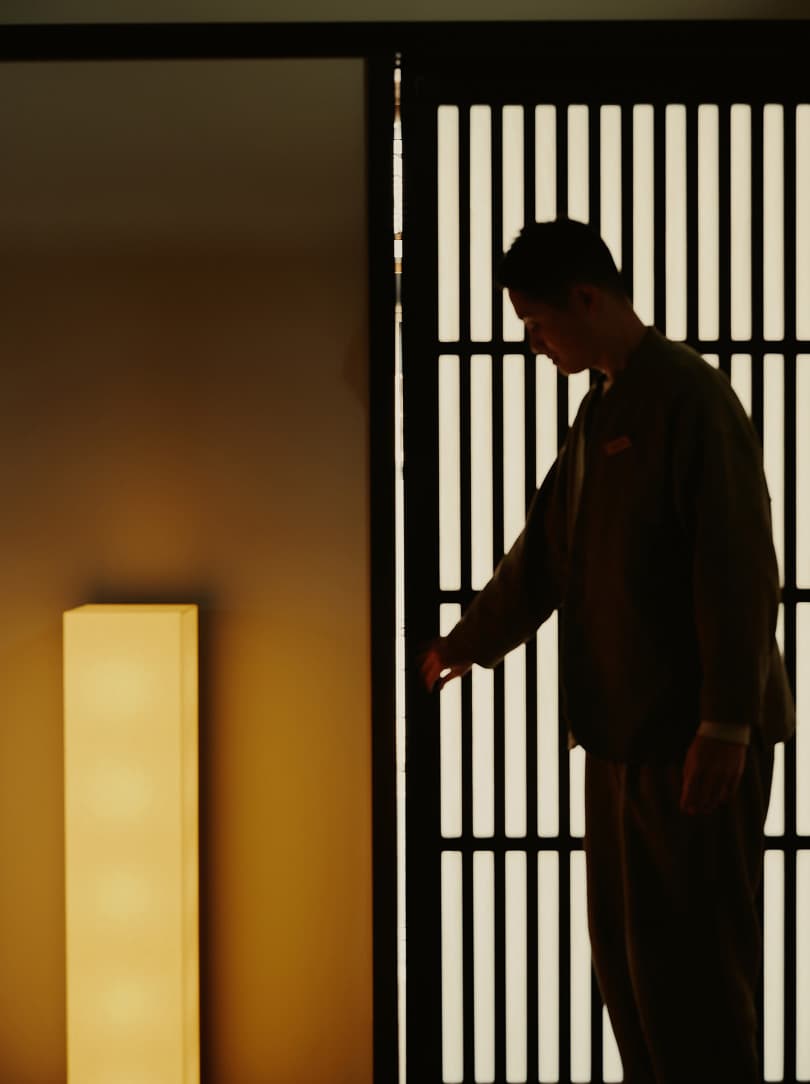
In this sense, the work feels less like an imposition than a continuation. Even at the time the house was first built, skilled carpenters had been brought from Kyoto, long regarded as a centre of craftsmanship in Japan. Miura-san’s intervention follows that same lineage, allowing the building to remain active rather than fixed – to be used, adapted and quietly carried forward. As Kubota-san says: “Buildings are meant to be lived in and used, not simply preserved.”
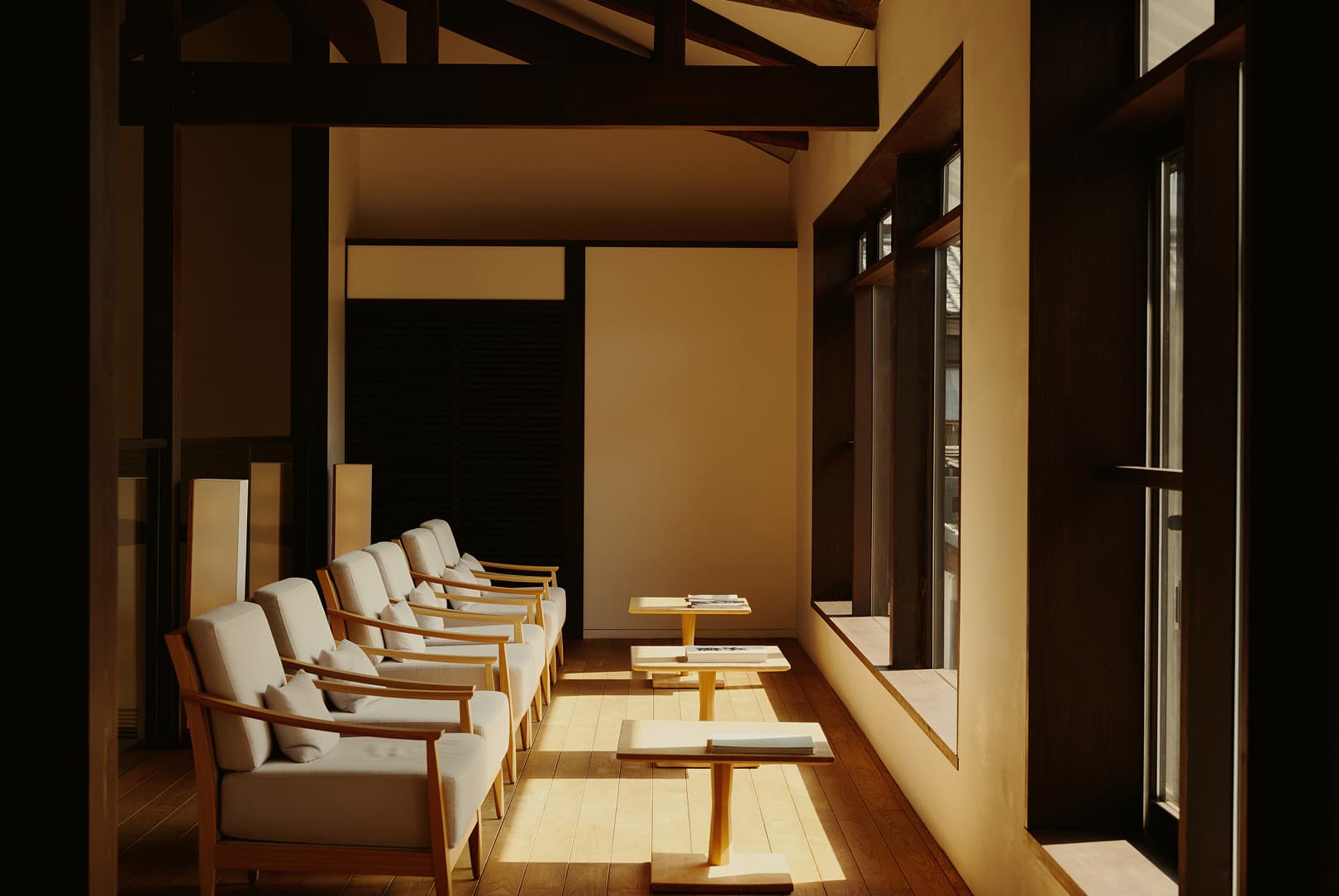
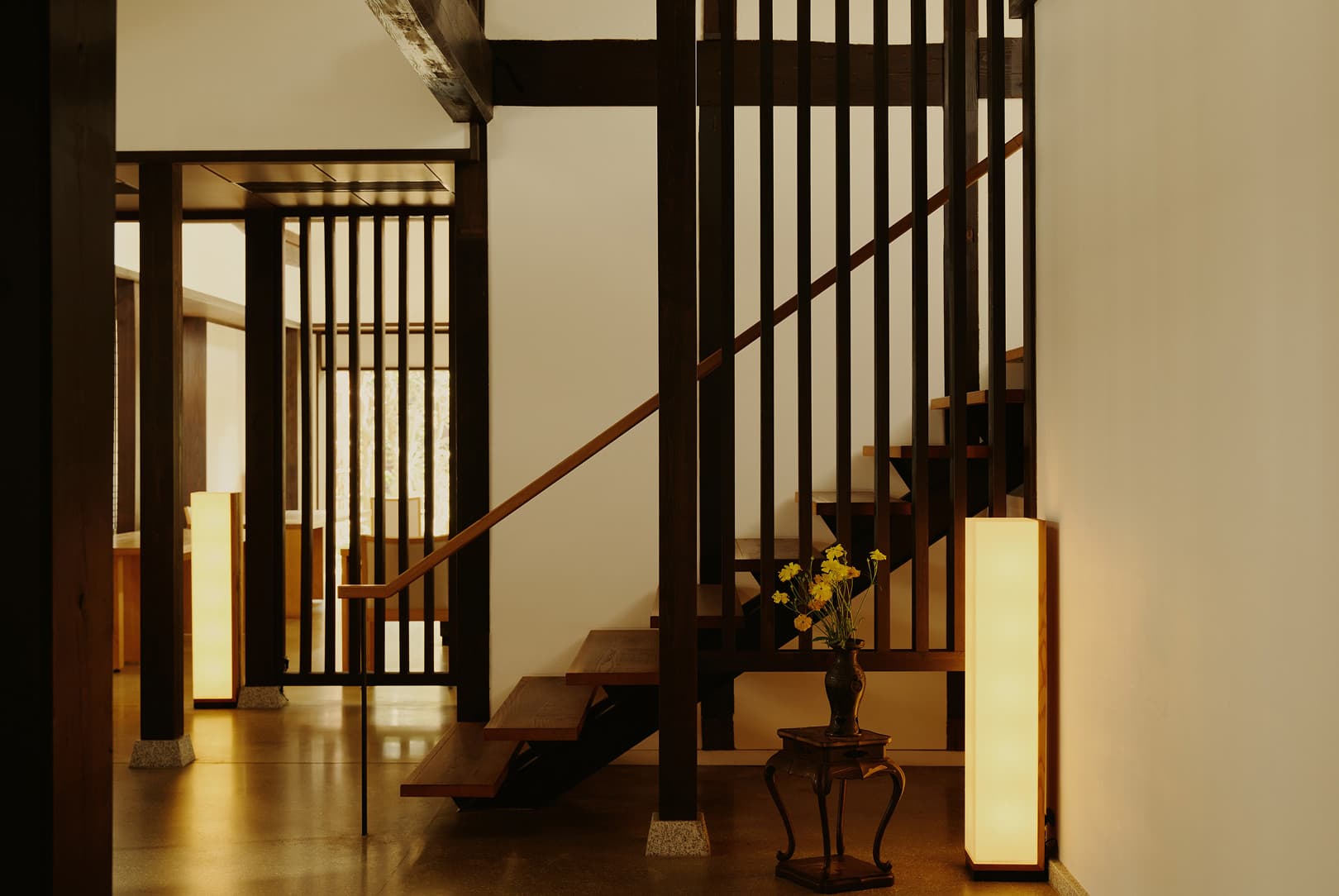
Underlying this is a sensitivity to material. As Miura-san has observed, a good Japanese home is shaped from natural elements such as wood, stone or other materials that exist in relation to one another as they do in the forest. In sukiya architecture, this balance is essential, not as a stylistic device, but so a building can sit naturally within its surroundings.
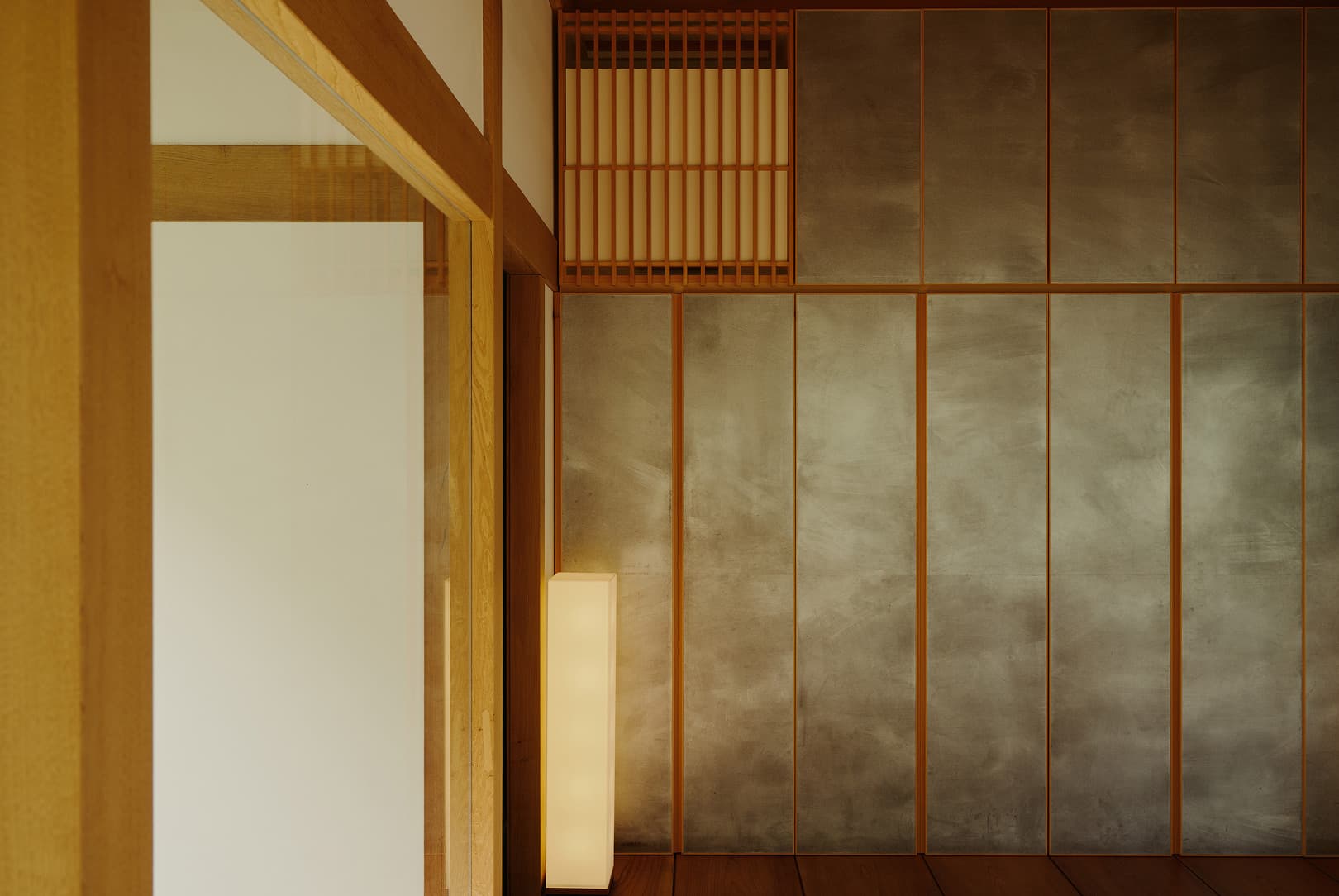
As a way to introduce some colour, with restraint, a local plaster craftsman was commissioned to create a brilliant blue wall just inside the entrance of the house.
Layers of earth and natural pigment subtly catch the light, so that its surface, shaped by hand with a trowel, shifts throughout the day. The colour draws on the work of painter Ikuo Hirayama, who grew up on the island and spent a lot of time observing the many shades of the sea, from above and beneath the water. It is a contemporary gesture that feels absorbed into the house rather than imposed, and echoes a connection to place.
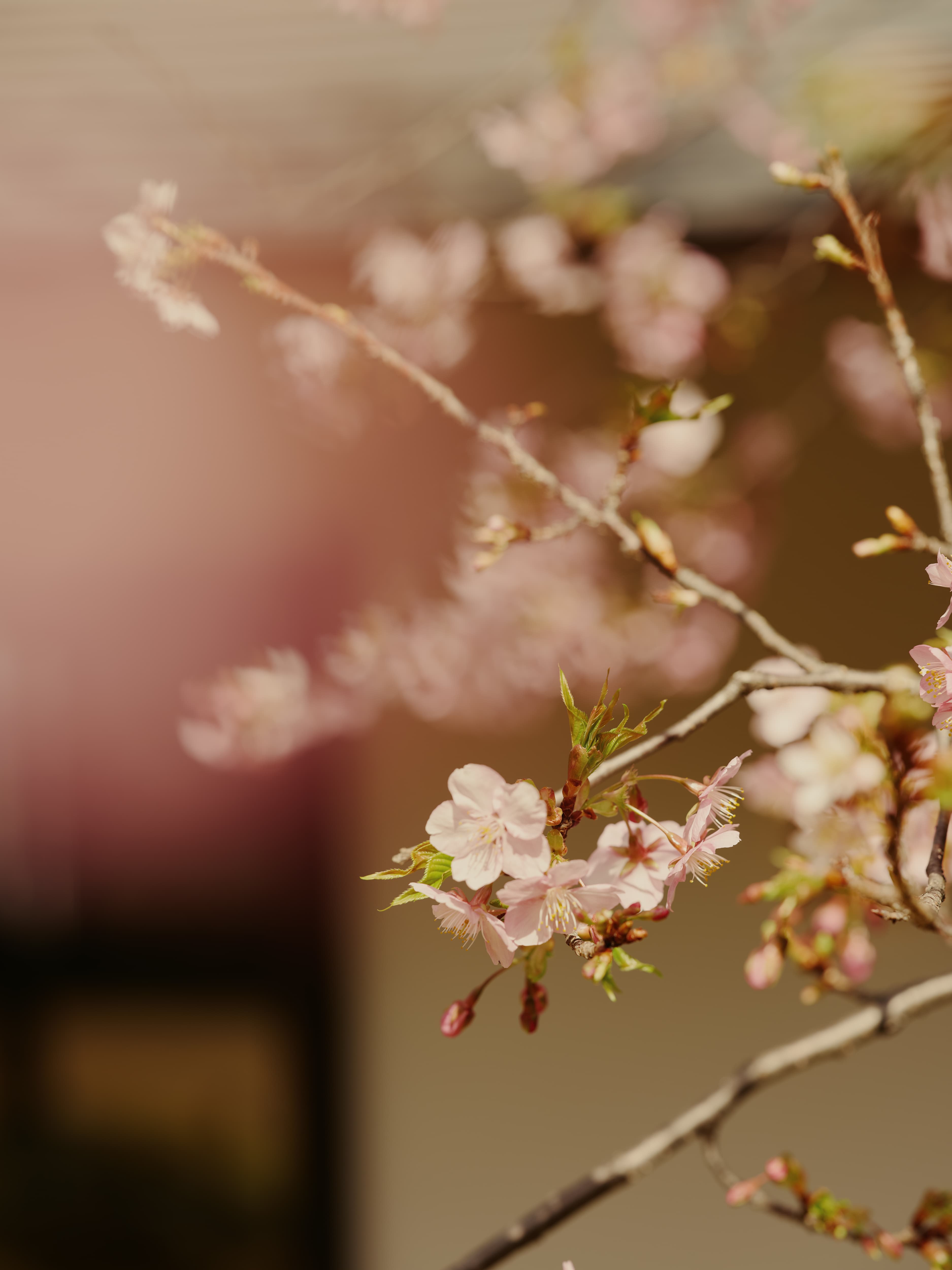
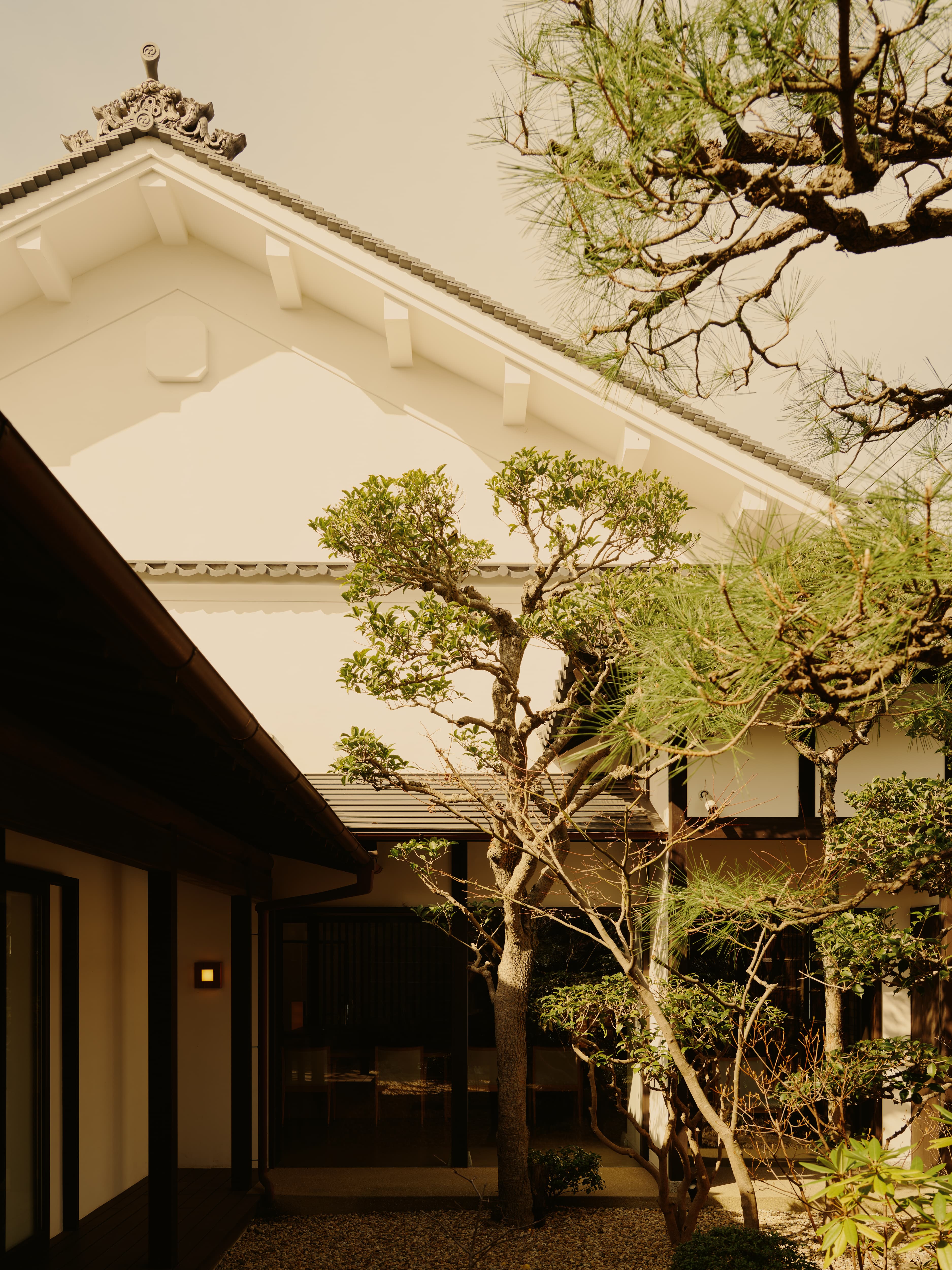
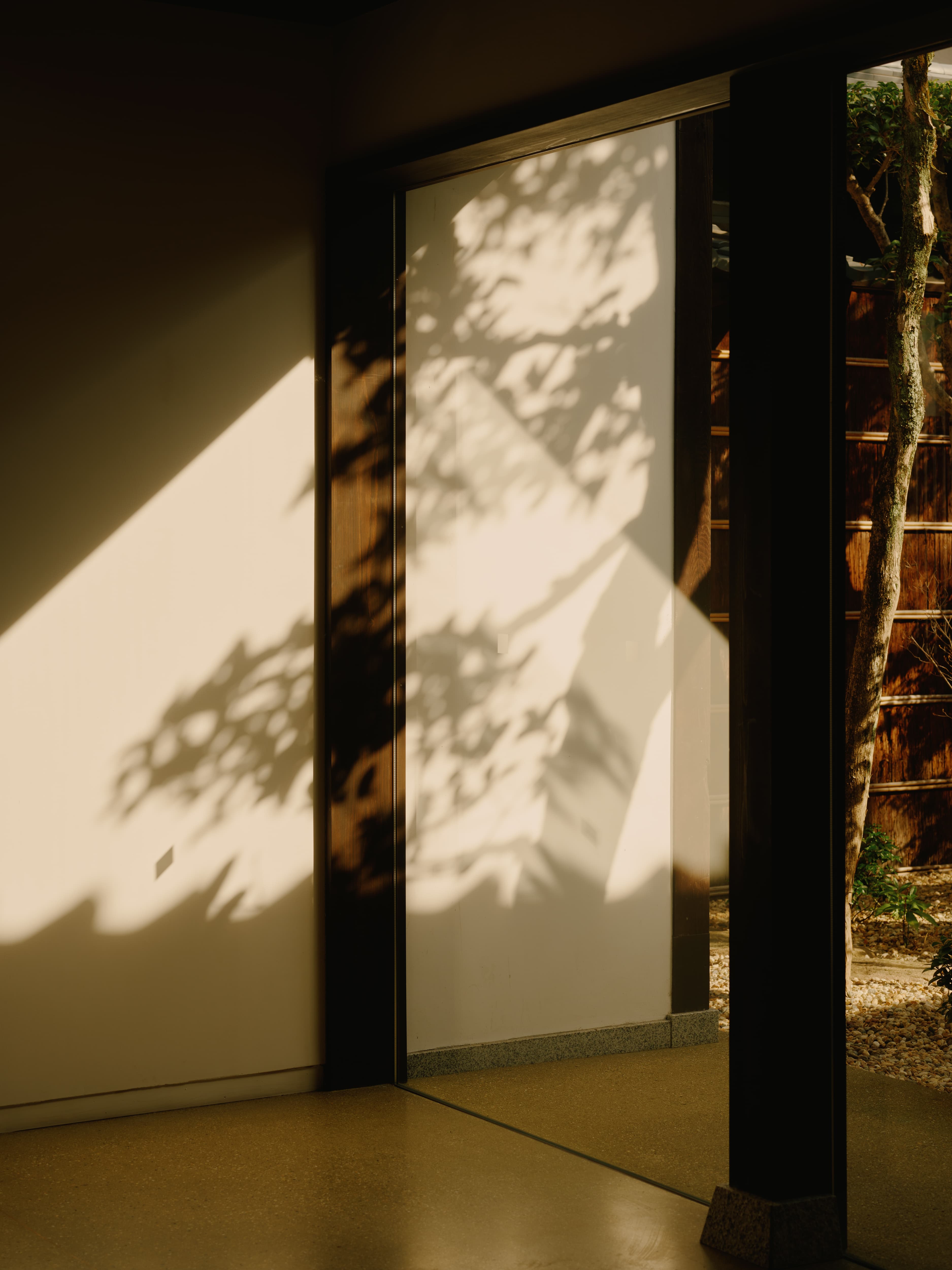
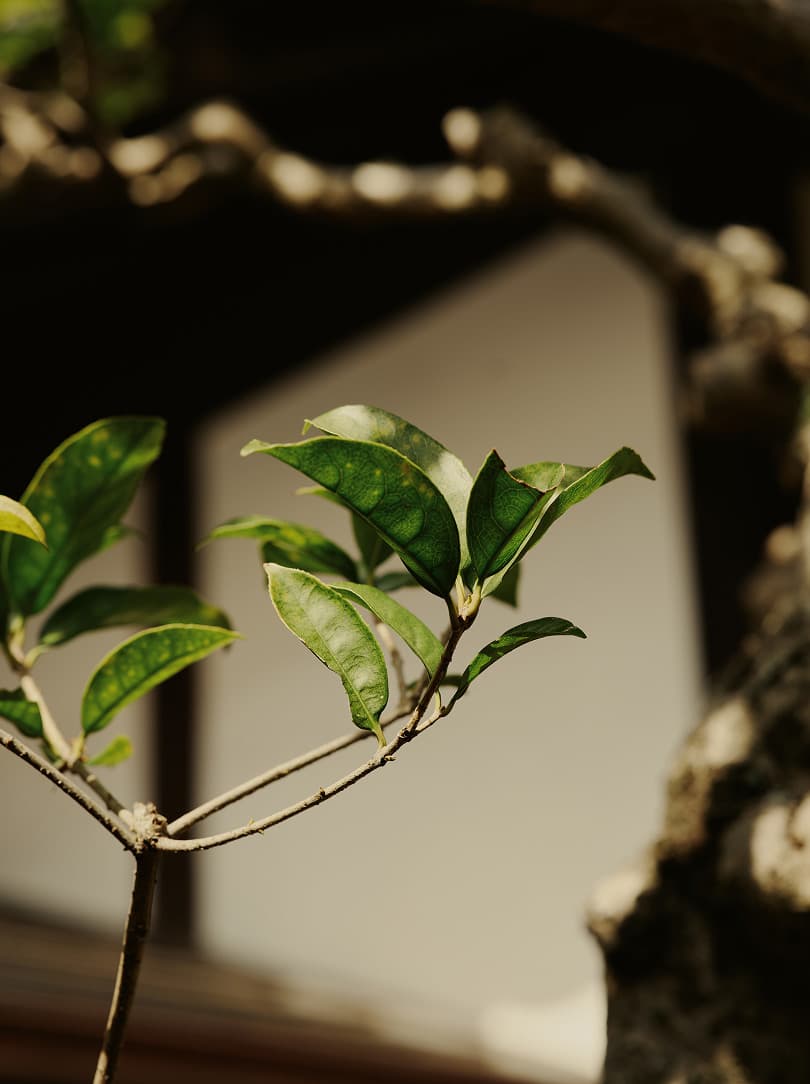
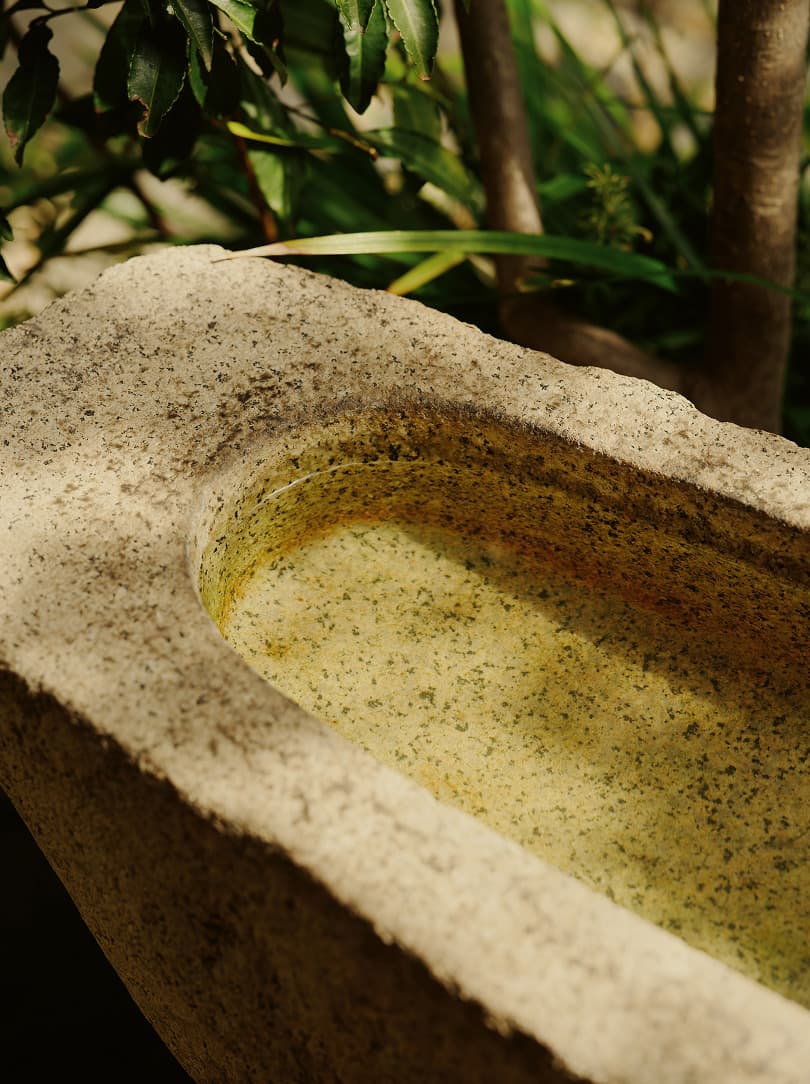
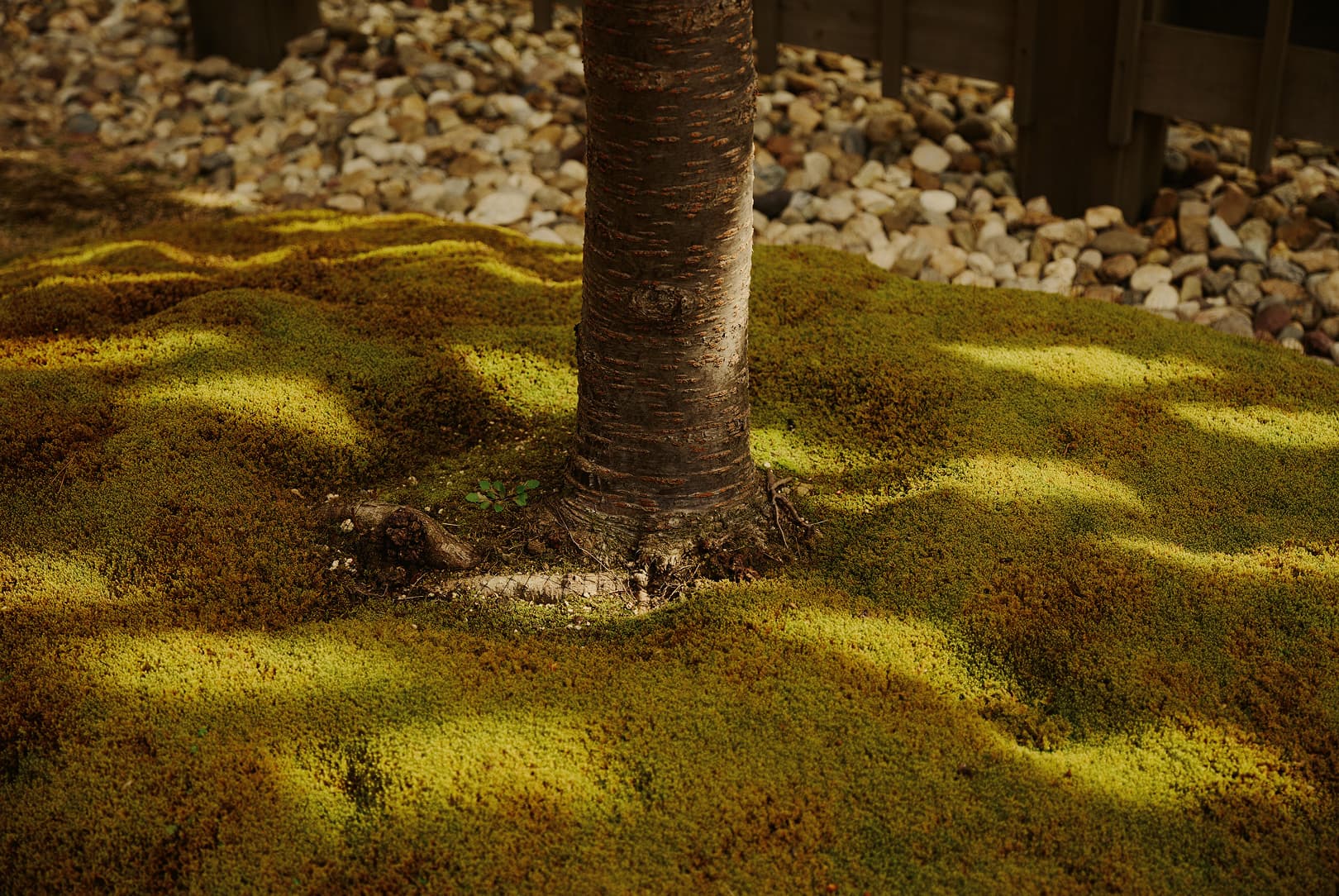
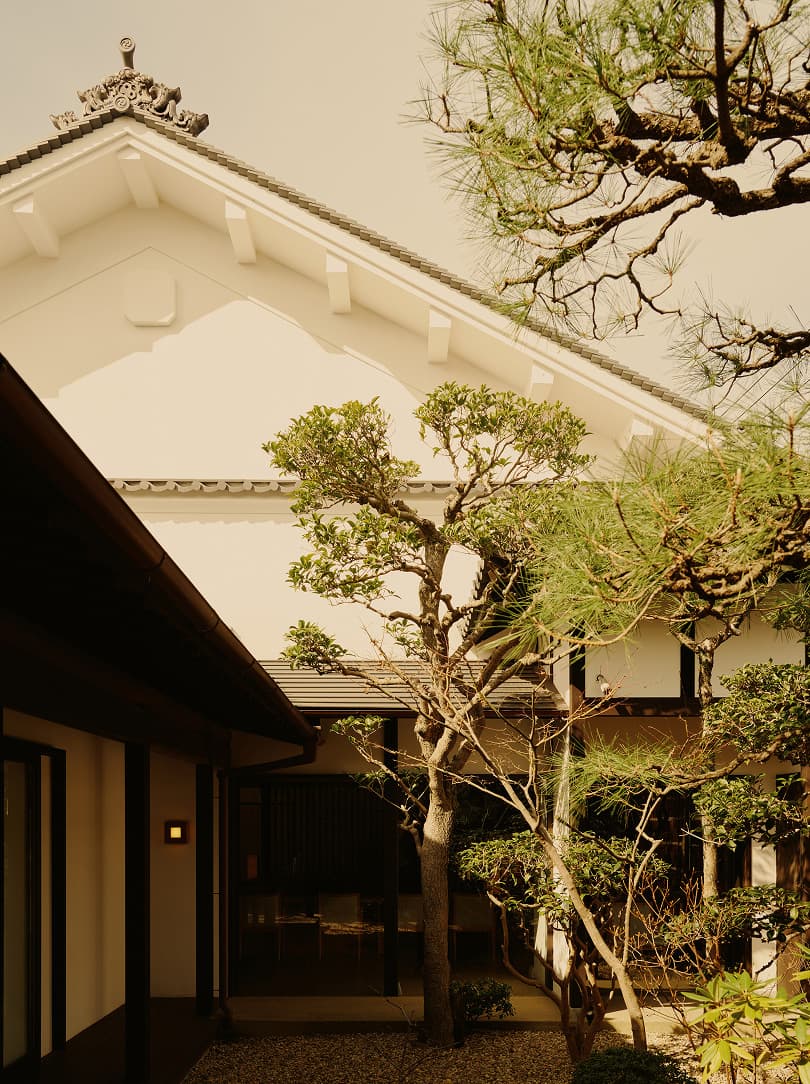
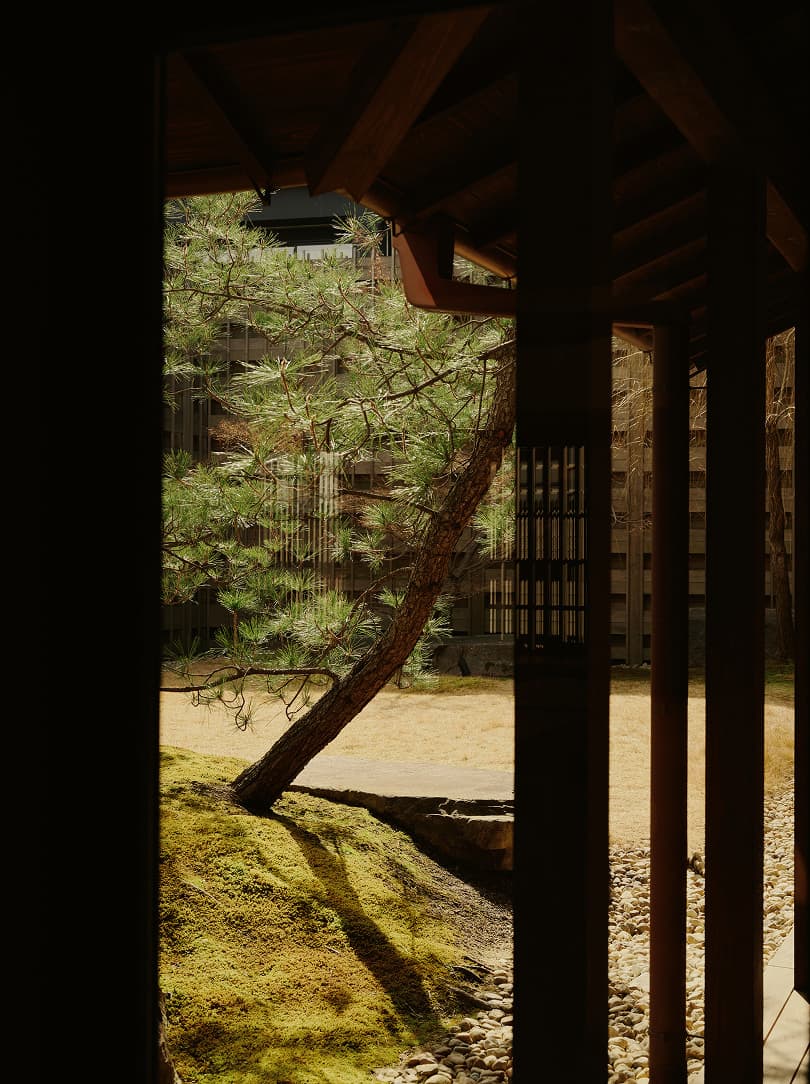
Central to Miura-san’s practice is the relationship between building and garden. Rather than treating them as separate components, the architecture is conceived in direct connection with its surroundings, allowing interior spaces to open naturally onto the landscape. The house’s newly created central garden draws on a traditional Japanese style, where planting reflects the seasons, with cherry, maple, willow and pine marking the cycle of the year. Landscape designer Yuji Nishinosono designed the space with activity in mind – again, to be used rather than just admired. Large stones placed with care double as places to sit, rest or eat while taking in the view beneath the shade of the pines.
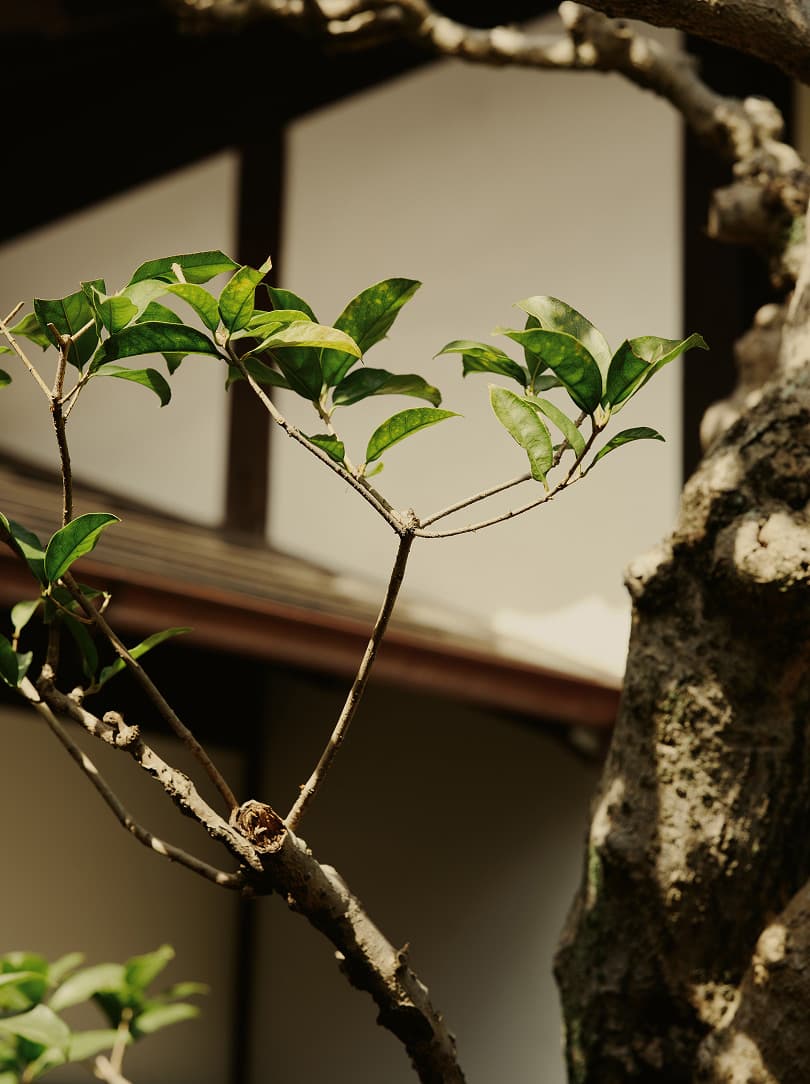
“Even in simple surroundings, what stays with you is the warmth of small memories – walking barefoot, or the calm that comes from not having a television in the room.”
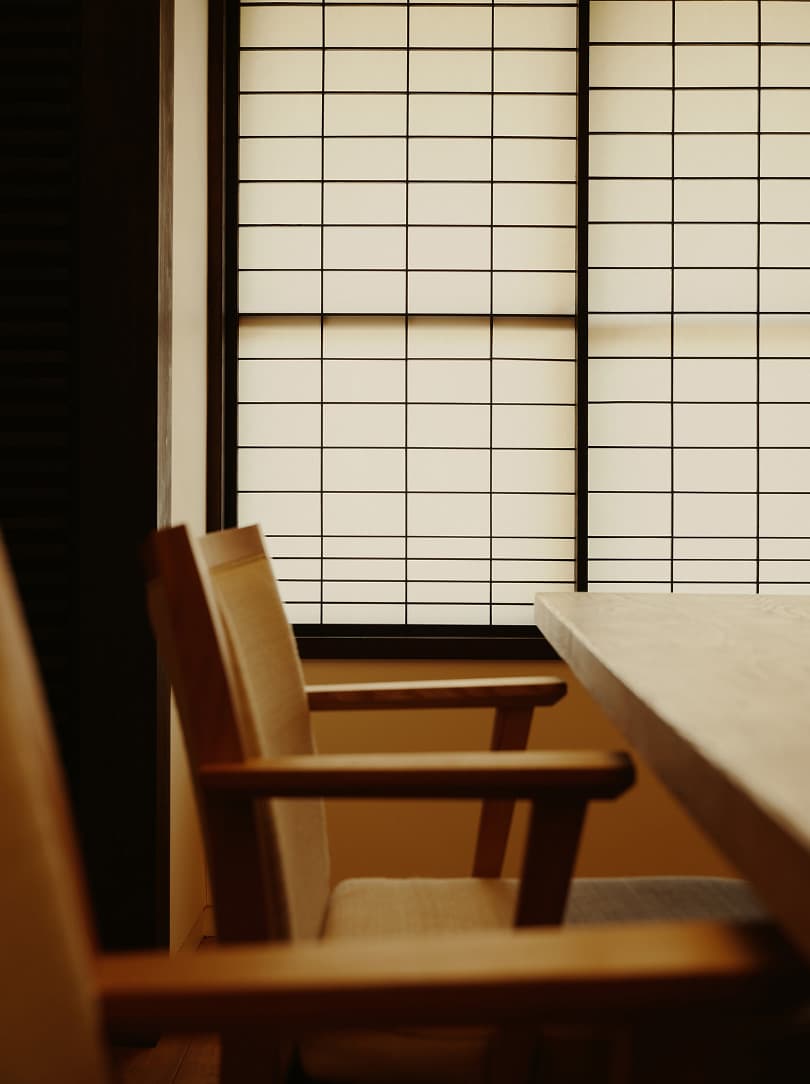
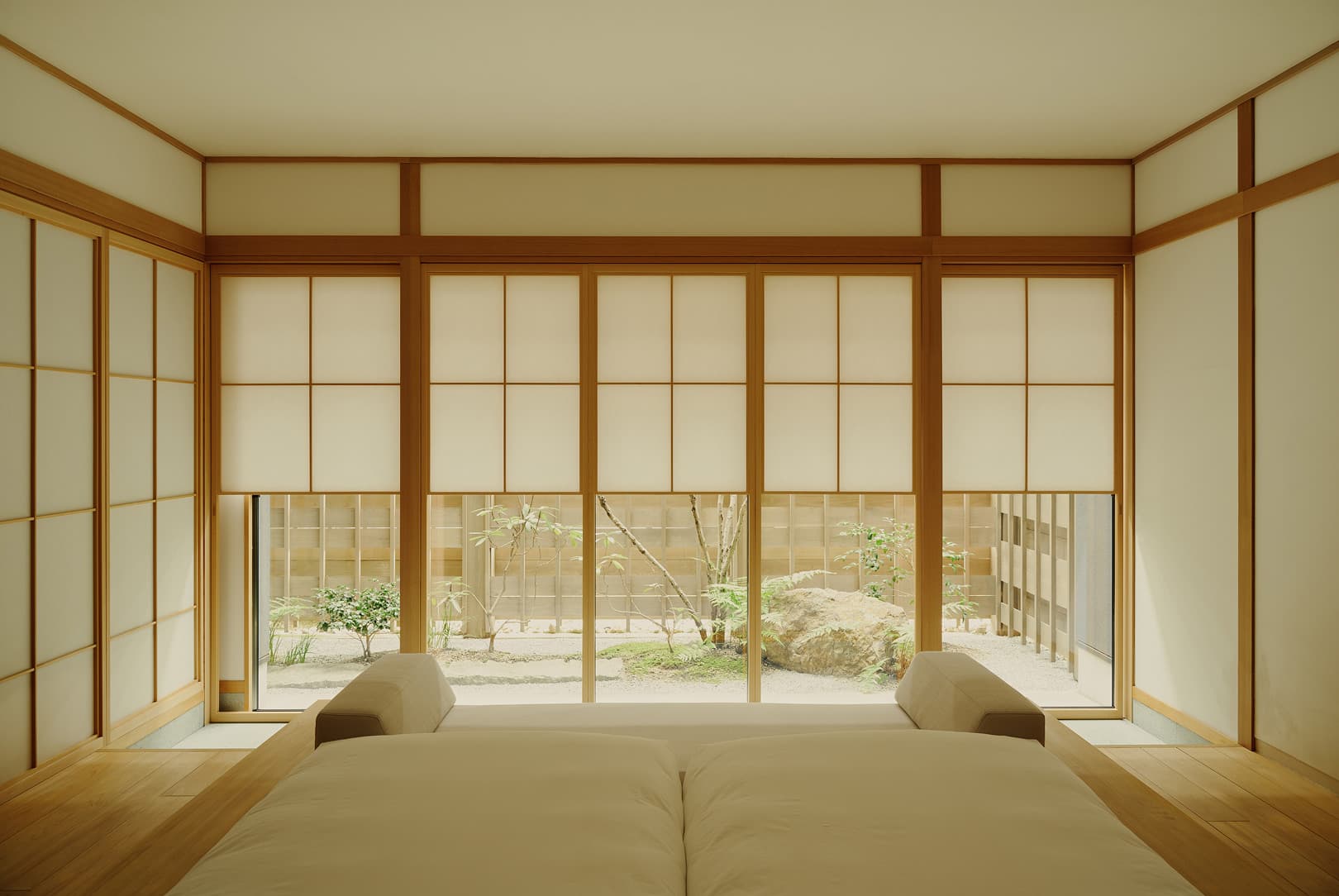
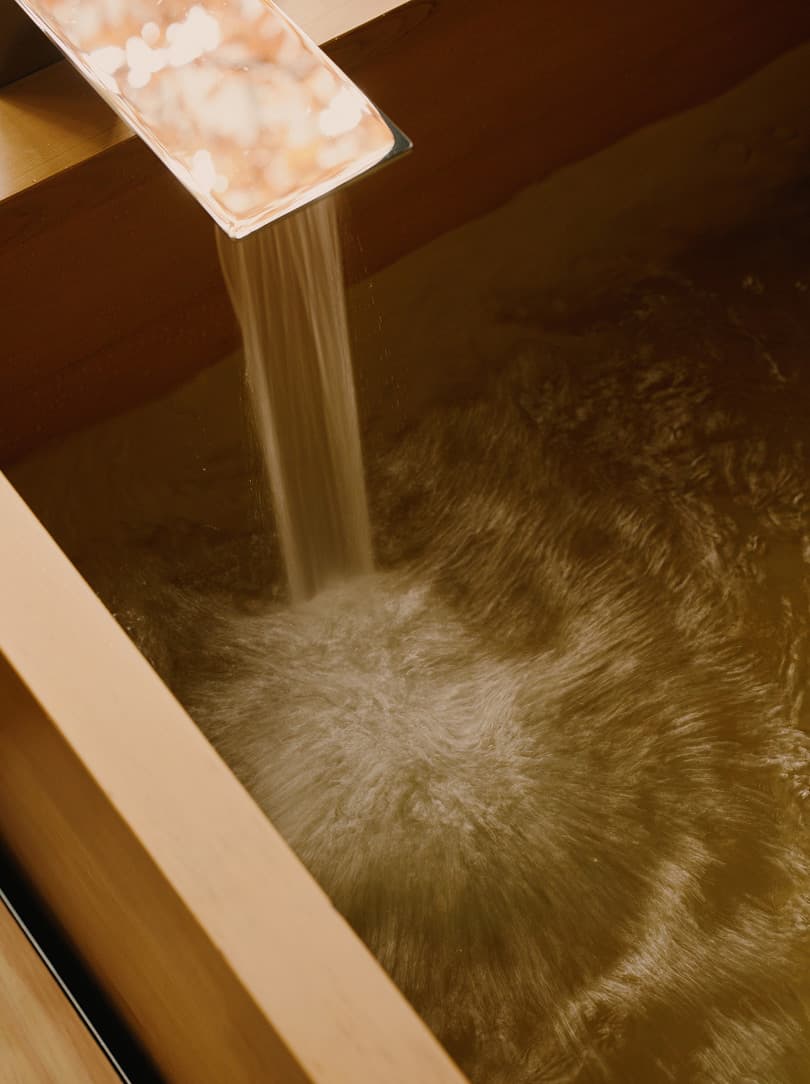
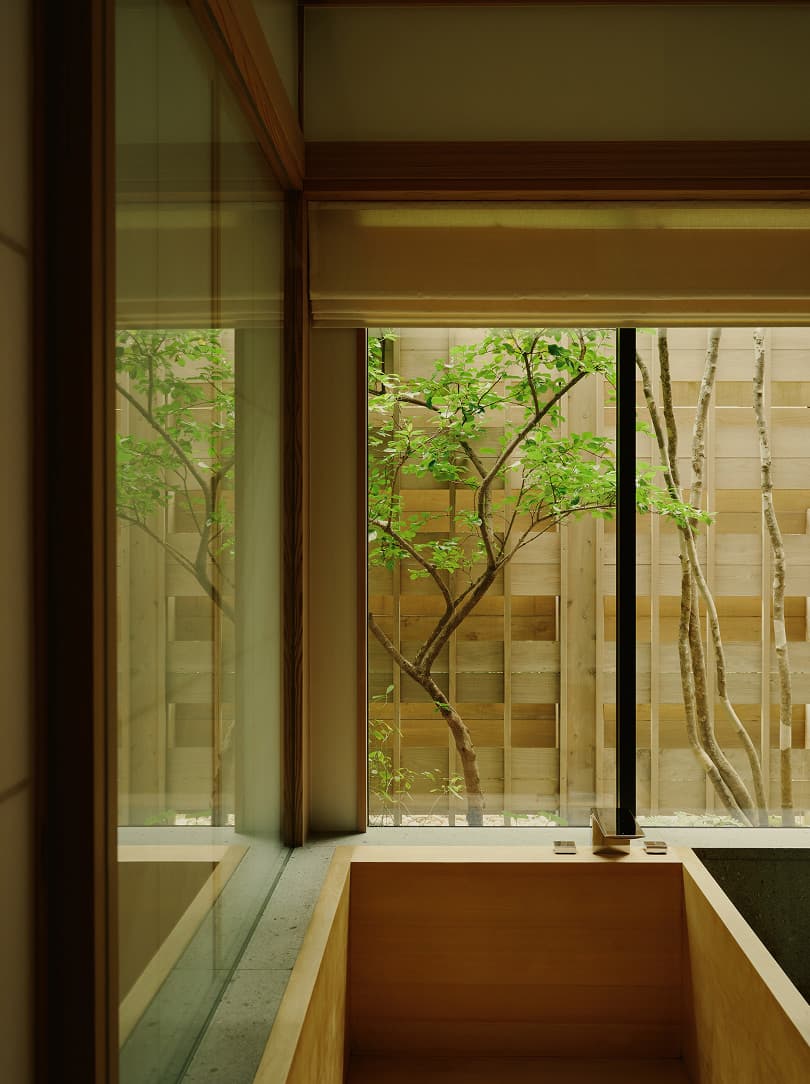
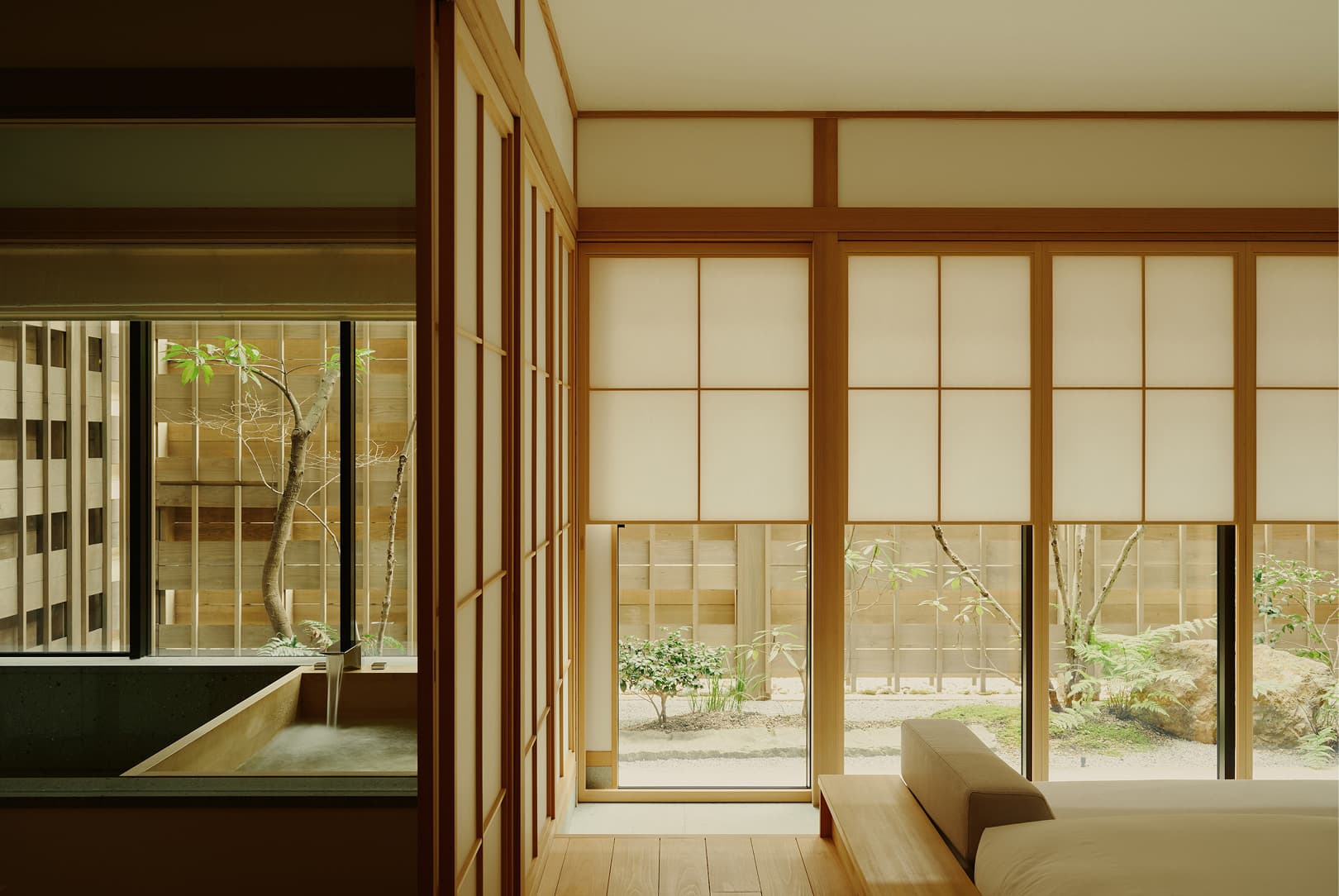
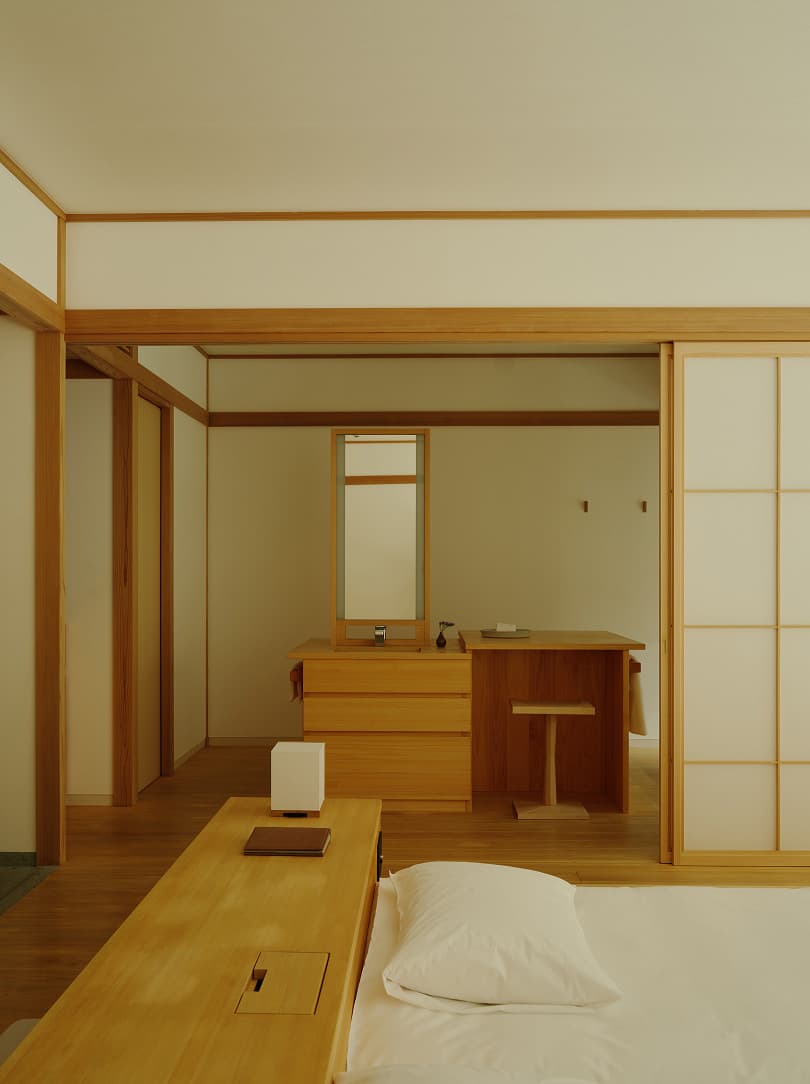
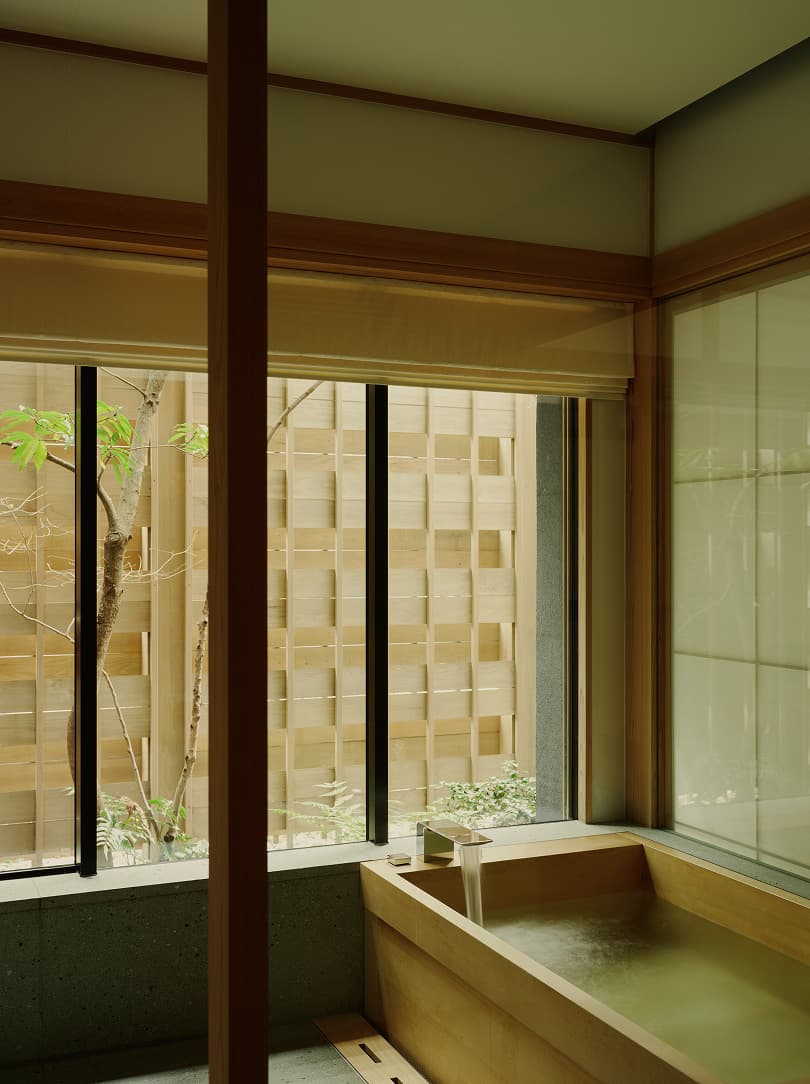
In each of the house’s 22 guest rooms, individual private gardens have been created, offering a more intimate connection to nature and, for returning guests, the opportunity to notice growth or other small changes each time. The room interiors are suitably subdued and calming, designed as places to inhabit. Light is hushed through washi screens; materials are soft and white. Loungewear is provided. A deep cypress bathtub looks out on the garden. “Even in simple surroundings, what stays with you is the warmth of small memories,” Kubota-san says, “walking barefoot, or the calm that comes from not having a television in the room. These are things you might not notice in the city, but I hope people can feel a little of that here.”
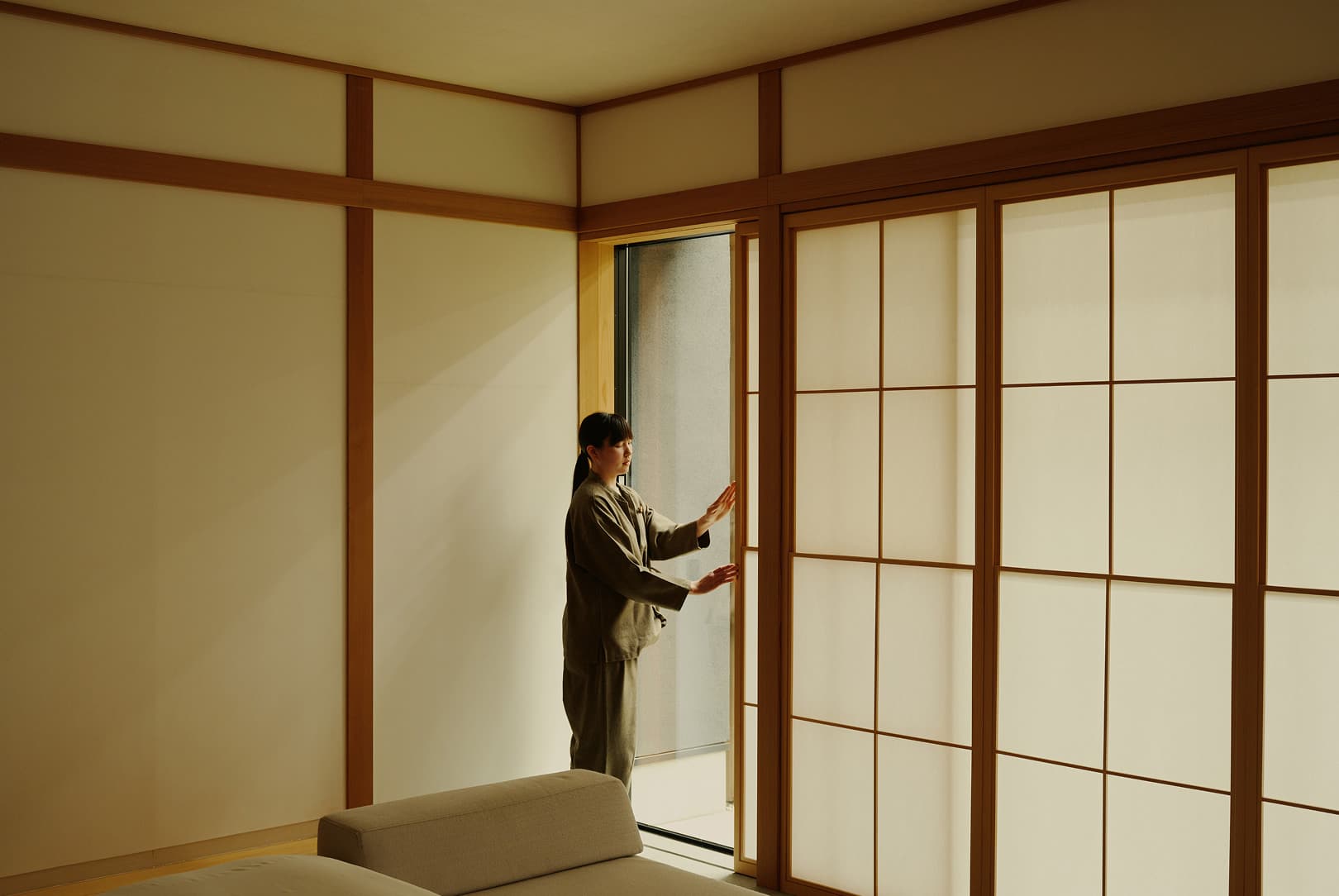
Similarly, the newly built teahouse, tucked away in a quiet corner of the garden, combines elements of wood, stone and air, all held in delicate balance. As elsewhere at Azumi, the room feels less constructed than composed and attuned to its surroundings. It’s a private multi-use space where experiences such as tea ceremonies, meditation, yoga or special meals can take place in the shifting light.
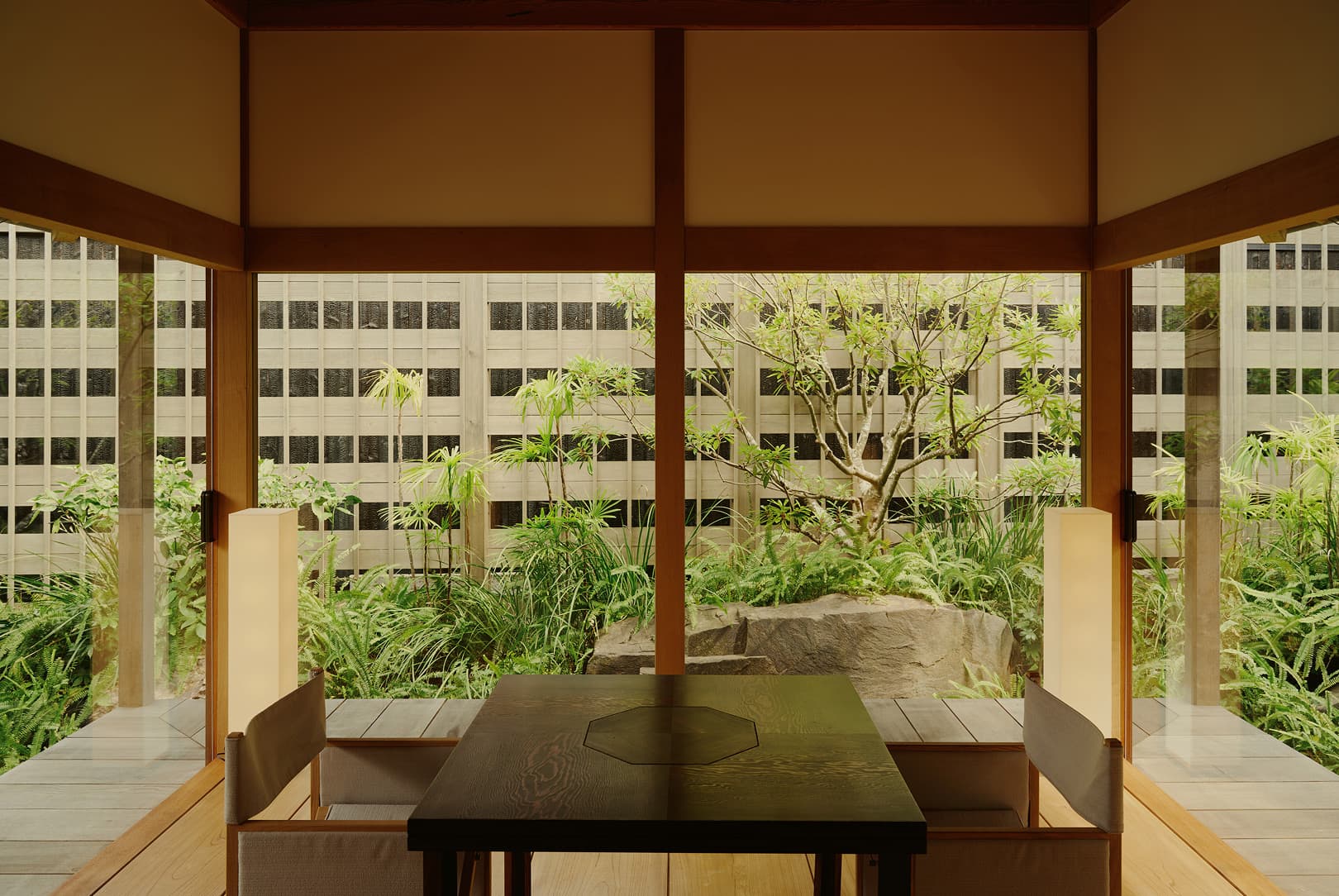
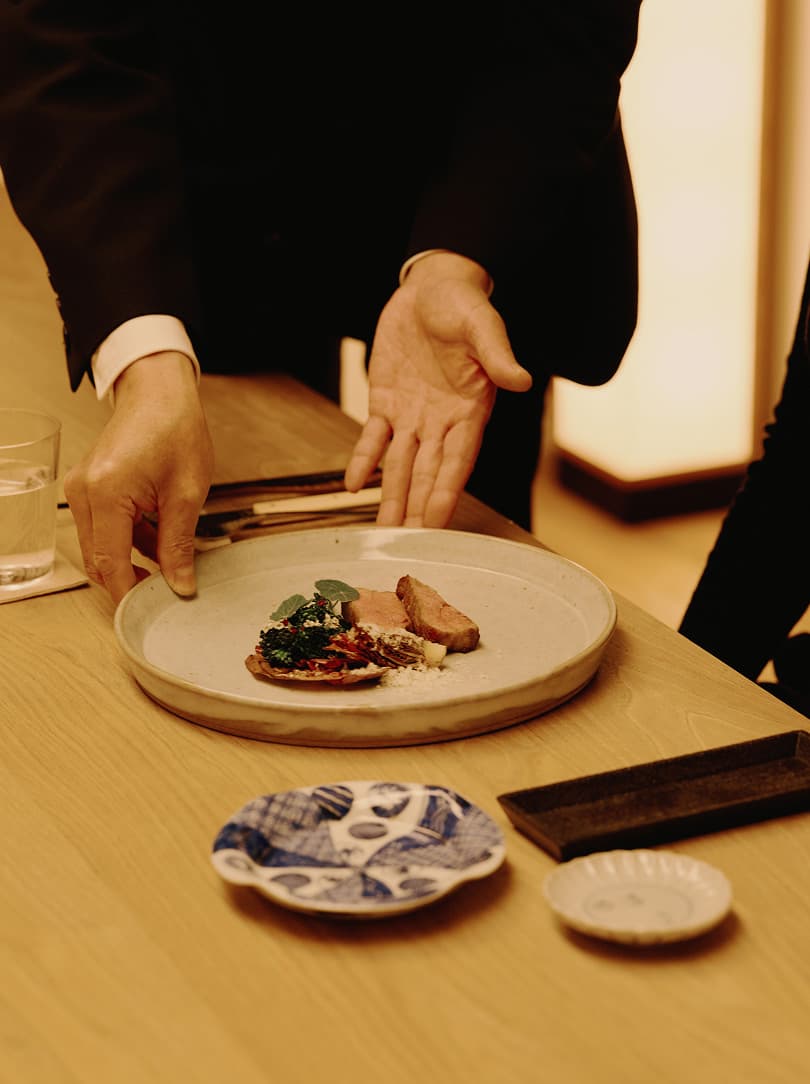
In the kitchen, the same openness applies. Rather than adhering to a fixed culinary identity, the method remains deliberately responsive – shaped by what is available, and by fostering relationships with nearby farmers and fishermen. “The most important thing is to use local ingredients,” says Kubota-san. “We don’t impose a concept. The chefs create what they feel inspired to make.” The result is a menu that evolves sustainably over time, guided as much by the island and its surroundings as by technique.
“When building an inn in this area, there was a desire to create a facility that local people could use. So the public bath became an important element of the project.”
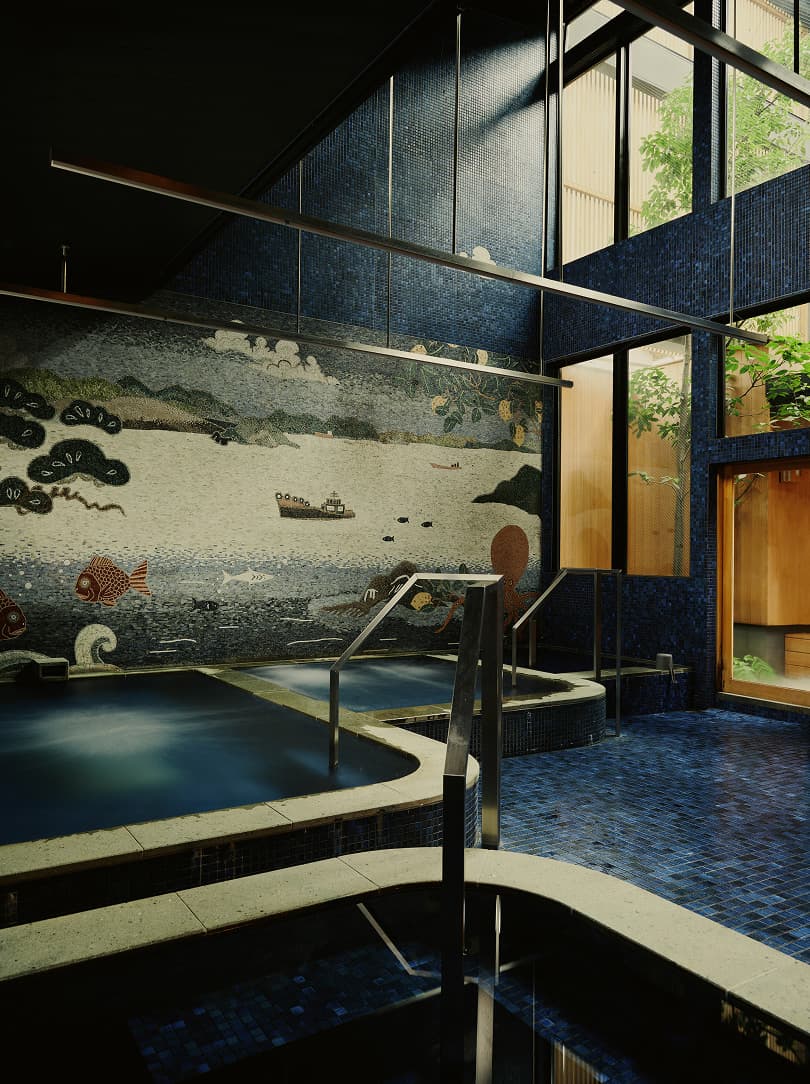
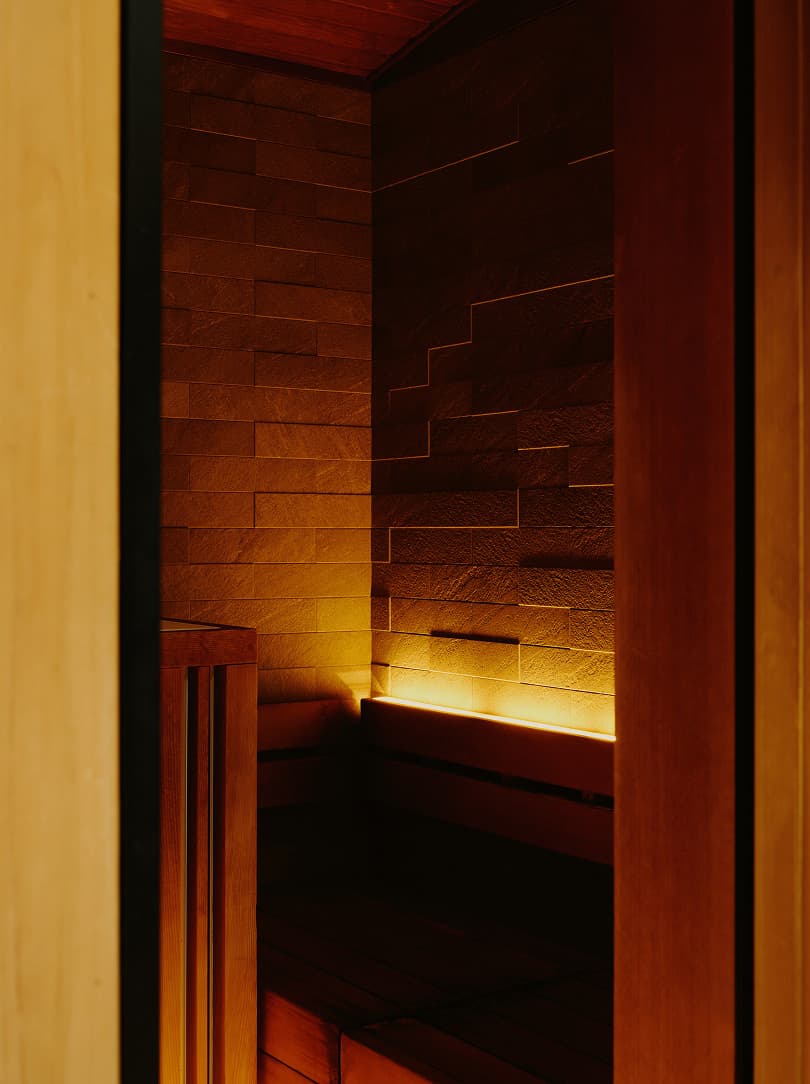
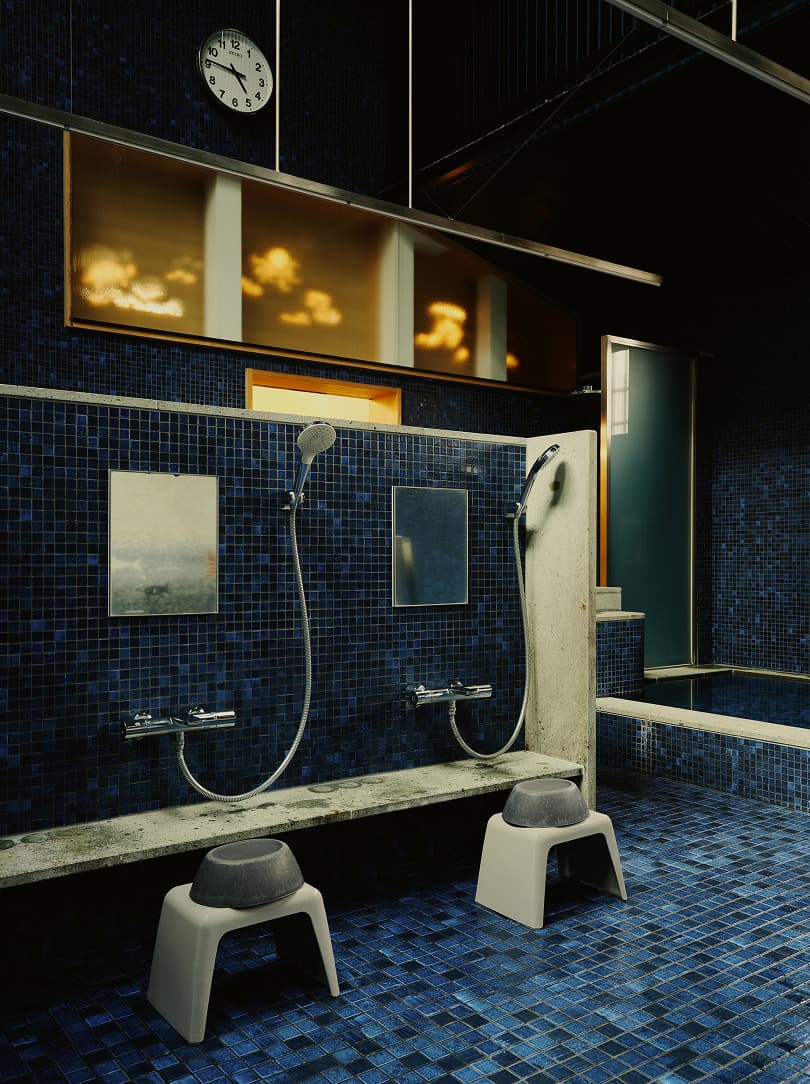
A further extension of this relationship between hospitality and community can be found in Yubune, the bathhouse and additional guest rooms positioned just across the street. Located in the small Shiomachi ‘shotengai’, or shopping street, it draws on an older idea of the inn – not as a self-contained destination, but as a place where travellers and locals naturally gather. Bathing, as Kubota-san explains, has long been associated with travel in Japan, offering a way to relieve fatigue. While Ikuchijima has no natural hot spring, unlike many other regions of the country, the atmosphere here is no less restorative. Magnificent indigo tiles line the bathing space – walls, floors and pools – creating a sense of submersion. This is deepened by a mural by artist Mai Miyake, depicting marine life and the currents of the Seto Inland Sea drifting across the surface.
Yet what defines Yubune is not only the space itself, but how it connects outward. With no restaurant on site, guests are gently directed into the surrounding streets to eat locally and encounter the rhythms of the town. Meals can be brought back and shared informally, in rooms or in the lounge, allowing the experience to move fluidly between inside and out. “When building an inn in this area, there was a desire to create a facility that local people could use,” says Kubota-san. “So the public bath became an important element of the project.”
What emerges here is a more tangible expression of what is offered. It is not defined by abundance or excess, nor by the more obvious markers of luxury, but by a careful calibration of environment, material and attention. “The kind of happiness we want to create here doesn’t come from luxury alone,” says Kubota-san. “It’s something we discover through space and nature.” It reveals itself gradually: in the way a place unfolds, in the presence of objects that take on a patina over time, and in the accumulation of nuanced moments. Everything remains in gentle circulation – the structure, its surfaces, the century-old chinaware – gaining depth through use and contact. “There are many things that only gain strength through being used.”
“The kind of happiness we want to create here doesn’t come from luxury alone.”
There is, too, a more subtle responsibility that underpins it all. Through conversations with long-time residents, many now in their eighties and nineties, Kubota-san describes a diligent, ongoing effort to really listen, to understand and to carry forward Setoda’s lived memory. “I believe it is very important to be in a position where I can hear the real voices of people on this island,” she says, “and to preserve that in any way possible.” For her, this sense of continuity is closely tied to what guests seek: “What people are looking for, ultimately, is a sense of authenticity.”
As the structures of hospitality continue to evolve, becoming more efficient, more systematised, places like this offer a quieter counterpoint. Kubota-san suggests that this idea is not confined to one place; across Japan, in smaller regions and less visible settings, there are many environments where it could still take root. Shaped by local context and sustained by community, it depends on attention, proximity and the conditions that allow it to be practised – where architecture, food, landscape and daily life are not separate elements, but part of a single, interconnected whole. The question, perhaps, is where emphasis is placed, and what can manage to endure.
“What people are looking for, ultimately, is a sense of authenticity.”
“When guests arrive at Azumi, they often seem a little tired,” Kubota-san says. “But by the time they leave, something has softened. They go with a genuine smile.” For her, the aim extends beyond hosting. It is about creating a domestic sense of ease – a space in which people can settle, even briefly, into a different way of being. “When you find a place where you can truly feel hospitality, it begins to feel like a real family. That is very rare. And it will become rarer.”
From a distance, as we depart along the winding waterside road, the mist lifting from the sea, it is this that remains: a subtle shift carried forward, and a quiet recognition of what hospitality, at its most essential, still is.